
Unbiased headlines. Facts, not spin.
Every story is an unbiased news briefing written from 110+ sources across the spectrum — sources linked so you can verify it yourself.
 tech
Low Interest (3/10)
August 2, 2026 at 07:55 PM
tech
Low Interest (3/10)
August 2, 2026 at 07:55 PM
Sextortion Scammers Are Using Real Carnival Breach Data to Fake a Camera Hack
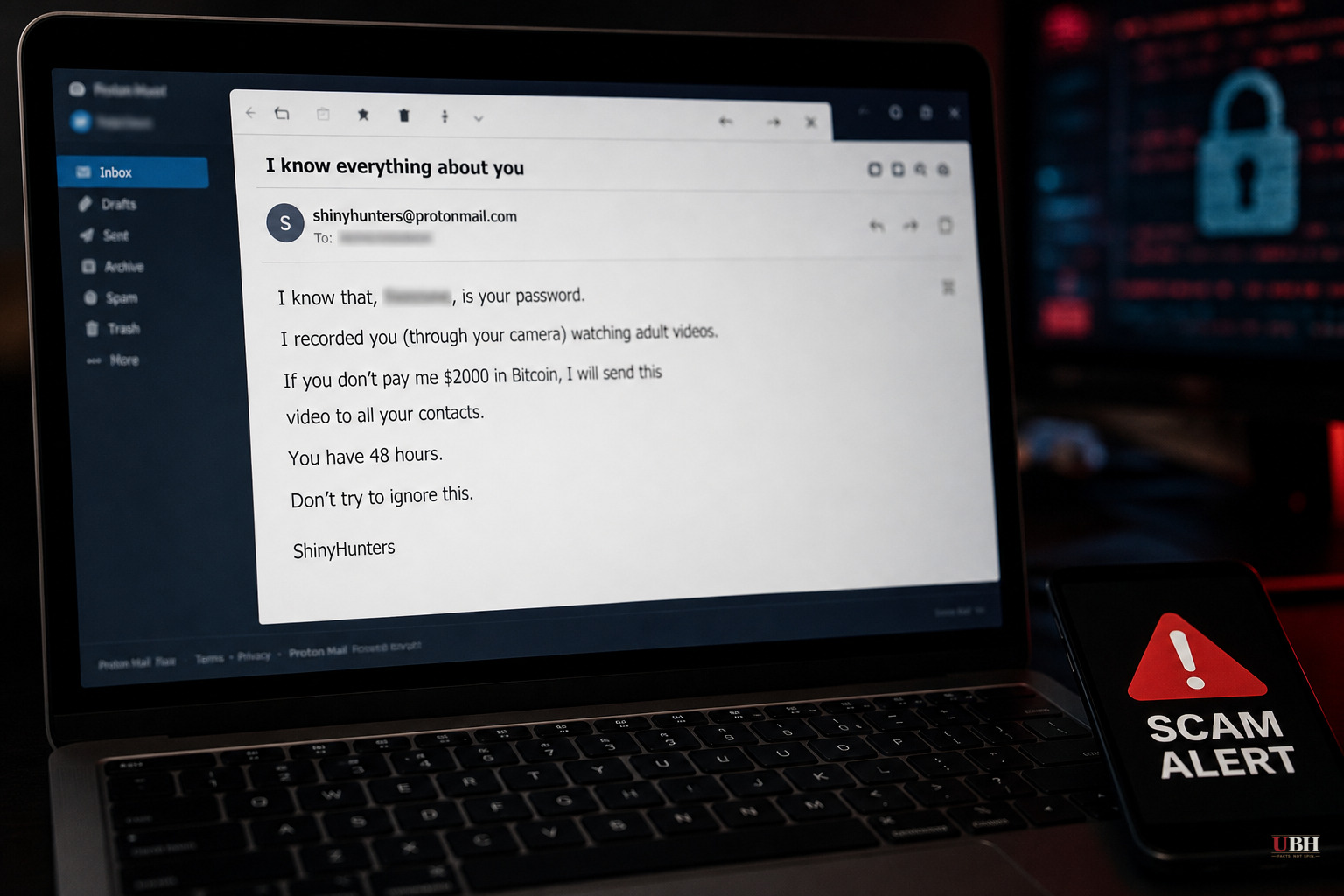
A man in Evangeline, Louisiana, identified only as Wayne P., got an email demanding $2,000 in Litecoin within 48 hours. The sender claimed to be ShinyHunters, a real hacking group, and said they'd recorded intimate video of Wayne through his own webcam. They threatened to send it to his contacts if he didn't pay.
Wayne didn't pay. He ran security scans on his phone and computer, found nothing wrong, forwarded the email to the government's phishing-reporting address, and reached out to Fox News tech columnist Kurt "CyberGuy" Knutsson to ask if the threat was real.
It wasn't. But it wasn't pure fiction either, which is what makes this version of the scam more convincing than most.
The one real thing in the email
Carnival Corporation, the cruise line operator, disclosed a data breach tied to an April 2026 social engineering attack, according to CyberGuy's reporting. Carnival's security team detected unauthorized activity involving an employee account on April 14 and shut it down, then brought in outside investigators.
Whatever data leaked in that breach appears to be the raw material scammers are now recycling into sextortion emails. The attacker doesn't need to hack your webcam. They just need enough real, breached personal information, an email address, maybe a password, maybe an old account detail, to make a form-letter threat feel personal.
What was missing: any actual proof
Wayne's email included zero evidence. No screenshot. No stolen file. No sample clip, blurred or otherwise. Just a claim, a demand, a countdown clock, and a warning not to go to the police.
The FBI has warned that emails invoking the ShinyHunters name have circulated with false claims about embarrassing photos or video that, in the FBI's assessment, never existed in many of these cases.
CyberGuy has documented similar campaigns before this one where scammers layer in personal details, sometimes even Google Maps images of a target's house, to make the bluff land harder. Scammers use one true fact to make a person believe a false one.
Why this matters beyond one email
The FBI and DOJ have separately flagged a rise in teen suicides linked to sextortion schemes, a trend serious enough that Fox News brought on retired FBI cyber investigator Darren Mott to break down how scammers identify and target victims. The tactics are converging: breach data plus generic threat templates plus a short deadline designed to short-circuit rational thinking.
Adults with fraud experience, like Wayne, can pause, run a scan, and report it. Teenagers targeted with the same playbook, often without real breach data behind the threat at all, frequently don't have that same instinct or resource, and the DOJ's growing focus on sextortion cases reflects that gap.
What to actually do if you get one of these
Don't pay. Don't reply. Don't click anything in the email. If the message references a real password or account detail, change that password immediately and check whether it appears in breach databases like Have I Been Pwned, since that's likely where the scammer got it, not from your webcam.
Report it to the FBI's Internet Crime Complaint Center or forward it to reportphishing@apwg.org, which is what Wayne did. If the message threatens to distribute real explicit images of a minor, that's a matter for law enforcement immediately, not a wait-and-see situation.
What's unresolved is how far the Carnival breach data has spread and how many other scam emails are drawing from the same pool. Carnival has not detailed publicly how many customer or employee records were exposed in the April incident, and no law enforcement action against the email senders invoking the ShinyHunters name has been announced in connection with this specific campaign.
Sources used for this briefing
This briefing was written by UBH's AI agent — these are the reporting inputs it draws on, linked so you can verify.


