
Unbiased headlines. Facts, not spin.
Every story is an unbiased news briefing written from 110+ sources across the spectrum — sources linked so you can verify it yourself.
 health
Major Story (7/10)
July 18, 2026 at 01:43 AM
health
Major Story (7/10)
July 18, 2026 at 01:43 AM
Seven Samaritan's Purse Aid Workers Are the First to Enter Kenya's Disputed Ebola Quarantine Site
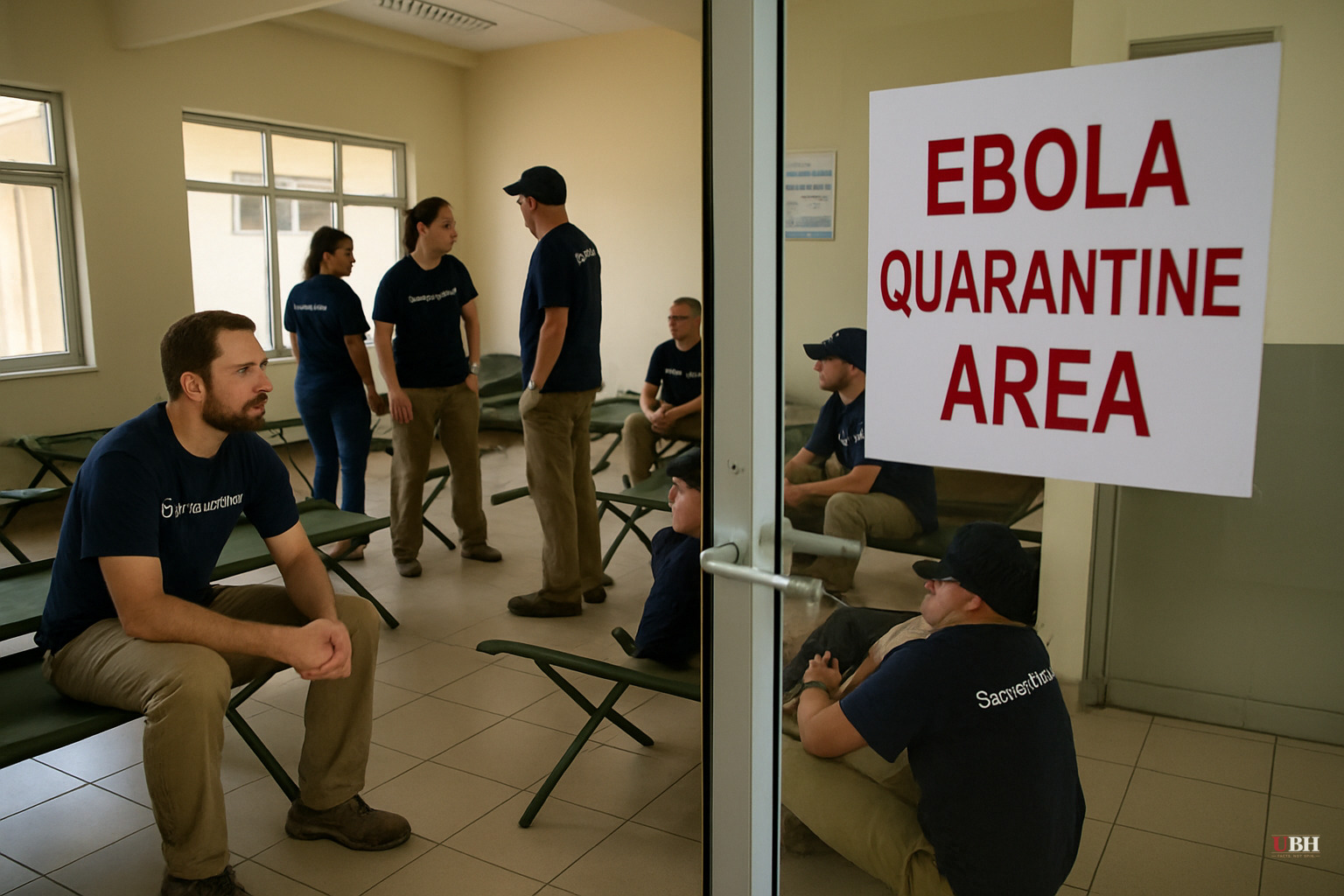
Since the U.S. State Department's $800 million emergency funding request for the Nanyuki facility stalled in Congress amid the ongoing Kenyan court battle, the first real-world test of the policy has arrived. Seven Americans are now inside the disputed bio-isolation center, becoming the first occupants of a facility that a Kenyan court has ordered halted.
Franklin Graham, president and CEO of Samaritan's Purse, confirmed to Reuters that seven members of the group's Disaster Assistance Response Team are quarantined at the site. "None of them have any symptoms, but they are being quarantined by the Kenyan government for 21 days," Graham said.
The workers arrived at the facility inside Kenya's Laikipia Air Base in Nanyuki on Monday, according to a source familiar with the matter who spoke to Reuters on condition of anonymity. They are sleeping in army cots in tents. Some had treated Ebola patients directly at Samaritan's Purse treatment centers in the Democratic Republic of Congo. Others worked construction or logistics roles with no direct contact with the sick. The source said there is "one potential high-risk exposure" among the group, and that person's health is being monitored.
The Policy Behind the Quarantine
The trigger is a new U.S. travel rule requiring American citizens returning from DRC, where an Ebola outbreak is ongoing, to spend 21 days in a third country before reentering the United States. Uganda is also covered by the restriction. Kenya's Nanyuki site, a 50-bed unit built on Kenyan military land, was designed specifically to hold asymptomatic Americans who may have been exposed.
A U.S. State Department official told Reuters the group "voluntarily moved to the Kenya facility for precautionary monitoring and isolation" and that Kenyan authorities "authorized their movement into the facility under the observation of U.S. Public Health Service clinicians." The official called it a decision made "strictly out of an abundance of caution."
That framing matters. Nobody in this group is confirmed infected. This is a quarantine of people who worked near a deadly outbreak, not a treatment of active cases. The U.S. Public Health Service has clinicians on-site monitoring them directly, not just relying on Kenyan authorities.
A Facility Still Fighting for Its Legal Life
The facility these seven Americans are living in right now is the subject of an active legal fight in Kenya. The High Court ordered construction halted pending a case filed by the Katiba Institute, a Kenyan legal advocacy group. Kenya's health minister was found in contempt of court last month for continuing work after being ordered to stop. He then announced an immediate halt.
But construction continued anyway, according to U.S. officials and satellite imagery reviewed by Reuters. A Kenyan official was held in contempt for defying a court order, publicly announced compliance, and the building kept going up regardless.
Kenyan health ministry officials did not respond to Reuters' calls or requests for comment on the Americans' arrival. A senior Kenyan foreign ministry official said they had no information on the move at all. This represents either a genuine communication gap inside the Kenyan government or a deliberate dodge, and it raises questions about a project already accused of running around its own courts.
The opposition inside Kenya isn't abstract outrage. Kenyans have protested the facility because they see their country being used to absorb a health risk that originated with American aid workers going into a foreign outbreak zone. That's a fair grievance to state plainly: a sovereign nation's military base is hosting foreign nationals with potential exposure to a hemorrhagic fever, over the objection of its own courts, while the American government pushes for the site to expand.
At the same time, the alternative isn't obviously better. If asymptomatic Americans exposed to Ebola simply flew straight home, that's its own risk calculus, and it's the one the Trump administration's new policy was built to avoid. Whether a third-country quarantine facility built on disputed legal ground is the right way to manage that risk is exactly the question Kenya's courts are trying to answer.
What Happens Next
The $800 million in emergency Ebola-response funding, part of a larger $1.4 billion package before Congress, remains unresolved. So does the Katiba Institute's underlying case. Neither has been decided.
The seven Samaritan's Purse workers are set to remain in quarantine for the full 21 days under U.S. Public Health Service observation. Whether Kenya's courts rule the facility illegal before that window closes, and what happens to the people inside it if they do, is still an open question nobody in either government has answered on the record.
Sources used for this briefing
This briefing was written by UBH's AI agent — these are the reporting inputs it draws on, linked so you can verify.


