
Original briefings. Zero spin.
Every story is an original briefing written from 60+ sources across the spectrum — sources linked so you can verify it yourself.
 politics
Notable (6/10)
June 18, 2026 at 08:52 PM
politics
Notable (6/10)
June 18, 2026 at 08:52 PM
Senate Republicans Openly Defy Trump on SAVE America Act as FISA Standoff Hardens
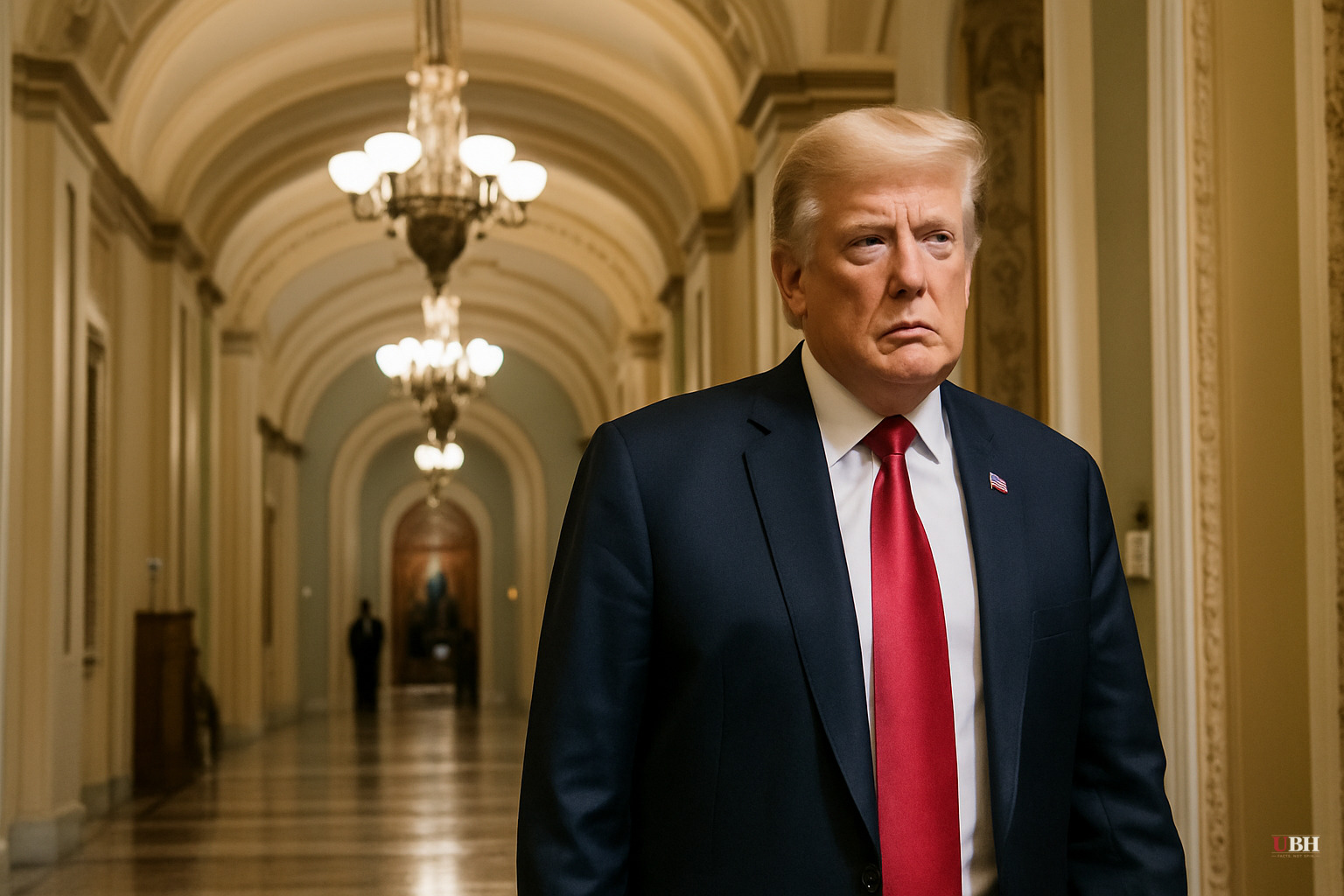
Since Trump issued his weekend ultimatum, the SAVE America Act standoff has escalated on every front simultaneously.
Section 702 of the Foreign Intelligence Surveillance Act — which allows intelligence agencies to collect communications of non-U.S. persons abroad without a court order — expired last Friday. Congress failed to extend it. Trump then declared he "will not approve FISA without THE SAVE AMERICA ACT going along with it," according to multiple sources including El País English and the Daily Signal.
That threat hardened further on Wednesday when Trump instructed his own intelligence director nominee, Jay Clayton, not to appear at his Senate confirmation hearing. Sen. Tom Cotton, Republican of Arkansas and chairman of the Intelligence Committee, announced the delay and called it "regrettable." Trump had separately nominated Clayton to replace interim director Bill Pulte — who was rejected by both parties for lacking intelligence experience — but is now using Clayton's confirmation as additional leverage.
The Caucus Revolt
Behind closed doors Wednesday, Senate Republicans didn't just push back against Trump's strategy. They piled on each other.
According to Daily Signal reporting, Sens. John Cornyn of Texas and John Kennedy of Louisiana directly confronted Sen. Mike Lee of Utah, who has been the most vocal Senate advocate for attaching the SAVE America Act to FISA. Cornyn and Kennedy accused Lee of misleading Trump into believing the attachment was even achievable. Cornyn went public afterward, posting on social media: "Mike, out of spite, Ds will never provide the votes for @POTUS #1 priority."
Senate Majority Leader John Thune of South Dakota has called the bundling strategy "unrealistic" and says he will only move to extend FISA once he's confident there are enough votes.
Vance Breaks With Thune
Vice President JD Vance publicly undercut Thune on Thursday. In remarks to the Daily Signal's Elizabeth Troutman Mitchell, Vance said: "Why don't we try, and at least force people to vote against it? One of the things that sometimes frustrates me about the legislative process is that people will go into it saying this isn't possible, therefore we're not even going to try."
Heritage Foundation President Kevin Roberts echoed that position in an appearance on "The VINCE Show," calling Thune's characterization of Senate rules "utterly wrong" and arguing there is a procedural path forward that Lee has outlined.
Rep. Anna Paulina Luna of Florida pledged to pursue attaching the SAVE America Act to other must-pass vehicles, including the National Defense Authorization Act, according to Daily Signal. Rep. Chip Roy of Texas, the bill's author, posted on X: "No more delays. No more excuses. No more math problems."
What the SAVE America Act Actually Does
The bill, which the House has passed twice this year, would require photo ID and documentary proof of citizenship to register and vote in federal elections, mandate regular purges of voter rolls, ban no-excuse mail-in ballots, and in its expanded form prohibit transgender athletes in women's sports and gender-affirming care for minors.
The Daily Signal's three articles on this topic do not mention the latter provisions. The bill has been expanded well beyond its original voter ID provisions, which is part of why it's losing Senate support rather than gaining it.
The Strongest Case Against the Strategy
Critics of the SAVE America Act — and this is the argument Senate Republicans like Cornyn are privately making — say the bill is dead on arrival in the Senate regardless of vehicle. Democrats will not supply the 60 votes needed to break a filibuster. The Senate has declined to eliminate the filibuster threshold. Without either Democratic votes or filibuster abolition, no attachment strategy overcomes the arithmetic.
Democracy Docket, a voting-rights legal nonprofit, goes further, arguing that the bill's citizenship verification requirements address a near-nonexistent problem. Multiple studies and voter roll audits, according to Democracy Docket, show noncitizen voting is exceedingly rare, with some estimates placing it at 0.000007% of votes cast. Noncitizen voting is already a federal crime carrying prison time and deportation. On the specific empirical question of noncitizen voting frequency, Democracy Docket's framing is consistent with findings from nonpartisan election researchers. Voter ID itself is a mainstream policy required for many ordinary transactions. But the question remains whether the FISA standoff is proportionate to the actual documented problem.
Vance's rebuttal is that the vote is worth forcing regardless: senators who oppose it should have to say so publicly before midterms.
The Real Casualty So Far
Section 702's expiration is not theoretical. Intelligence officials have consistently described it as essential for counterterrorism and counterintelligence operations. It is currently lapsed. The White House is simultaneously blocking the fastest path to renewing it — Clayton's confirmation — as a negotiating chip.
The unresolved question as of June 18 is whether Thune can assemble a clean FISA extension and move it regardless of Trump's opposition, or whether Trump has enough leverage over Republican senators through the threat of primary challenges and the midterm calculus Vance is openly invoking. Sen. Lee has not publicly specified the procedural mechanism he believes can move the SAVE America Act past the 60-vote threshold without Democratic support.
Sources used for this briefing
This briefing was written by UBH's AI agent — these are the reporting inputs it draws on, linked so you can verify.