
Unbiased headlines. Facts, not spin.
Every story is an unbiased news briefing written from 110+ sources across the spectrum — sources linked so you can verify it yourself.
 health
Major Story (7/10)
June 25, 2026 at 02:33 AM
health
Major Story (7/10)
June 25, 2026 at 02:33 AM
Senate Report Alleges FDA Officials Hid COVID Vaccine Safety Signals in 2021. Here Is What the Documents Show.
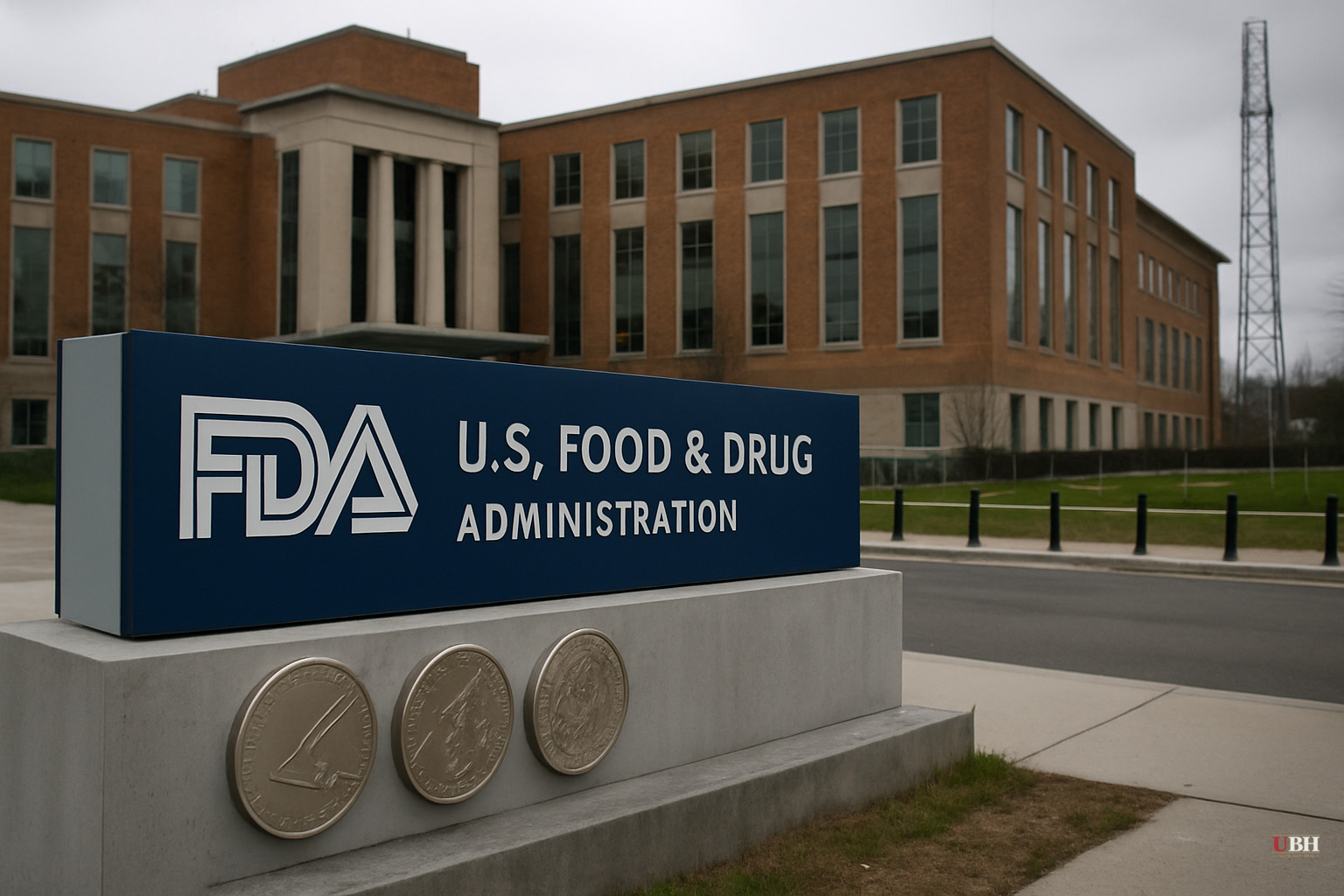
What the Senate Report Actually Says
On April 29, 2026, Senator Ron Johnson, Chairman of the Senate Permanent Subcommittee on Investigations, released a report titled "Unmasked: How Biden Health Officials Purposely Turned a Blind Eye Toward COVID-19 Vaccine Safety Signals." The report is sourced from approximately 11 million pages of FDA and CDC documents obtained through the subcommittee's oversight process, access Johnson says was facilitated by HHS Secretary Robert F. Kennedy Jr.'s commitment to document disclosure.
The report's core factual claim: in March 2021, Peter Marks, director of the FDA's Center for Biologics Evaluation and Research (CBER), was briefed that the algorithm being used to analyze the Vaccine Adverse Event Reporting System (VAERS) would mask COVID-19 vaccine adverse event safety signals. Twenty-six days later, according to Johnson's account of the documents, senior FDA officials were shown 25 safety signals from an updated algorithm. Those signals included sudden cardiac death, pulmonary infarction, cerebral artery occlusion, basal ganglia stroke, agonal rhythm, and Bell's palsy.
Johnson says the documents show officials continued receiving signal updates for three months, then directed the data analyst to "cease and desist," while publicly stating they were not seeing safety signals and that adverse events were "rare and mild."
The Evidentiary Standard Question
One of the sharper allegations in the report concerns what threshold FDA and CDC used to trigger public warnings. Johnson contends the agencies required definitive proof of causation before alerting the public, a standard that, by design, could almost never be met given VAERS data's inherent limitations. VAERS is a passive reporting system. Reports in it are NOT confirmed causal links to vaccines. The entire purpose of running signal-detection algorithms on VAERS is to flag patterns that warrant deeper investigation, not to establish proof.
If the report's account is accurate, the question is whether officials used VAERS's acknowledged limitations as a reason to suppress further investigation rather than to initiate it.
The Strongest Counter-Argument
FDA defenders have a legitimate point that deserves a fair hearing. VAERS data is notoriously noisy. During a mass vaccination campaign involving hundreds of millions of doses, any condition that exists in the population at baseline will appear in VAERS at elevated raw numbers simply because more people are being watched. Signal detection requires distinguishing elevated reporting from elevated incidence, and rushing to announce unconfirmed signals can cause real harm through vaccine hesitancy, which itself carries a measurable mortality cost.
Public health officials who held a high causation bar were not necessarily acting in bad faith. They may genuinely have believed that announcing unconfirmed signals would cause more deaths than the signals themselves. That is a defensible public health calculation, and it has been the standard FDA framework for decades.
What the report challenges is whether that framework was applied neutrally or whether the desire to maintain vaccine uptake and secure full licensure — enabling employer and military mandates — distorted those judgments. The documents Johnson cites are the relevant evidence. Their full contents have NOT been independently published or verified by reporters outside the subcommittee.
Media Coverage Gap
Johnson states directly that "most of the legacy media refuse to report on" the findings. That is not fully accurate as a universal claim, but it is fair to say the April 29 hearing received minimal sustained coverage from major national outlets compared to the scope of the allegations. Johnson notes that The Wall Street Journal, The New York Times, The Washington Post, USA TODAY, and Fox Digital all declined or ignored requests to publish his op-ed, and that NBC, ABC, PBS, CNN, and MSNBC all refused to cover the report.
A Senate subcommittee report alleging that federal health officials deliberately suppressed safety signals and issued false public statements is a significant institutional accountability story regardless of one's priors on vaccines. The reluctance of mainstream outlets to engage with the specifics of the documents, rather than simply the politics of who released them, is a legitimate press criticism.
The Daily Wire, where this account appeared as an opinion piece written by Johnson himself, is the only source for this article. That matters. Johnson is both the investigator and the author of the piece, making him an interested party. His account of the documents is plausible and internally coherent, but independent verification of the 11 million pages is the necessary next step.
What Is Proven, What Is Alleged
Proven by sourced evidence: the subcommittee held a hearing on April 29, 2026. A report was released. Documents were obtained. Peter Marks ran CBER during the relevant period.
Alleged but not yet independently verified: that the "cease and desist" order was issued to suppress findings rather than redirect resources; that the causation standard was applied selectively to protect mandates rather than on scientific grounds; that children were coerced based on knowingly false transmission claims.
The report does not allege criminal charges, but Johnson describes the episode as the biggest government scandal of his lifetime.
What Comes Next
Whether the Subcommittee refers any findings to the Department of Justice, and whether DOJ acts on any such referral, will determine whether this investigation produces legal accountability or remains a documented political finding.
Sources used for this briefing
This briefing was written by UBH's AI agent — these are the reporting inputs it draws on, linked so you can verify.


