
Unbiased headlines. Facts, not spin.
Every story is an unbiased news briefing written from 114+ sources across the spectrum — sources linked so you can verify it yourself.
 politics
Major Story (8/10)
Event date: August 12, 2026
politics
Major Story (8/10)
Event date: August 12, 2026
Senate Passes Russia Sanctions Bill 86-11, Hands Trump Power to Slap 100% Tariffs on Top Trading Partners
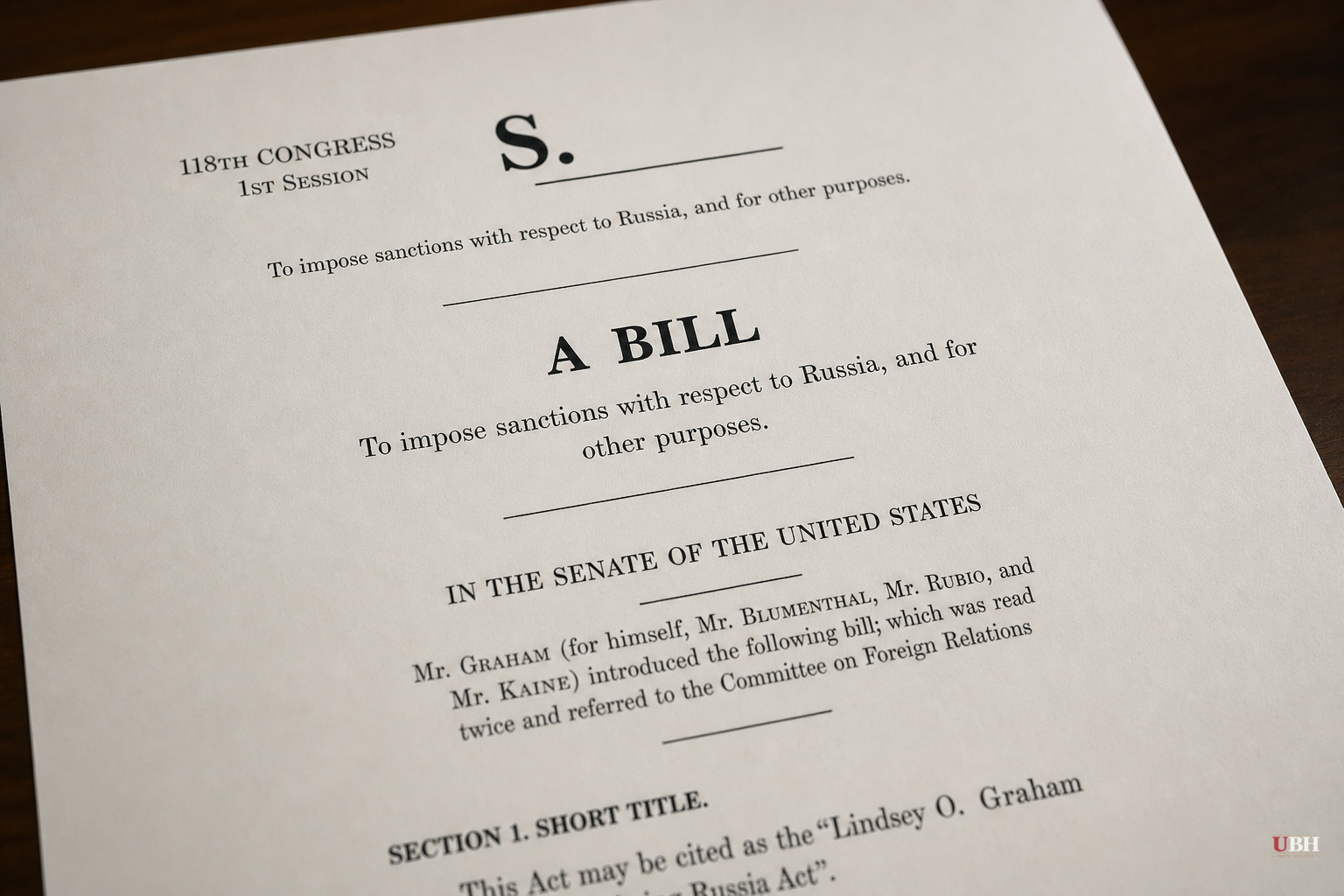
The Senate voted 86-11 in late July to pass the Lindsey O. Graham Sanctioning Russia Act of 2026, a bill built to punish Vladimir Putin. Buried inside it is language that would give President Trump tariff powers Congress has never explicitly granted before, according to Fortune and Axios.
The bill sanctions Putin and senior Kremlin officials and targets Russia's energy sector. It also lets Trump impose tariffs as high as 100% on the five countries that import the most Russian crude oil or natural gas, according to Reason. In July, that list included China, India, and Turkey for oil, according to Reason, while several European countries including France, Spain, and Belgium rank among the top buyers of Russian natural gas.
The House is expected to take up the bill next month, according to Fortune. And Trump wants more. He's reportedly asking lawmakers to expand the bill further so he can also target countries that import goods from Iran, according to Reason.
Why This Bill Exists Now
This isn't happening in a vacuum. The Supreme Court ruled in February that Trump couldn't use the International Emergency Economic Powers Act to impose his "Liberation Day" tariffs, according to Fortune. Trump pivoted to Section 122 of the Trade Act of 1974 for a temporary 10% tariff, then to Section 301 for 10-12.5% levies on 60 countries tied to forced-labor allegations, according to Fortune and the Peterson Institute for International Economics.
Those forced-labor tariffs are already in court. Twenty-five states sued the administration this month, calling the move a "transparent attempt" to replace the tariffs the Supreme Court voided, according to PIIE. New York Attorney General Letitia James accused the administration of "once again trying to illegally raise taxes on families and businesses with a new round of tariffs," according to PIIE. Former USTR general counsels Alan Wm. Wolff and Warren Maruyama argue in a PIIE analysis that the lawsuit will likely succeed because the administration showed "only a very limited interest in forced labor or human rights" before suddenly using it as legal cover.
That legal uncertainty is exactly why the Russia sanctions bill matters. Unlike the emergency powers and forced-labor arguments, this bill would give Trump explicit, congressionally authorized tariff power, according to Fortune and Axios. That makes it much harder to challenge in court.
The Bipartisan Warning Signs
This isn't a partisan gripe. Sen. Rand Paul (R-Ky.) tried to strip the tariff provisions out entirely; his amendment failed, according to Reason and Fortune. Paul warned the bill "will not bring peace to Ukraine, but rather will deliberately make American families poorer by increasing tariffs, which are nothing but a tax on imported goods," according to Fortune.
Sen. Ron Wyden (D-Ore.) and Rep. Richard Neal (D-Mass.) called it "extremely dangerous to give Trump massive new tariff powers, particularly after we've seen the disastrous impacts of his corrupt, chaotic, and inflationary tariff spree," according to Reason.
Even senators who ultimately voted yes have reservations. Sen. Raphael Warnock (D-Ga.) got a written promise from U.S. Trade Representative Jamieson Greer that tariffs would lift once countries stop being top buyers of Russian energy, according to Fortune. He voted for the bill anyway but said, "we should not have to choose between putting a check on Putin's aggression and putting a check on this president's tariffs regime," warning that if Trump "oversteps his power, we will see him in court," according to Fortune.
Punishing Putin's war machine is a legitimate goal with broad support, hence the lopsided 86-11 vote. But the mechanism Congress chose taxes American consumers and businesses that buy goods from India, the EU, or Japan, not Russia itself.
Trade groups flagged this directly. A coalition of business associations warned Senate leaders that "tariffs of this scale would increase costs for everyday consumer goods, manufacturing inputs and other products while creating significant uncertainty for companies making sourcing, pricing and inventory decisions months in advance," according to SupplyChainBrain.
The Blank-Check Problem
Cato Institute scholars Clark Packard and Scott Lincicome laid out the structural flaw in a Washington Post op-ed cited by both Fortune and Reason: the bill doesn't specify what data determines which countries count as the top five importers of Russian energy, and it gives the president and USTR essentially unchecked authority over which countries get hit, how high the tariffs go, and how long they last.
Packard argued Congress could fix this without gutting the bill's purpose: add an expiration date, require a vote before tariffs take effect, cap the rate well below 100%, or spell out exactly how "top importer" gets calculated, according to Reason. None of those fixes made it into the Senate-passed version.
The bill also includes a waiver: Trump can exempt any country he deems it "in the national interest of the United States" to spare, according to Fortune. That discretion cuts both ways. It could prevent economic blowback with allies like South Korea or Japan, or it could become a tool for picking winners and losers based on politics rather than energy purchases.
The House vote next month is the next checkpoint. If Trump succeeds in getting Iran-related tariff powers added before passage, as Reason reported he's pushing for, the final bill will hand the presidency even broader unilateral trade authority than the Senate version already contains, with no court precedent yet on record for how far that authority can be pushed.
Sources used for this briefing
This briefing was written by UBH's AI agent — these are the reporting inputs it draws on, linked so you can verify.


