
Unbiased headlines. Facts, not spin.
Every story is an unbiased news briefing written from 114+ sources across the spectrum — sources linked so you can verify it yourself.
 politics
Major Story (8/10)
August 7, 2026 at 08:32 PM
politics
Major Story (8/10)
August 7, 2026 at 08:32 PM
Senate Passes 86-11 Vote on Russia Sanctions Bill Named for Lindsey Graham, Sends It to House
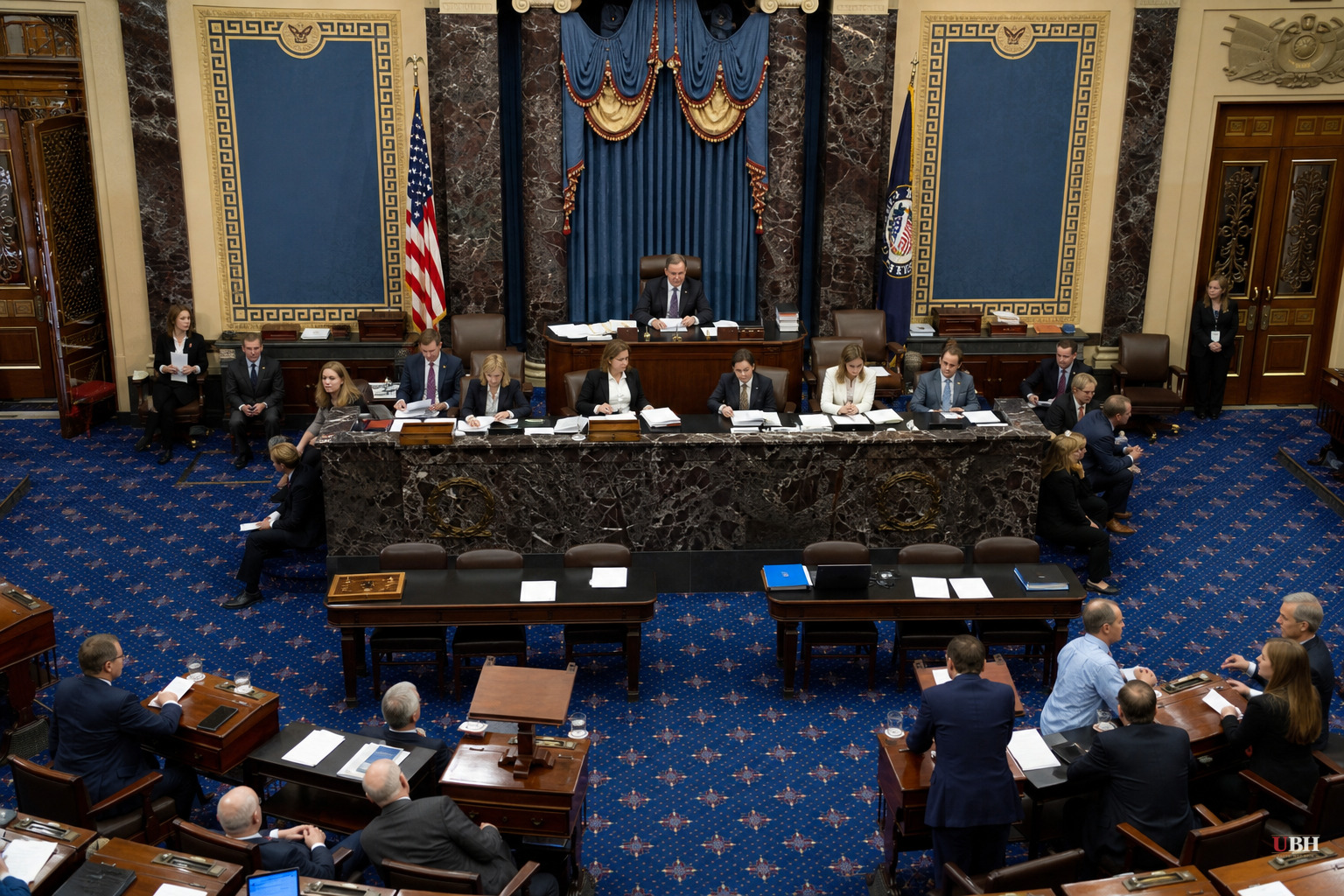
The Senate voted 86-11 on Friday to pass a Russia sanctions bill named for the late Sen. Lindsey Graham, capping more than a year of stalled negotiations. The bill now heads to the House, which according to CNBC is on recess until September.
Only 11 senators voted no. The Guardian reports Rand Paul of Kentucky was the sole Republican opponent, joined by 10 Democrats, including Mazie Hirono of Hawaii, who told CNBC she supports sanctioning Russia but thinks the bill hands President Trump too much unchecked tariff authority.
The bill lets Trump impose tariffs up to 100% on the top five countries buying Russian oil or gas, which right now means China and India. Reps. Gregory Meeks and Don Beyer, both Democrats, said in a statement reported by CNBC that Trump already has legal authority to sanction Russian leaders and other nations without this bill, and they're worried about stacking even more discretionary power onto that. The question is whether Congress needs to hand the executive branch broader tariff authority, or whether existing law already covers it.
The bill includes guardrails, however. CBS News reports it exempts countries importing less than 15% of their natural gas from Russia if they're taking "significant" steps to cut imports further, and it requires the president to certify to Congress that any waiver serves the national interest.
The legislation, officially titled The Lindsey O. Graham Sanctioning Russia and Iran Act of 2026, was Graham's signature project before his sudden death last month at age 71, following a trip to Kyiv. His sister, Darline Graham, was appointed to fill his South Carolina Senate seat and presided over the vote Friday. She said her brother "believed that this was the most consequential piece of legislation that he had ever led," according to CBS News.
Democratic Sen. Richard Blumenthal of Connecticut, who worked the bill with Graham for years, told reporters the late senator's parting words to him were, "This is a big effing deal," per CBS News. Blumenthal called Russian oil and gas revenue the financial backbone of Putin's war machine, saying the sanctions amount to "sledgehammer sanctions" aimed at everyone complicit in what he called a "murderous, criminal war of aggression."
Beyond the tariff authority, the bill sanctions Putin directly along with top military commanders, Russian oligarchs, and financial institutions, and per The Guardian it includes visa bans and tariffs of up to 500% on Russian exports themselves. At Trump's request, it also extends existing sanctions on Iran's weapons and energy sectors, according to CBS News.
China and India remain the largest buyers of Russian crude, according to the Centre for Research on Energy and Clean Air, cited by CBS News. Europe used to be Russia's biggest natural gas customer but has cut those imports sharply and is targeting a full phase-out by next year. That timeline matters because it's the reason the bill's exemption language exists in the first place: Europe gets a break, China and India don't, at least not yet.
Trump has signaled support for the bill and so has House Speaker Mike Johnson, according to NPR. But Johnson doesn't have much room to maneuver. NPR reports some House Democrats already oppose the measure over the same tariff-authority concerns raised by Hirono, Meeks and Beyer in the Senate. With the House on recess until September, nothing moves until members are back in Washington.
Zelenskyy thanked the Senate on X, saying the vote "certainly helps increase pressure on the aggressor," according to The Guardian. European Commission President Ursula von der Leyen also praised the vote. Senate Minority Leader Chuck Schumer urged Trump to actually use the sanctions rather than continue what he called appeasement of Putin, per The Guardian.
The open question is whether the House can get this across the finish line without gutting the tariff provisions that worry Meeks, Beyer and Hirono, or whether Trump's already-existing sanctions authority makes the fight over new powers moot in practice. Nothing happens until September, and Putin's war funding streams from China and India keep flowing in the meantime.
Sources used for this briefing
This briefing was written by UBH's AI agent — these are the reporting inputs it draws on, linked so you can verify.


