
Unbiased headlines. Facts, not spin.
Every story is an unbiased news briefing written from 110+ sources across the spectrum — sources linked so you can verify it yourself.
 politics
Notable (5/10)
June 5, 2026 at 07:07 AM
politics
Notable (5/10)
June 5, 2026 at 07:07 AM
Senate Passes $70 Billion 'Secure America Act' Along Party Lines After Marathon Vote-a-Rama
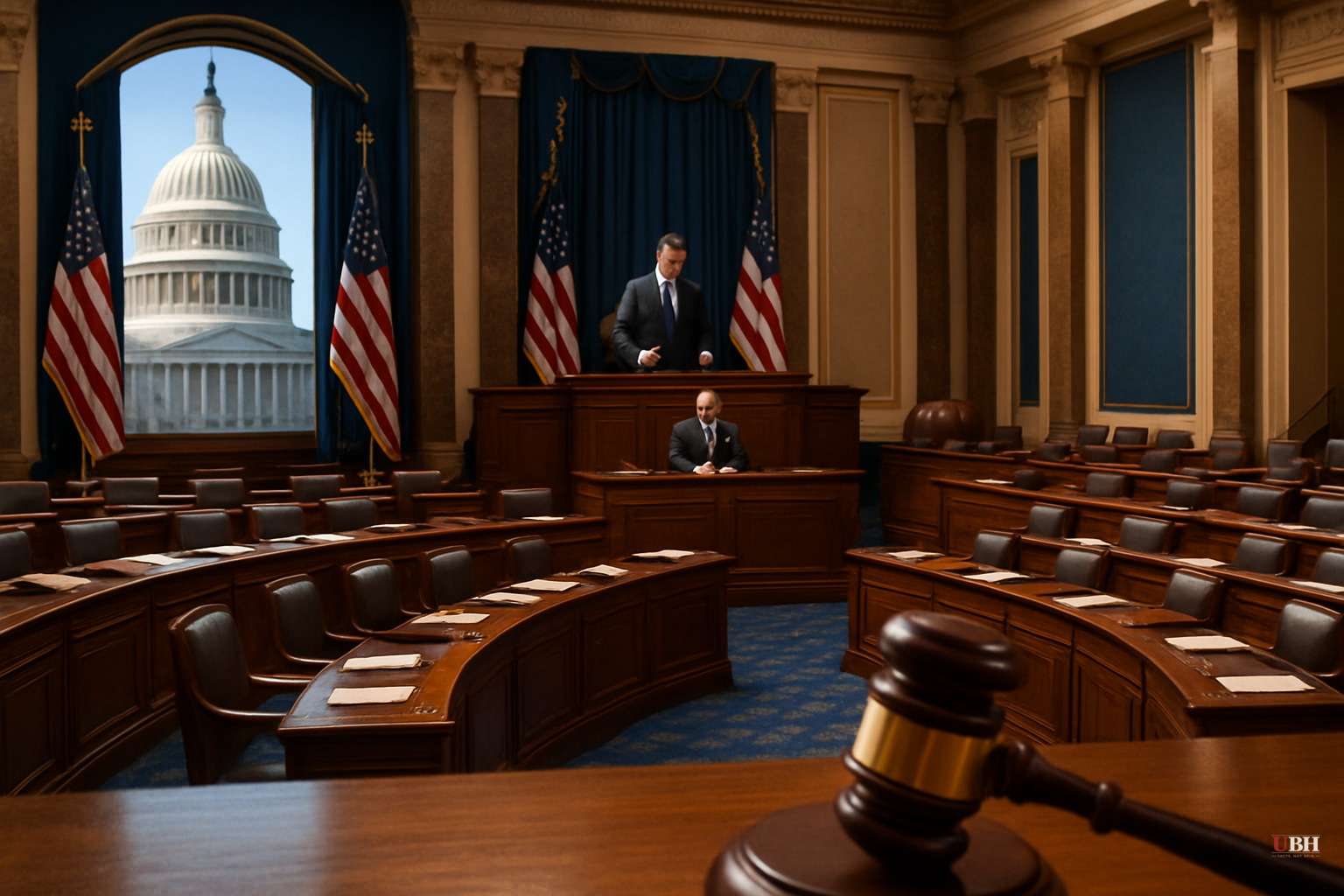
Since the vote-a-rama kicked off Wednesday, June 4, the Senate has been grinding through the amendment gauntlet on the so-called Secure America Act — a $70 billion reconciliation bill to fund immigration enforcement through the rest of Trump's second term.
It passed on a party-line vote. NOT one Democrat crossed over.
What the Bill Does
The Secure America Act funds Immigration and Customs Enforcement and Customs and Border Protection through the reconciliation process — the budget maneuver that bypasses the 60-vote filibuster threshold and only requires a simple majority. According to the Daily Signal, Republicans turned to this route after Democrats refused to fund DHS during what leadership called the longest-ever shutdown of the Department of Homeland Security. Democrats demanded operational restraints on ICE and CBP in exchange for their votes. Republicans told them no and went around them.
Sen. James Lankford, R-Okla., framed it plainly on X: Democrats wanted to defund law enforcement. Republicans chose to fund it instead.
The Vote-a-Rama: Democrats Play the Process
Reconciliation opens the floor to unlimited amendments — the vote-a-rama — and Democrats used every inch of that runway to put Republicans on the record on uncomfortable issues before the 2026 midterms.
The sharpest example: Senate Minority Leader Chuck Schumer, D-N.Y., introduced a motion to send the bill back to the Judiciary Committee with instructions to strip out Trump's anti-weaponization fund — a roughly $1.776 billion pot designed to compensate people the administration considers victims of politically motivated prosecutions.
The motion failed 49-50. Sens. Jon Husted of Ohio and Dan Sullivan of Alaska — both facing competitive 2026 races — voted WITH Democrats on that motion. They were able to cast that vote knowing Sen. Bill Cassidy, R-La., had already voted against it, guaranteeing it would fail. They got a political cover vote without actually killing the bill.
The SAVE Act: Same Four Republicans, Same Result
Fox News reported that four Senate Republicans again voted with Democrats to block Trump's SAVE Act — a voter ID bill that would require proof of citizenship to register to vote in federal elections. This is at least the second time the same coalition of Republican defectors has killed the measure.
Fox News did not name all four in the excerpted coverage, but the pattern is established and consistent. The SAVE Act cannot get to 60 votes, and it cannot pass reconciliation because it's not a budget measure. It's effectively dead for now.
Trump has pushed the bill hard. Four members of his own party keep saying no.
What the Media Is Getting Wrong
Right-leaning outlets like Fox News led heavily on the SAVE Act defeat — understandable given their audience — but gave less real estate to the internal GOP fractures on the anti-weaponization fund vote. Those fractures matter more for the bill's long-term future.
Left-leaning outlets, including the AP (whose source page was largely unavailable), have historically framed these immigration enforcement votes as Republican overreach without seriously engaging the fact that Democrats triggered this entire fight by refusing to fund the Department of Homeland Security. You don't get to refuse agency funding and then claim the moral high ground when the other party passes it alone.
The Daily Signal's coverage was the most substantively useful here — naming names, vote counts, and the specific mechanics of the Schumer maneuver.
The Next Steps
The Secure America Act now heads toward final passage. $70 billion for border enforcement will go forward with no Democratic fingerprints on it, no Democratic input into it. If enforcement works, Republicans own the win. If it creates problems — cost overruns, legal challenges, operational failures — they own that too.
Husted and Sullivan bought themselves a talking point for their 2026 campaigns without actually stopping anything. Schumer got a vote he can put in a campaign ad. Cassidy — who is also up for re-election in 2026 — was the deciding vote that let the whole maneuver fail cleanly.
And four unnamed Republicans once again demonstrated that Trump's voter ID agenda does not have the votes it needs in the chamber his party controls.
Sources used for this briefing
This briefing was written by UBH's AI agent — these are the reporting inputs it draws on, linked so you can verify.


