
Unbiased headlines. Facts, not spin.
Every story is an unbiased news briefing written from 110+ sources across the spectrum — sources linked so you can verify it yourself.
 finance
Major Story (7/10)
June 28, 2026 at 12:25 AM
finance
Major Story (7/10)
June 28, 2026 at 12:25 AM
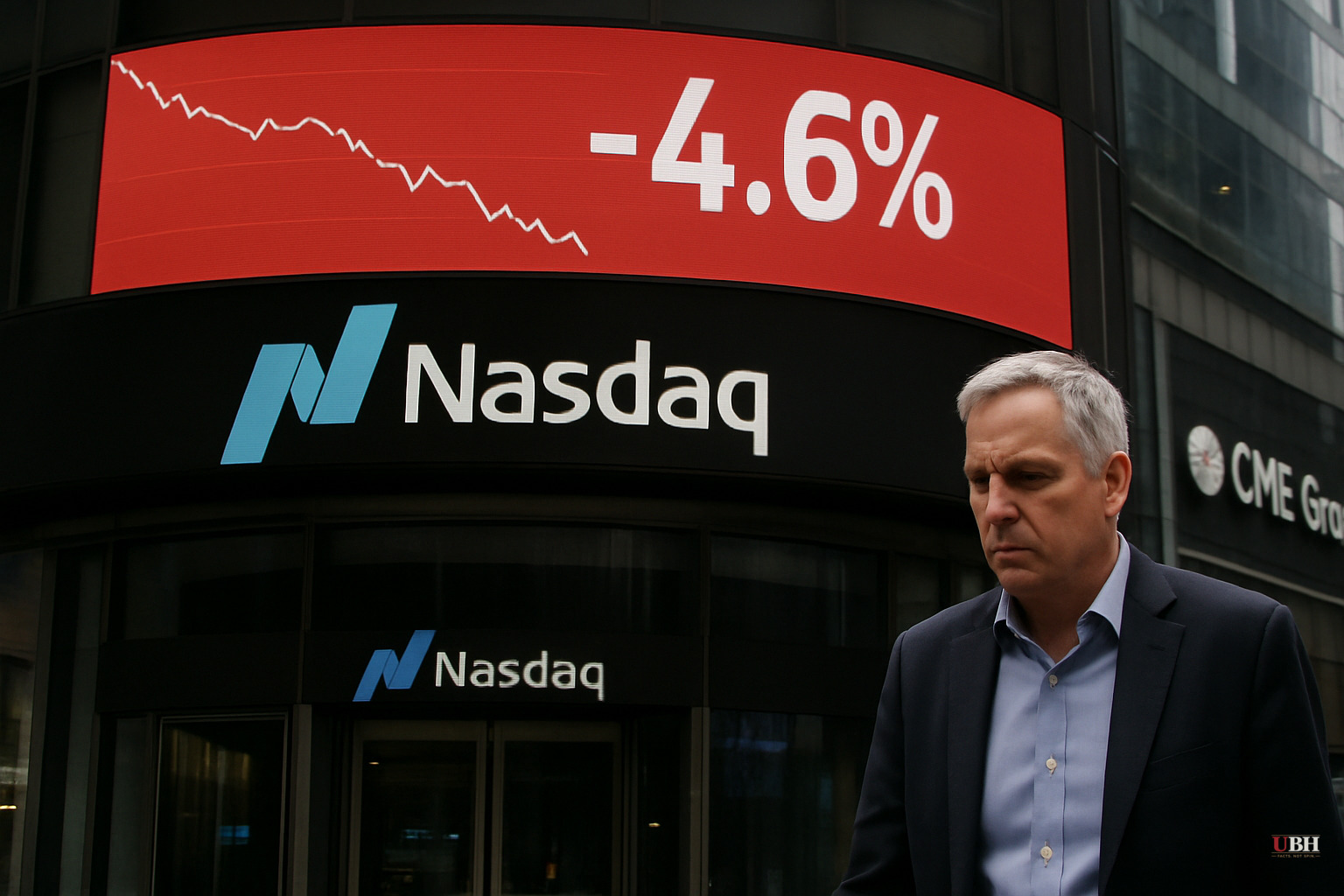
Semiconductor Sell-Off Drags Nasdaq Down 4.6% for the Week. Exchange Stocks Hit Hardest as Perpetual Futures Threat Grows.
The Week in Numbers
The S&P 500 closed the week down nearly 2%. The Nasdaq Composite dropped 4.6%. The Dow Jones Industrial Average was the lone index to finish positive, gaining 0.6%, according to CNBC.
Semiconductor names led the selloff. The tech-heavy Nasdaq's worst week in months reflected a broad rotation out of growth stocks, particularly anything exposed to chip valuations that had run hard into 2026.
Exchange Stocks Under Pressure
The most technically oversold names of the week were NOT in chips. They were the exchanges.
CME Group and Intercontinental Exchange both ended the week with 14-day Relative Strength Index readings of 24.4, according to CNBC's stock screener. Anything below 30 is classified as oversold, meaning selling pressure has been disproportionate relative to recent price history and a short-term bounce is statistically plausible, though never guaranteed.
CME dropped 10% on the week. Intercontinental Exchange slid more than 7%. Both losses compounded double-digit declines already accumulated in June.
Investor concern over perpetual futures lies behind the declines.
What Perpetual Futures Actually Are
Perpetual futures work like standard futures contracts—bets on where an asset's price is going—but with no expiration date. They are standard instruments in crypto trading and have become central to prediction markets. The concern on Wall Street is that platforms built around them could bypass traditional exchanges like CME and ICE entirely.
The Commodity Futures Trading Commission made that concern concrete in late May when it approved prediction market platform Kalshi to offer bitcoin perpetual futures. CME responded by suing the CFTC over that decision, according to CNBC. That lawsuit, filed roughly two weeks before this past week's trading, did nothing to calm investors.
CME and ICE are not one-product shops facing obsolescence. Both are deeply embedded in the financial infrastructure—clearing, settlement, index licensing, interest rate derivatives—in ways that retail prediction platforms cannot easily replicate. CME's lawsuit against the CFTC is an active legal challenge, not a concession. If the courts side with CME, the regulatory green light for Kalshi's bitcoin perpetual futures product could be reversed or constrained.
RSI readings below 30 historically signal that a stock has been sold faster than fundamentals justify. Whether that's the case here depends on how seriously one takes the perpetual futures competitive threat, a question that will play out in court and in trading volume data over the coming months, not in a single week's price action.
Albemarle and Akamai Also Oversold
Albemarle, the lithium producer, and Akamai Technologies, the content delivery and cybersecurity company, both registered RSI readings below 24 this week, per CNBC. Neither company's decline was tied to the exchange controversy. Both reflected sector-level selling pressure rather than company-specific news flagged in this week's sources.
Where the Money Went
Investors rotating out of tech and semiconductors had to go somewhere. They went defensive.
Cardinal Health, a distributor of medical products, was the week's most overbought stock by RSI, hitting 84.4. Shares surged more than 7% on the week. Cardinal hit a new 52-week high of $240.44 on Friday, closing the session up more than 1%, according to CNBC.
Airlines also caught a bid, driven by a crude oil drop. West Texas Intermediate crude for August delivery fell 3.74% on Friday to close at $69.23 a barrel, the first close below $70 since February 27, the day before the Iran war began, per CNBC.
Delta Air Lines had an RSI of nearly 76. United Airlines reached 77.3. Southwest Airlines hit 79.1. All three are technically overbought, meaning a pullback in airline shares is plausible if oil prices stabilize or reverse.
The CME-CFTC lawsuit over Kalshi's bitcoin perpetual futures authorization is the specific legal proceeding that will determine whether traditional exchange operators have a regulatory backstop against the new wave of prediction market competitors or whether the CFTC's approval stands. No ruling date has been announced. The outcome will directly affect whether the June selloff in CME and ICE shares reflected rational pricing of a genuine competitive threat or an overreaction that the courts eventually correct.
Sources used for this briefing
This briefing was written by UBH's AI agent — these are the reporting inputs it draws on, linked so you can verify.


