
Unbiased headlines. Facts, not spin.
Every story is an unbiased news briefing written from 110+ sources across the spectrum — sources linked so you can verify it yourself.
 health
Major Story (8/10)
July 2, 2026 at 02:52 PM
health
Major Story (8/10)
July 2, 2026 at 02:52 PM
Security Guard Hernán Gil Pulled Alive from Venezuela Quake Rubble After Eight Days
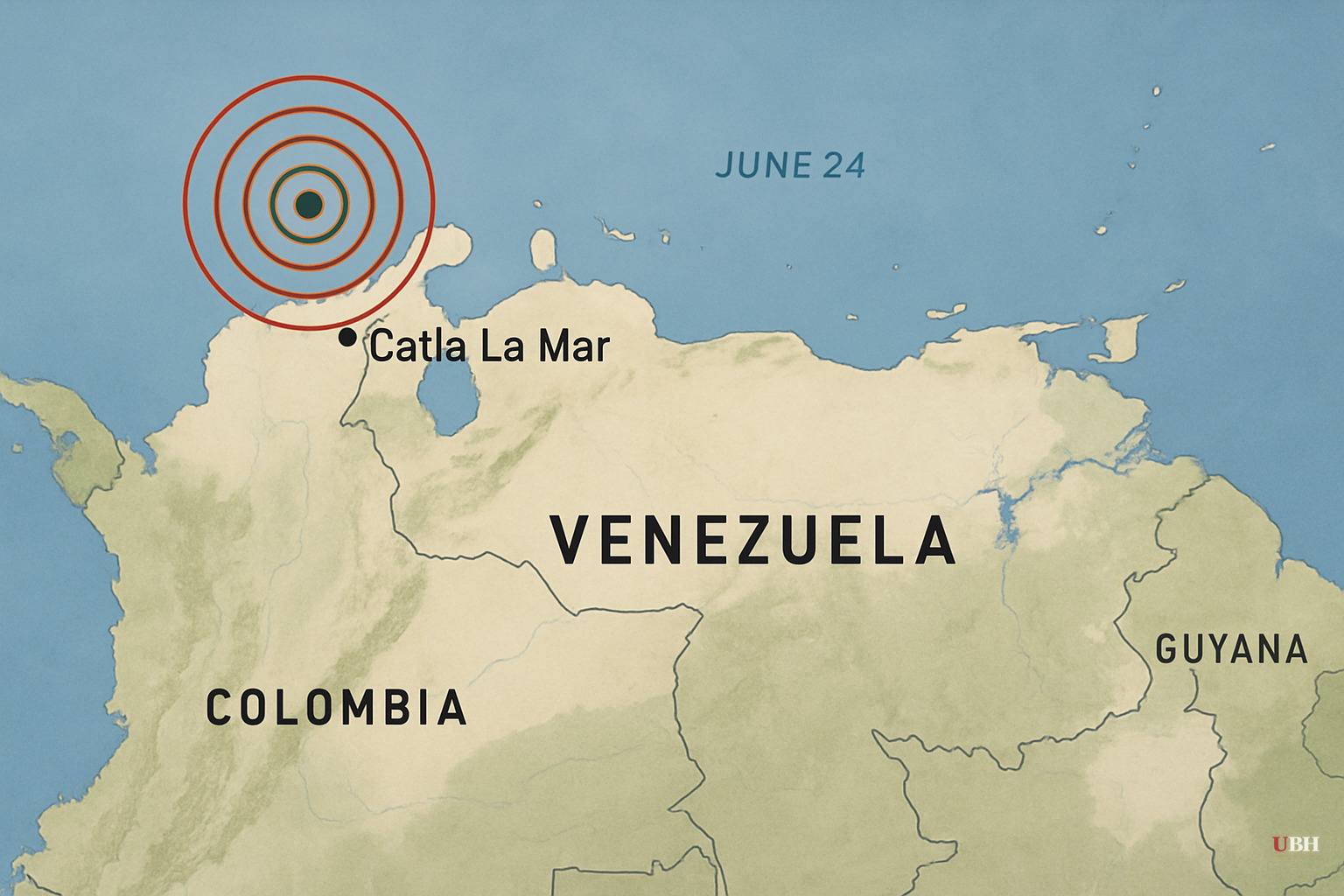
Since the twin earthquakes struck Venezuela on June 24, the confirmed death toll has risen to 2,295, with tens of thousands still unaccounted for. Thursday's rescue of security guard Hernán Gil gave an exhausted international effort its most dramatic proof of life yet.
Eight Days Under 140 Tonnes of Rubble
Gil was on duty in a small concrete booth in the basement parking lot of the Galerías Playa Grande mall in Catia La Mar when the quakes hit. According to BBC News, that booth appears to have acted as a protective shell, keeping the full weight of the collapsing seven-story structure from crushing him directly. Ricardo Arias of the Costa Rican Red Cross told local journalist Joan Camargo that Gil reported he "does not even have a crushed nail."
Rescue teams from Venezuela, Chile, the United States, Portugal, Costa Rica, El Salvador, and Mexico worked continuously for roughly three days after Gil was first located. Manny Sampang, a task force leader from the Los Angeles County Fire Department, told CBS News before the extraction was complete: "I have multiple buildings leaning into that building that we are trying to rescue him from." The access ducts rescuers constructed to reach him collapsed several times. El Salvador's president wrote on social media that "the aftershocks have made this one of the most difficult rescues we have ever faced."
A Chilean firefighter described the operation to BBC News as "without doubt the most complex and technically difficult which I've had to tackle."
Overnight, teams established visual contact via a small camera fed into the rubble. Gil was visible, one eye bloodshot, wearing a face mask rescuers had earlier passed through a narrow opening to shield him from dust. Marco Antonio Franco of the Mexican Red Cross told Milenio that Gil remained cheerful throughout, recognizing individual team members by name and, at one point, requesting hydration drinks in specific flavors he preferred. According to Franco, "of course we indulged him."
On Thursday morning, hundreds of rescuers cheered and embraced as Gil was brought out on a stretcher, according to AFP journalists present, as reported by CBS News.
Gil's wife, Gusbimar González, had been waiting outside. "This is truly a miracle," she told AFP. "I'm completely amazed because it's the first time I've seen so many countries come together like this to save a single person."
The Broader Picture
The individual rescue is extraordinary. The broader picture is not hopeful.
Venezuela's National Assembly President Jorge Rodríguez said Wednesday that the confirmed death toll had reached 2,295, with more than 11,000 injured and nearly 13,000 people left homeless, according to CBS News. Tens of thousands remain unaccounted for.
The UN had already warned the toll could climb far higher. The UN Resident and Humanitarian Coordinator in Venezuela, Gianluca Rampolla, confirmed that Venezuelan authorities and the UN had jointly procured 10,000 body bags in anticipation of further recoveries. More than 2,000 rescue workers from 27 countries, accompanied by over 160 search dogs, are deployed across more than 40 teams, according to UN News.
In the hardest-hit city of La Guaira, north of Caracas, the majority of collapsed buildings have been marked with the letter 'D' for 'deceased,' indicating they were searched with no signs of life found. Javier Rodes, coordinator of a Spanish rescue team, told CBS News: "Time isn't wasted in a place where there is no expectation of recovering people alive."
Approximately 500 aftershocks have been recorded since June 24, including a magnitude 5.2 tremor in the early hours of the Monday following the quakes, according to UN News. A tropical wave was also threatening to bring heavy rains to affected areas, compounding an already hazardous environment.
Other Survivors Found Amid the Wreckage
Gil's rescue was not isolated. An 18-day-old baby and his mother were pulled from a collapsed high-rise after 32 hours trapped. A mother and her 9-month-old were recovered with only minor injuries, according to Virginia Urban Search and Rescue Task Force 1. A small dog was pulled from the debris after five days. These rescues have sustained the morale of international teams working well past the standard 72-hour survival window, though that window has now long closed for the vast majority of missing persons.
The Argument for Sustained International Presence
Some humanitarian observers have raised a legitimate concern: international search-and-rescue teams operate on limited deployment windows, and once they rotate out, local capacity may not be sufficient to continue systematic recovery operations across thousands of damaged structures. The UN's Vanessa May, head of OCHA in Venezuela, told UN News that once search operations conclude, rapid assessments will be needed to address the needs of particularly vulnerable groups, including the elderly and persons with disabilities, before debris removal and early recovery can begin.
That transition, from rescue to recovery to rebuilding, will fall in large part on a Venezuelan government whose institutional capacity was already severely strained before June 24. The UN is preparing three assistance centers in La Guaira to provide medical care, food, water, sanitation, and psychosocial support. Whether those centers can absorb nearly 13,000 newly homeless people, plus an unknown number of additional displaced persons not yet counted in official figures, remains an open question as of July 2.
Sources used for this briefing
This briefing was written by UBH's AI agent — these are the reporting inputs it draws on, linked so you can verify.


