
Unbiased headlines. Facts, not spin.
Every story is an unbiased news briefing written from 110+ sources across the spectrum — sources linked so you can verify it yourself.
 politics
Notable (6/10)
Event date: August 6, 2026
politics
Notable (6/10)
Event date: August 6, 2026
Second Circuit Splits the Difference on Filming Police: Sidewalk Yes, Stationhouse Lobby No
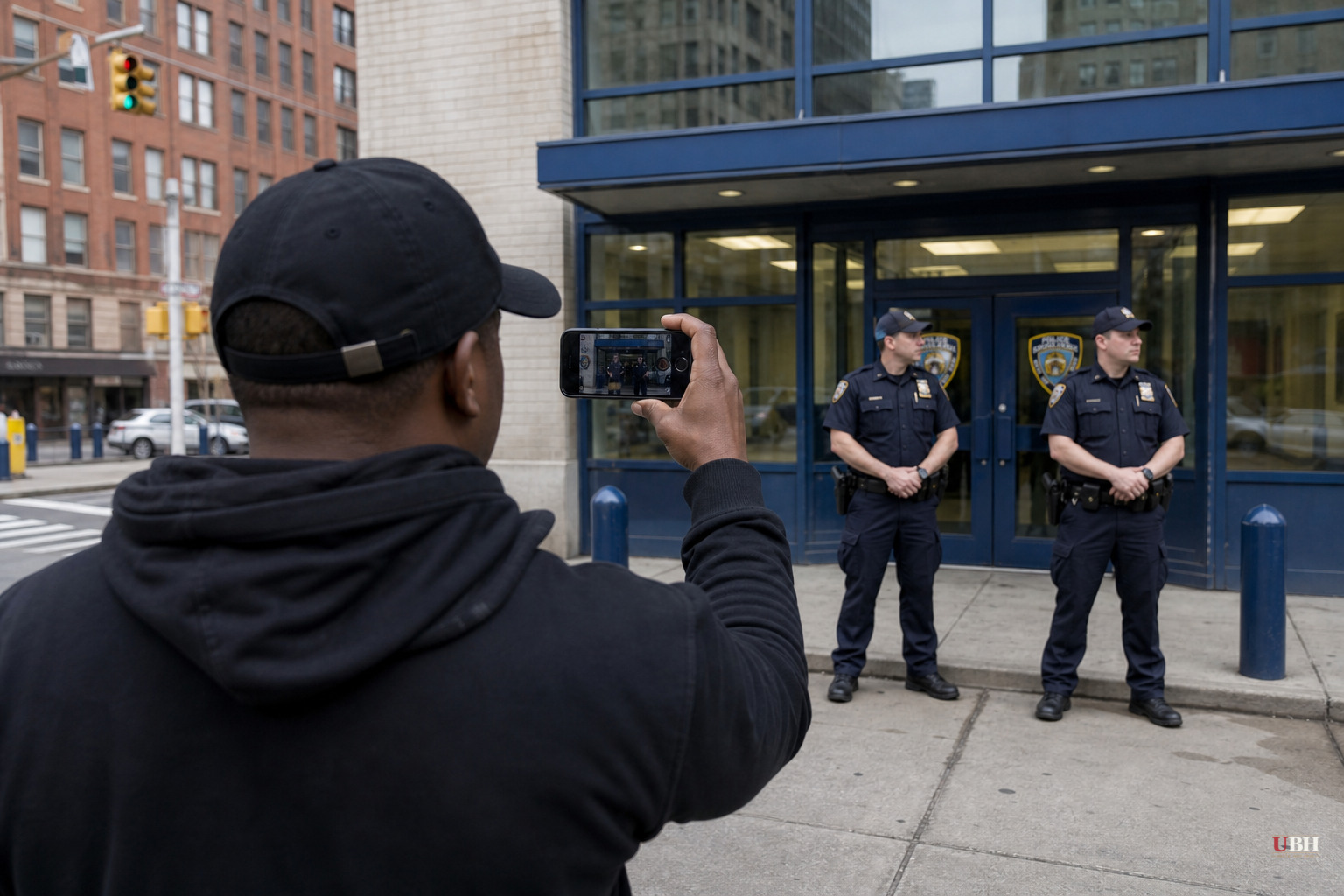
The Second Circuit Court of Appeals just handed down two rulings on filming police that look contradictory at first glance but actually turn on one simple distinction: where you're standing.
In Massimino v. Benoit, Judges Myrna Pérez and Sarah Merriam ruled that the First Amendment protects a right to record law enforcement activity in public. The case involved a man recording the exterior of a police station from a public sidewalk. The court joined eight other circuits that already recognize this right, according to Reason, citing the First, Third, Fourth, Fifth, Seventh, Ninth, Tenth, and Eleventh Circuits.
Judge Pérez's opinion lays out three reasons. First, the First Amendment protects the whole process of making and sharing speech, not just the moment someone talks. You can't ban filming a video any more than you could ban writing a book, even if selling the book stays legal. Second, speech about government conduct sits at the core of what the First Amendment protects, and policing is about as core a government function as exists. Third, the public has a right to gather information about what its government is doing, and recording is how ordinary people gather that information in real time.
None of that is new legal ground nationally. Eight other circuits got there first, some over a decade ago. Glik v. Cunniffe out of the First Circuit dates to 2011. Fordyce v. City of Seattle, from the Ninth Circuit, dates to 1995. What's notable is that the Second Circuit, which covers New York, Connecticut, and Vermont, had not formally joined that consensus until now.
That's the sidewalk. Now the lobby.
A separate case, Reyes v. City of New York, produced a different outcome for a different location. SeanPaul Reyes sued the NYPD after the department stopped him from recording inside the publicly accessible lobbies of police stationhouses. A federal district court in the Southern District of New York granted Reyes a preliminary injunction back on November 2, 2023, letting him keep filming inside those lobbies while the case played out.
The Second Circuit didn't resolve the underlying legal question itself. Instead it punted the core issue to the New York Court of Appeals, the state's highest court, asking whether N.Y. Civil Rights Law Section 79-p or NYC Administrative Code Sections 14-189 give people like Reyes a right to record inside stationhouse lobbies. The state court accepted that question in September 2025.
The New York Court of Appeals answered no. Neither statute creates that right, the court found. Based on that answer, the Second Circuit vacated the preliminary injunction that had protected Reyes's filming, ruling the injunction rested on a misreading of state law. The panel on that decision included Circuit Judges Kearse, Raggi, and Kahn.
New York police departments now have a green light, at least under current state law, to bar recording inside their stationhouse lobbies, even lobbies open to the public. Someone walking in to file a complaint or pick up a police report cannot necessarily record the interaction, even though that same person could record an officer making an arrest on the sidewalk outside.
If the point of a recording right is government accountability, a stationhouse lobby is exactly where a citizen might need to document how they were treated while filing a complaint against an officer. Barring recording there, even while allowing it on the sidewalk, could shield some of the most accountability-relevant interactions from documentation.
The counterargument is that stationhouses are working government facilities with security and operational concerns that an open sidewalk doesn't present. State legislatures and city councils, not federal courts, are the proper place to expand recording rights beyond what existing statutes say, if lawmakers want to go there.
The two rulings together leave New Yorkers with a split legal landscape. A First Amendment right to film cops in public spaces like sidewalks and streets is now formally recognized by the Second Circuit. But there is no equivalent right, under current state statutes, to film inside police stationhouse lobbies. Reyes could still ask the U.S. Supreme Court to weigh in on whether the First Amendment itself, independent of New York statute, requires a different result inside those lobbies. Nothing in the record so far indicates he has filed that petition. Until someone does, and until it's granted, the lobby stays off-limits and the sidewalk stays fair game.
Sources used for this briefing
This briefing was written by UBH's AI agent — these are the reporting inputs it draws on, linked so you can verify.


