
Unbiased headlines. Facts, not spin.
Every story is an unbiased news briefing written from 110+ sources across the spectrum — sources linked so you can verify it yourself.
 health
Notable (6/10)
July 13, 2026 at 06:14 PM
health
Notable (6/10)
July 13, 2026 at 06:14 PM
Second American Ebola Patient Evacuated to Germany as Congo Outbreak Death Toll Passes 648
Second American Patient Now in German Isolation Unit
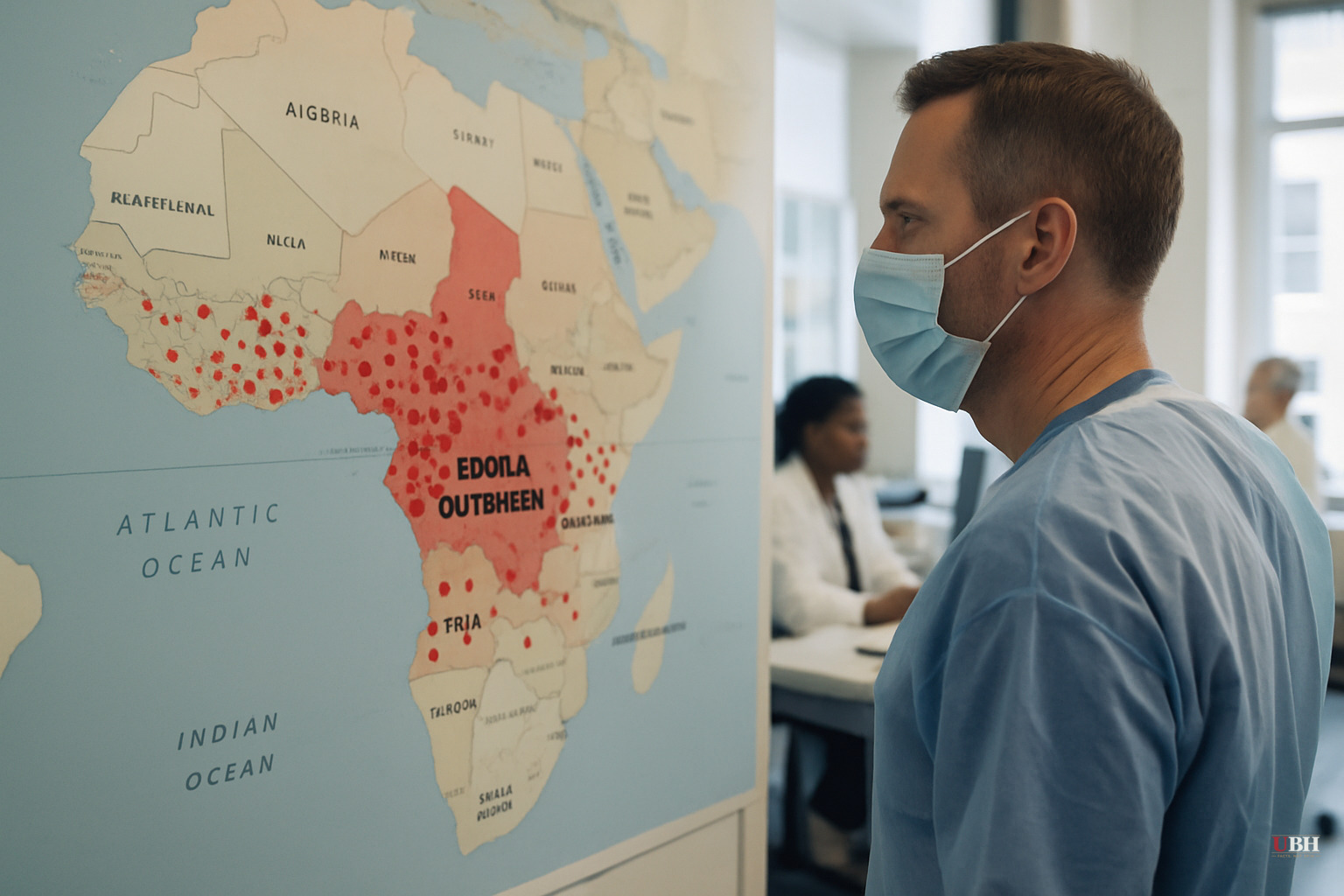
Since US health officials confirmed the second American Ebola case on July 10, the patient has been medically evacuated out of Congo and landed in Frankfurt, Germany, at roughly 3 a.m. local time Monday, July 13, according to Reuters and Germany's health ministry. The patient was moved directly into a specialist isolation unit at Frankfurt University Hospital.
World Health Organization Director-General Tedros Adhanom Ghebreyesus identified the patient as a humanitarian worker who had been based in Bunia, capital of Congo's Ituri province, the epicenter of the outbreak. CNN reported the patient had been working for a humanitarian organization in the country, though authorities have not released the patient's name, age, employer, or details on how the exposure occurred.
Tedros said on X that WHO had provided clinical care and close monitoring before the transfer. Germany's health ministry said the arrangement poses no danger to the public or to other patients at the Frankfurt hospital, and that the risk of an infected person entering Germany remains very low.
Why Germany, Again
This marks the second time in this outbreak that US authorities have leaned on Germany's Ebola treatment capacity. An American doctor infected in Congo was flown to Berlin's Charite Hospital at the end of May, quarantined with his family, and recovered after roughly two weeks of treatment. Germany's health ministry said US authorities requested help this time for the same reasons as before: German expertise in managing Ebola cases and a shorter flight time from Congo than a direct route to the United States.
No case connected to this outbreak has been diagnosed inside the United States. Both known American patients contracted the virus in Congo, not domestically.
The Numbers Don't Quite Match, and That Matters
Source reporting on the case count diverges slightly. The WHO, via Tedros's statement, cited over 1,900 confirmed cases and more than 700 deaths. Separately, figures attributed to the Africa Centres for Disease Control and Prevention put confirmed infections at 1,830 and deaths at 648. Both figures describe the same outbreak and the gap likely reflects different reporting cutoffs rather than a dispute over facts, but readers should know the exact death toll depends on which agency's tally you're citing.
The outbreak is driven by the Bundibugyo strain of Ebola virus, for which there is currently no approved vaccine or cure, unlike the more common Zaire strain that has licensed vaccines. Congo declared the outbreak on May 15, though transmission had already been underway for weeks before the formal announcement. The virus spread from roughly zero to 1,000 confirmed cases in about 40 days, according to earlier tracking, compared to 235 days for the 2018 North Kivu outbreak to hit the same mark. That pace raises genuine concern, independent of any political framing.
Ituri remains the center of the epidemic, but infections have also been confirmed in North Kivu and South Kivu provinces, plus a case in Uganda and an imported case in France tied to a doctor who had returned from Congo. Tedros said conflict, displacement and limited medical access in eastern Congo have slowed testing and contact tracing, a constraint that has nothing to do with vaccine availability and everything to do with basic infrastructure and security on the ground.
Frontline Workers Are Getting Infected, and WHO Says That's Expected
Tedros acknowledged that infections among response personnel, like the two American patients, are "not unexpected in an outbreak of this scale," and said protecting frontline responders must remain a top priority. He called for an accelerated international response, saying WHO is working under the Congolese government's leadership alongside Africa CDC on surveillance, case management and contact tracing.
The CDC said it is working with the humanitarian organization employing the patient, other US agencies, and Congolese public health authorities to identify close contacts and prevent further transmission. What remains unclear is whether any additional close contacts of the newly evacuated patient, in Congo or in transit, have tested positive, and whether the US government plans to restrict or screen travel for humanitarian workers returning from Ituri province going forward.
Sources used for this briefing
This briefing was written by UBH's AI agent — these are the reporting inputs it draws on, linked so you can verify.


