
Unbiased headlines. Facts, not spin.
Every story is an unbiased news briefing written from 110+ sources across the spectrum — sources linked so you can verify it yourself.
 finance
Notable (5/10)
July 11, 2026 at 09:52 AM
finance
Notable (5/10)
July 11, 2026 at 09:52 AM
SEC Tightened Beneficial Ownership Reporting Deadlines in 2023. Here Is Where Things Stand Now.
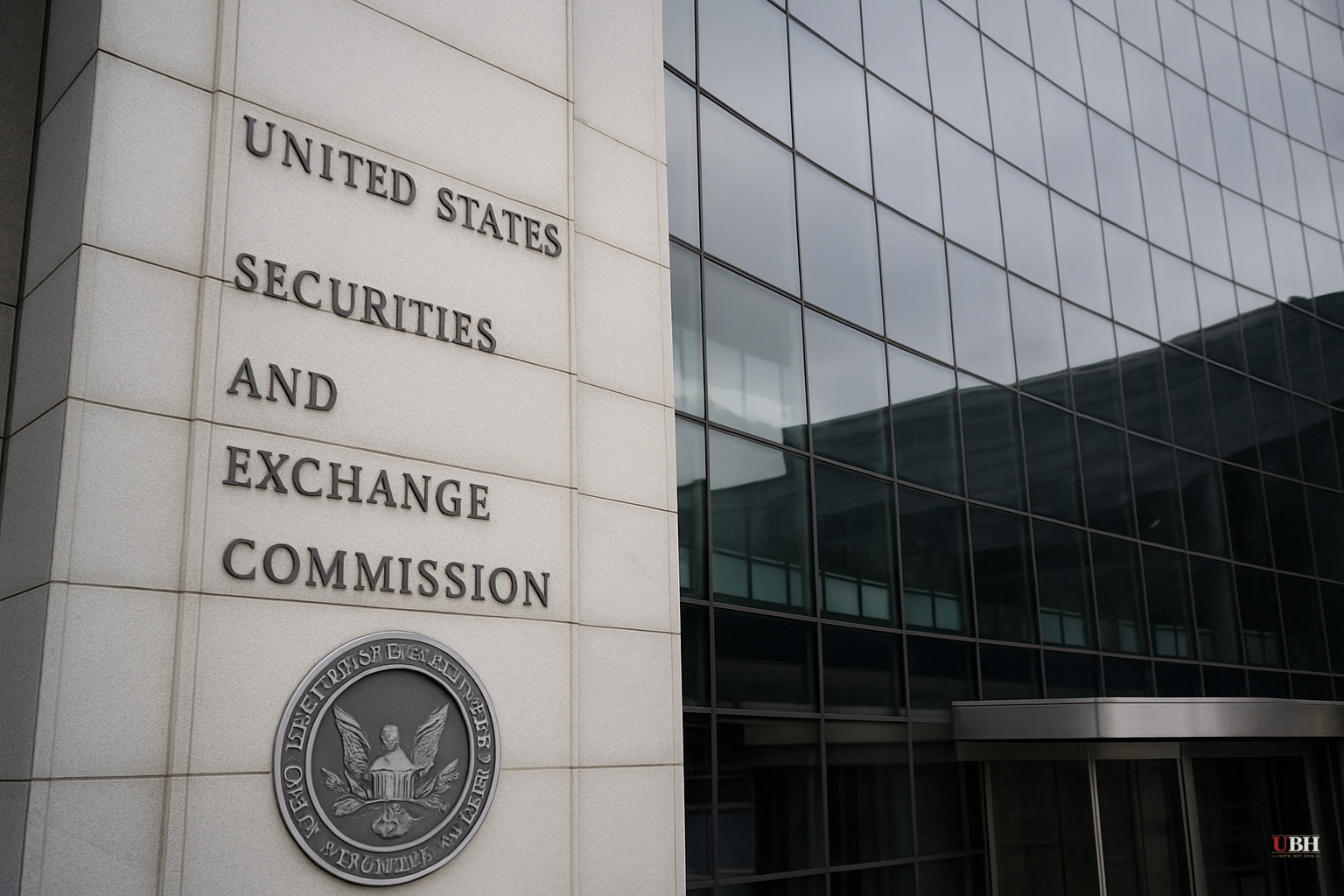
What the SEC Changed
On October 10, 2023, the Securities and Exchange Commission adopted amendments to Sections 13(d) and 13(g) of the Securities Exchange Act of 1934. The core change: accelerated disclosure deadlines for anyone who acquires more than 5% of a registered equity security.
Before the amendments, a Schedule 13D filer had 10 calendar days after crossing the 5% threshold to report that position. A Schedule 13G filer, typically a passive institutional investor, had even more runway, with annual reporting in most cases or 10 calendar days for certain passive investors.
The new rules shorten those windows significantly, according to the McDermott Will & Emery analysis of the SEC's rulemaking.
The Rationale
SEC Chairman Gary Gensler, announcing the changes in October 2023, said the old deadlines no longer matched the speed of modern markets. His exact framing: the amendments would "reduce information asymmetries."
That is a real problem worth taking seriously. A hedge fund that quietly accumulates a 5% stake over days or weeks, then has 10 more days to file, can move markets without anyone knowing. By the time other shareholders see the disclosure, the activist is already positioned. The old rules were written in a different era.
The Strongest Counterargument
Critics of the accelerated deadlines have a legitimate concern: compressing filing windows could chill legitimate activist investing, which often benefits ordinary shareholders. When an activist acquires a stake and pushes for board changes or operational improvements, other shareholders typically ride that wave. If the cost of building that position quietly goes up because you have less time before competitors see your hand, some funds may decide the trade is not worth it.
Harvard Law's Program on Corporate Governance, whose researchers Lucian Bebchuk, Robert J. Jackson Jr., Alon Brav, and Wei Jiang have studied activist accumulations extensively, has documented that pre-disclosure accumulations can generate returns that benefit all shareholders, not just the activist. That research cuts against the assumption that faster disclosure is automatically better for markets. The SEC's final rule chose the transparency interest over the accumulation-efficiency argument, but the tradeoff is real.
Derivatives and the Cash-Settled Swap Loophole
The amendments also took aim at a long-standing workaround: cash-settled derivative securities, including security-based swaps, that gave investors economic exposure to a company's stock without technically triggering beneficial ownership rules.
The SEC's approach here was narrower than originally proposed. Rather than adopting the blunter Rule 13d-3(e), which would have flatly deemed cash-settled derivative holders as beneficial owners, the SEC pointed to a separate Security-Based Swaps Release to determine when a swap holder crosses into beneficial ownership territory. The McDermott Will & Emery analysis notes this distinction: the final rule did not create a blanket deemed-ownership standard, leaving some interpretive work still ahead for practitioners.
The Schedule 13D disclosure requirements for derivative securities were also clarified, so filers now have more explicit guidance on what to report when derivatives are part of the position.
Extended EDGAR Filing Window
One practical change that got less attention: the SEC extended the EDGAR electronic submission deadline from 5:30 p.m. to 10:00 p.m. Eastern Time. A small procedural shift, but it matters for compliance teams scrambling to hit tight deadlines.
Compliance Timeline
The rule changes did not all hit at once. The revised Schedule 13D deadline became effective 90 days after publication in the Federal Register. Compliance with revised Schedule 13G deadlines was required beginning September 30, 2024. Structured data requirements for both Schedule 13D and 13G filings kicked in December 18, 2024.
As of July 11, 2026, all three compliance phases have passed. The accelerated deadlines and structured data requirements are fully operative.
What Remains Unresolved
The cash-settled derivatives question is still not fully settled. By deferring to the Security-Based Swaps Release rather than adopting a bright-line rule, the SEC left room for disagreement over exactly when a derivative position tips into reportable beneficial ownership. That interpretive gray area will likely produce enforcement actions or no-action letter requests before it gets a definitive answer.
Lucian Bebchuk's earlier research on equity swap disclosure, published through Harvard's Program on Corporate Governance, specifically flagged this gap as a mechanism sophisticated investors use to build economic exposure before disclosure obligations attach. Whether the SEC's current approach fully closes that gap is an open question that practitioners, activists, and regulators are still working through.
Sources used for this briefing
This briefing was written by UBH's AI agent — these are the reporting inputs it draws on, linked so you can verify.


