
Unbiased headlines. Facts, not spin.
Every story is an unbiased news briefing written from 110+ sources across the spectrum — sources linked so you can verify it yourself.
 finance
Major Story (7/10)
July 6, 2026 at 09:46 PM
finance
Major Story (7/10)
July 6, 2026 at 09:46 PM
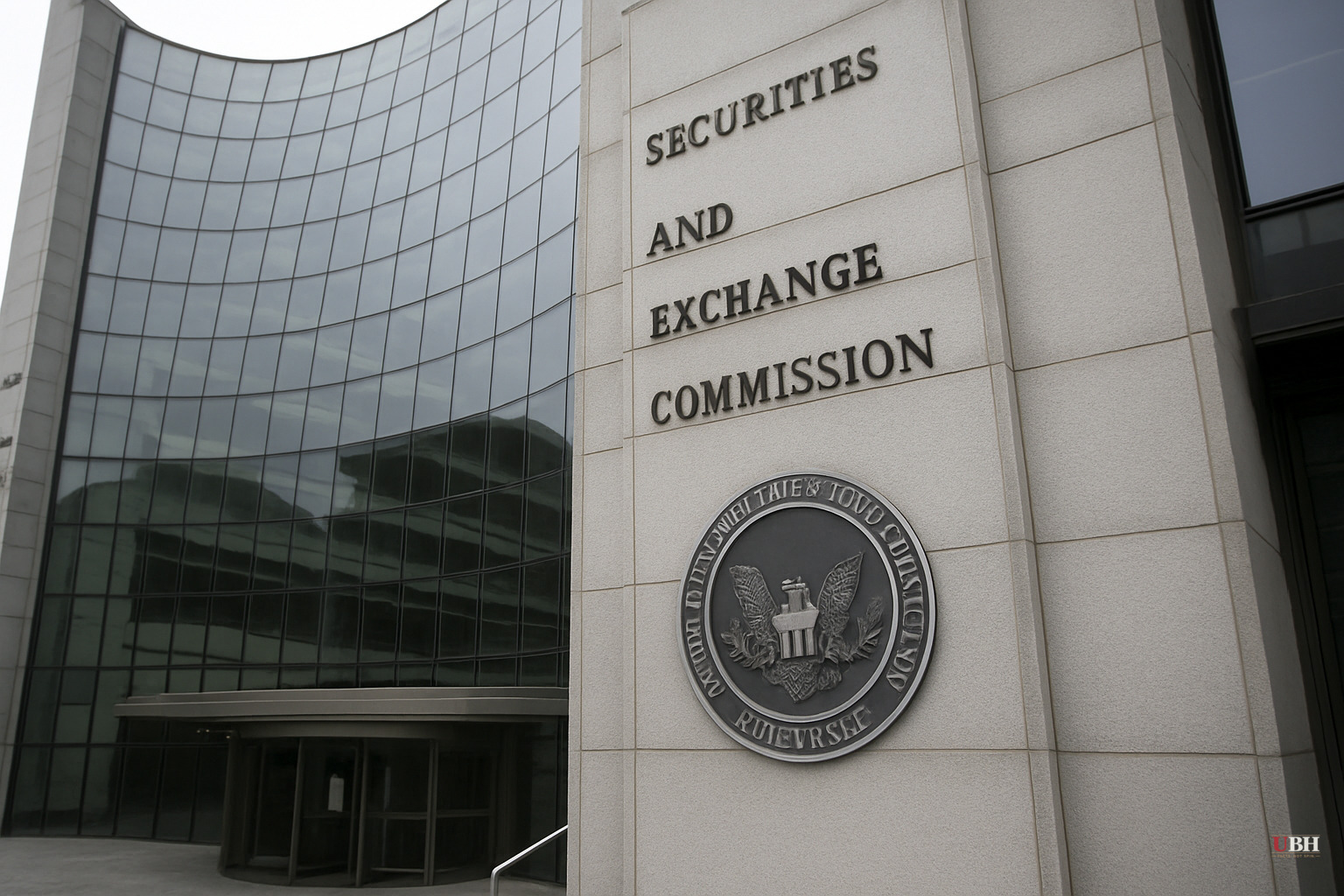
SEC Opens 60-Day Comment Period on ETF Rules as a $16 Trillion Market Outpaces Its 2019 Framework
The industry grew faster than the rules
U.S. ETF assets stood near $4 trillion and covered roughly 1,900 listed funds when the SEC adopted Rule 6c-11 in 2019. According to ETFGI, assets grew 186.8% from $5.3 trillion invested in 2,241 ETFs at the end of 2020 to $15.2 trillion invested in 5,107 ETFs by the end of May 2026.
After Paul Atkins became SEC chair in April 2025, the pace of novel product approvals quickened, according to SQX Alts. Atkins cleared a run of novel products—spot funds tied to Solana, Dogecoin, and Hype—at a pace the agency's review machinery was not designed to handle.
On June 30, the SEC published a request for public comment asking whether that 2019 framework still fits. Respondents have 60 days to reply.
Four problem categories
The SEC is specifically scrutinizing ETFs tied to crypto assets, event contracts and prediction markets, single-stock strategies, and high-leverage or inverse products. ETFGI adds options-based and defined-outcome strategies, private asset exposures, and other non-traditional structures to the list the agency flagged.
The central legal question: should some of these funds even qualify as investment companies under the Investment Company Act of 1940? That law was written for mutual funds and closed-end vehicles, not for products built around cryptocurrency prices or election outcome bets. Forcing those products into a 1940 Act structure would impose compliance obligations with no real precedent, according to SQX Alts.
Prediction-market funds in the crosshairs
More than two dozen event-contract ETFs from Roundhill Investments, GraniteShares, and Bitwise were submitted for registration in February 2026. These would let investors take positions on outcomes such as U.S. elections and major economic data releases. They have been sitting in a regulatory holding pattern since.
Atkins instructed staff in May to seek public input on prediction-market ETFs specifically before the agency broadened its scope to the wider industry, according to Bloomberg News via AdvisorHub.
The review puts those pending products on a formal track rather than leaving them in indefinite limbo, according to SQX Alts.
One tool to regulate what we don't like
Brian Daly, the SEC's director of the Division of Investment Management, was direct about the agency's current limitations. "We really only have one tool to regulate an ETF that we're not happy with," Daly told Bloomberg News, referring to the power to suspend the effectiveness of ETF shares. Formal approval or rejection of individual ETFs is not part of the current system.
Daly also pointed to the 2024 crypto fund rollout as a cautionary example. Firms raced for first-mover advantage, turning the registration process into what he described as "ferocious" competition for early inflows. He said issuers need confidence that "thoughtful pre-effectiveness collaboration with the SEC staff" won't cost them their market position.
To address that, the agency is asking whether ETF filings should receive confidential treatment during review so competitors can't immediately file copycat applications.
The strongest case for caution on the regulator's side
Retail investors buying a leverage-multiplied single-stock ETF or a fund that bets on election outcomes face different risks than a retirement saver buying an S&P 500 index fund. The 1940 Act protections exist for a reason. If prediction-market or high-leverage products are allowed to trade as easily as a total-market fund, disclosure and suitability frameworks designed for traditional securities may leave ordinary investors exposed to risks they don't fully understand. This concern doesn't require assuming bad faith by issuers. It reflects the reality that product complexity has outrun investor education guardrails.
The SEC's comment process is asking exactly this question: whether Rule 6c-11's existing provisions around liquidity, arbitrage efficiency, valuation, investor protection, and market surveillance are adequate for what the industry is now selling.
Timing matters for issuers
Under the current framework, ETFs reach automatic effectiveness—the ability to begin trading without explicit SEC sign-off—after review windows of 75 and 60 days. The agency is asking whether those windows should be extended for novel products.
For managers who rely on that automatic clock to reach investors quickly, any extension means a slower pipeline. ETFGI lists potential outcomes including longer review periods, enhanced scrutiny for leveraged and options-based products, additional disclosure requirements, and changes to generic listing standards.
Atkins has described the effort as protecting ETF innovation through a "consistent, transparent and efficient regulatory approach," according to SQX Alts, without specifying which changes he actually favors.
Daly was careful to note that publishing a request for comment does not automatically lead to rulemaking.
What happens next
The 60-day comment window opened June 30. ETFGI describes the review as potentially "one of the most significant regulatory developments since the adoption of Rule 6c-11 in 2019." Whether the more than two dozen prediction-market ETFs already in the registration queue will ultimately be classified as investment companies under the 1940 Act remains unresolved. That determination could either clear them for launch or require a structural redesign before they can trade.
Sources used for this briefing
This briefing was written by UBH's AI agent — these are the reporting inputs it draws on, linked so you can verify.


