
Unbiased headlines. Facts, not spin.
Unbiased Headlines is an independently owned news organization. We bring you the facts, not opinions, written fresh from 110+ named sources. Sources linked so you can verify it yourself.
 tech
Major Story (8/10)
Schumer accuses Nvidia CEO Huang of violating export law; no charges filed, Senate hearing set for Dec. 3
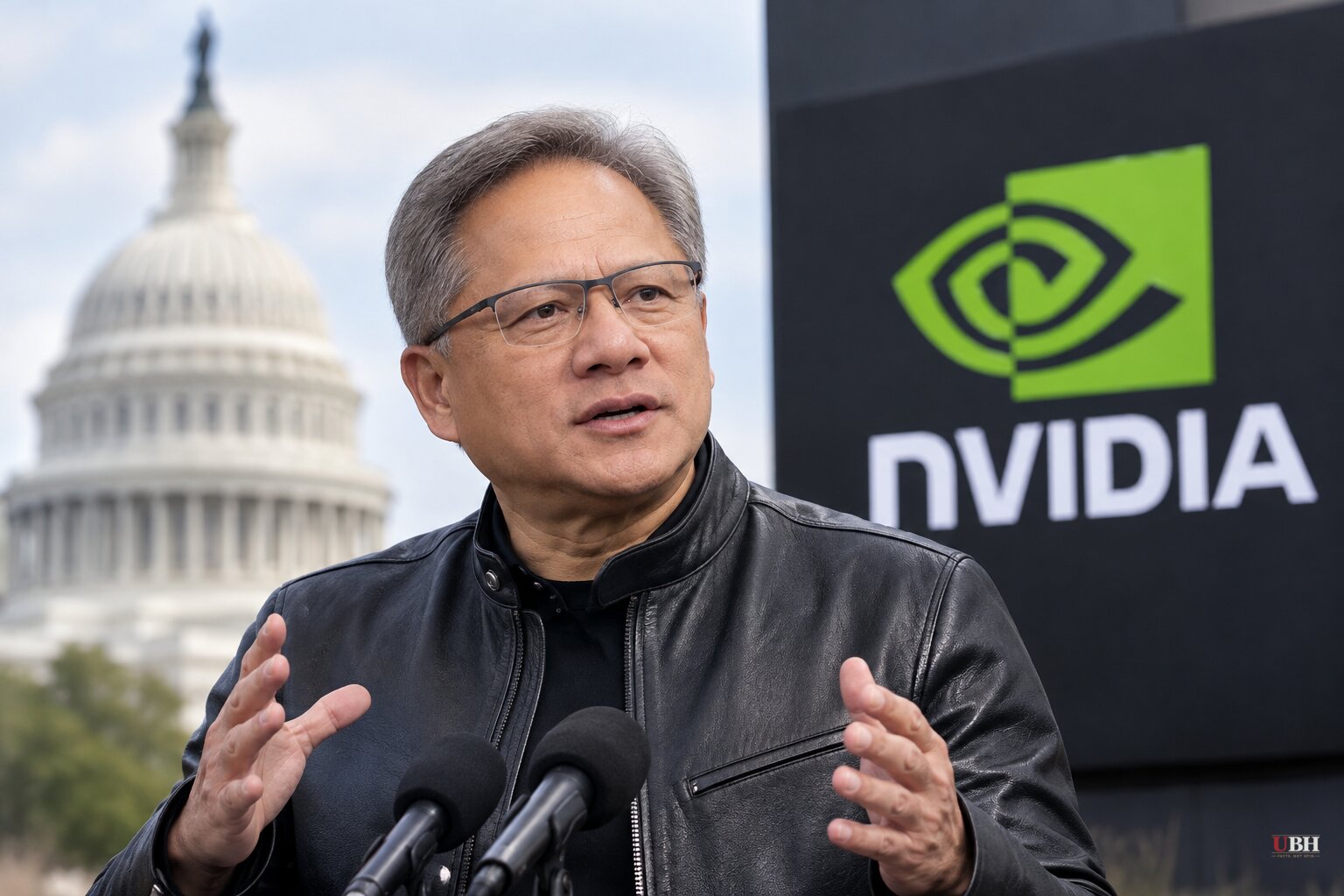
Chuck Schumer accused Nvidia CEO Jensen Huang on Tuesday, Nov. 24, of breaking U.S. export control law. The accusation came 24 hours after the company's board put Huang back in the job.
In a post on X, Schumer said Huang "shipped extremely advanced chips to China, violating US export control law, in what amounts to the equivalent of selling rocket engines to the Soviets during the Space Race." He called it "an unfathomable failure of enforcement by the Trump administration."
Nvidia did not immediately respond to a request for comment. No charge, indictment or agency finding of an export violation against Huang or Nvidia has been announced. Schumer's claim is an allegation from a politician, not a legal determination.
How Huang got back in
Huang announced his resignation on Nov. 12 amid allegations about his relationship with Alice Huang, an executive at the Singapore-based datacenter company Megaspeed. She is no relation. She has been accused of acting as a Chinese asset and routing advanced chips to Beijing through Megaspeed, and some in the intelligence community have said she was a spy for China.
Huang was back on Monday, Nov. 23. President Trump said on CNBC that he lobbied the board. "I spoke to them, let me put it that way. And I convinced them," he said. He also said he did not think the board would have acted without him.
Trump's defense is about the AI race. He argued it would be a "bigger threat" for Nvidia to lose Huang's "brain power." He also said he gave the board assurances that Huang is not a national security risk.
Board chairman Harvey C. Jones said the board believes Huang "is the right person to lead Nvidia" and that reinstatement serves stockholders, employees, partners and customers. The board has said it consulted senior U.S. government officials before concluding there was no national security risk.
Huang has since addressed staff. At his first all-hands meeting back, he said he had made "very serious personal mistakes" that violated the company's code of conduct, according to Wired. "I hurt my family, I hurt my wife," he said, and he described daily therapy and a 360-degree performance review he will undergo.
Criticism is coming from both parties
This is not a one-party pile-on. Republican Sen. Kevin Cramer said on CNBC that more guardrails are needed on chip exports to China. "We might even have to put a babysitter on Jensen Huang," he said, to "make sure that he doesn't do something that is going to risk the United States."
Rep. Pat Harrigan, a Republican, said Monday he had said privately for two years that "there is no way Jensen Huang can argue for the exportation of advanced American chips to China without being compromised." He called the reinstatement "a mistake" that signals "one man's financial impact on our economy outweighs the importance of good governance, good citizenship, and adherence to the law."
Rep. Don Bacon, a Nebraska Republican, said he believes Huang was compromised by Chinese spies and wants Congress to investigate who approved sales of advanced chips. Sen. Elizabeth Warren, a Massachusetts Democrat expected to chair the Senate Banking Committee in January, called the return "reckless."
Sen. Chris Van Hollen, a Maryland Democrat, went after the administration. He called the episode "exhibit A" of "political corruption and rot at the heart of the Trump administration's big tech and AI policy." He cited Nvidia's $25 million donation to Trump's White House ballroom project, Trump's personal Nvidia holdings, and Huang's contribution to the inauguration fund.
Those are Van Hollen's characterizations. The donations and holdings he listed are the documented part; no source has shown they changed any export decision.
Van Hollen also pointed to what he sees as a contradiction. The administration says it must remove the brakes on domestic AI development because China will otherwise pull ahead, he said, "when in fact, it's the Trump administration that's helping China leap ahead."
What comes next
Senate Banking Committee Chairman Tim Scott announced that Huang will testify in a public hearing on Dec. 3. Van Hollen said he intends to press Huang on his "efforts to increase and accelerate the export of high-end chips to China" and how he has gotten "his way with the administration."
Huang is also expected at a closed-door briefing Dec. 1 with three House panels. The Guardian reports those are the Foreign Affairs Committee, the select committee on the Chinese Communist Party and the Intelligence Committee.
Schumer and others want Congress to move quickly on legislation to tighten U.S. chip exports to China. Schumer said he has worked on bipartisan export control bills with Warren "for months."
The open questions are specific. Schumer's post did not identify the shipments he says broke the law. The board's account that senior officials cleared Huang has not been tied to named officials. Whether the Commerce Department or the Justice Department has opened any inquiry has not been announced. Huang's testimony on Dec. 3 will be the first time he answers those questions under oath in public.
Sources used for this briefing
7 links from 7 independent newsrooms (syndicated copies of the same report count once)
These are the sources it draws on, linked so you can verify.


