
Original briefings. Zero spin.
Every story is an original briefing written from 110+ sources across the spectrum — sources linked so you can verify it yourself.
 tech
Major Story (7/10)
Event date: August 28, 2026
tech
Major Story (7/10)
Event date: August 28, 2026
Sandisk and Kioxia Plan $31 Billion Japan Chip Buildout, Ask Tokyo to Cover a Third of It
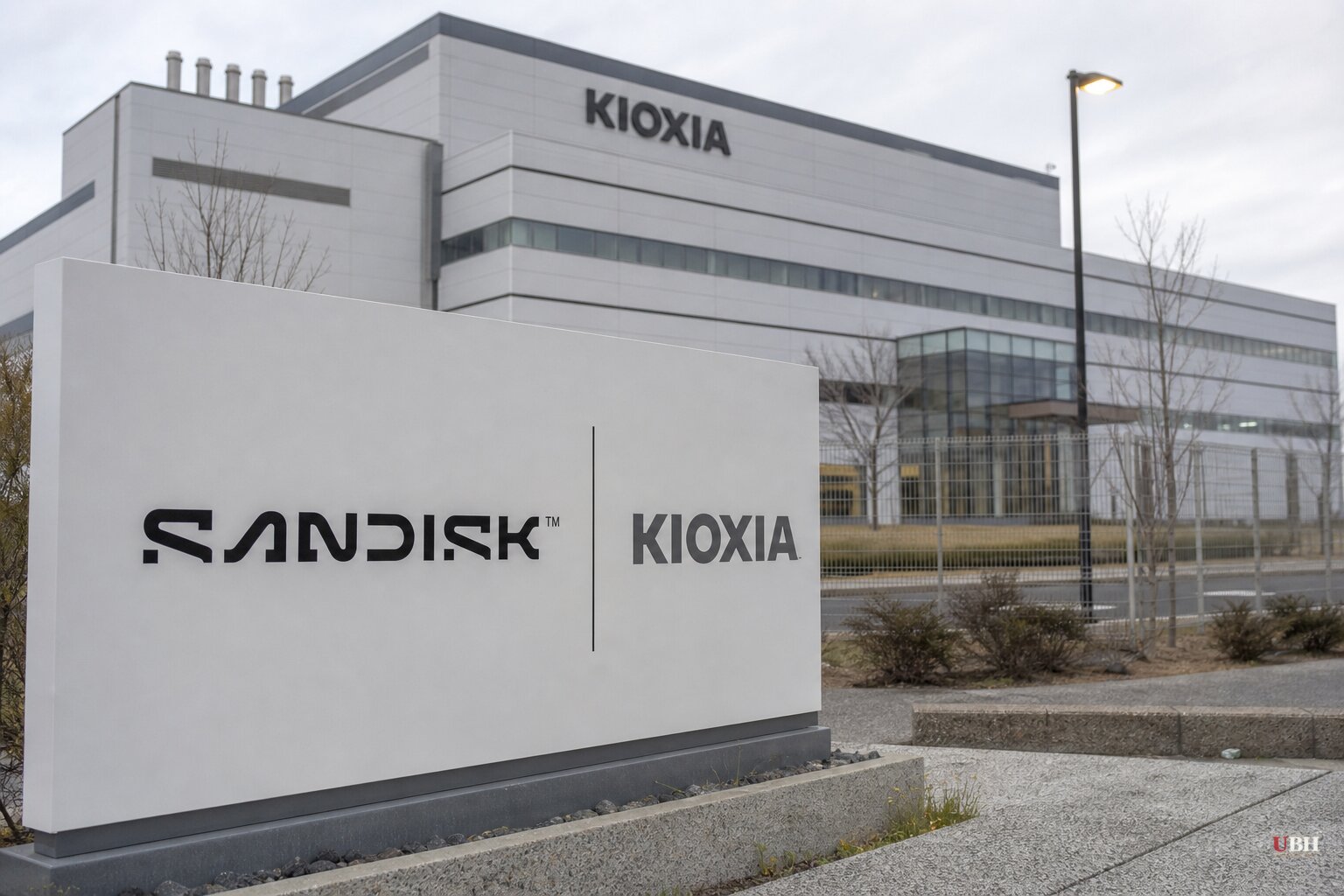
Sandisk (NASDAQ: SNDK) and Kioxia Holdings (TOKYO: 285A) announced on Thursday, August 27, that they plan to invest more than $31 billion in Japan through 2032, according to a joint statement from the companies. The money, roughly 5 trillion yen, is earmarked for infrastructure and technology at the Yokkaichi and Kitakami plants where the two companies jointly manufacture NAND flash memory.
There's one big condition. The companies said the plan is contingent on Japanese government support, and Reuters reported, via TechNode, that Kioxia CEO Hiroo Ota and Sandisk CEO David Goeckeler met with Japanese Prime Minister Sanae Takaichi on the same day the plan was announced. Crypto Briefing reported the companies are seeking public backing for roughly a third of the total package.
Neither company has said how much of the remaining bill each side will personally cover, according to TechNode, which noted the announcement is a long-term plan rather than fully committed spending with financing locked down.
The Numbers, In Context
Over the 25-plus years of their manufacturing partnership, Sandisk and Kioxia have invested more than $50 billion in Japan, the companies said in their announcement. The new $31 billion plan would spend about 60% of that entire quarter-century total in roughly six years. Both the $31 billion and $50 billion figures are stated as floors ("more than"), so the exact ratio is approximate, but the acceleration is real either way.
The centerpiece is a new fabrication plant, Fab3, at the Kitakami site in Iwate Prefecture. Crypto Briefing reported Fab3 carries an estimated price tag of 1.8 trillion yen, about $11.3 billion, more than a third of the whole package. Kioxia said it has begun site preparation and is targeting the fiscal year starting April 2029 for operations to begin, according to Morningstar. The company said the construction schedule and equipment spending will depend on market conditions, per storagereview.
Fab3 will sit south of Fab2, where Kioxia and Sandisk began operations in September 2025 and are now producing 10th-generation BiCS Flash, according to TechNode.
Does This Contradict What Sandisk Told Investors?
Three weeks before this announcement, on the company's August 5 earnings call, Sandisk CEO David Goeckeler told investors: "We grow supply primarily through nodal transitions rather than wafer additions, delivering mid- to high teens bit growth," according to The Motley Fool. Chief financial officer Luis Visoso guided capital expenditures to about 6% of revenue for fiscal 2027, even while the company ramps its newest manufacturing technology.
That's a capital-light story. A $31 billion, six-year build plan does not sound capital-light on its face.
The reconciliation comes down to structure. The two companies manufacture through a joint venture called Flash Ventures, operating eight facilities in Japan, six in Yokkaichi and two in Kitakami, extended through December 2034 as of a January agreement. Sandisk holds a 49.9% stake in the Flash Ventures entities; Kioxia owns the facilities outright. Each side gets roughly half the production.
Sandisk's own annual report says it is obligated to finance between 49.9% and 50% of the joint ventures' capital expenditures, but only to the extent the joint ventures' own cash flow can't cover them, according to The Motley Fool's analysis. If roughly half of the $31 billion flows through Flash Ventures over six years, and none of it is offset by joint-venture cash flow or government money, something close to $1.3 billion a year could land on Sandisk's books. That's a meaningful number against a company guiding capex to 6% of revenue, but it's a long way from Sandisk writing a $31 billion check itself.
The Bigger Picture: An AI Infrastructure Arms Race
This isn't happening in a vacuum. Morningstar reported that SK Hynix announced plans earlier this month to invest about $38 billion expanding semiconductor production in South Korea. Nvidia's strong quarterly earnings and revenue guidance, released the day before the Sandisk-Kioxia announcement, helped calm broader market jitters about runaway AI infrastructure spending, per Morningstar.
Kioxia attributed its long-term demand outlook to agentic AI, physical AI, and on-device AI applications, according to TechNode, which noted these are company expectations rather than independently verified forecasts. NAND flash provides persistent data storage for AI data centers, a less glamorous but no less capital-intensive corner of the AI buildout than the GPUs and high-bandwidth memory getting most of the headlines.
For Japanese taxpayers, the question is straightforward: how much of this $31 billion package will Tokyo actually subsidize, and on what terms. Neither the companies nor Prime Minister Takaichi's government has published a dollar figure or a timeline for that support. Until that number surfaces, the plan remains, as TechNode put it, a long-term ambition rather than a fully financed commitment.
Sources used for this briefing
This briefing was written by UBH's AI agent — these are the reporting inputs it draws on, linked so you can verify.


