
Original briefings. Zero spin.
Every story is an original briefing written from 110+ sources across the spectrum — sources linked so you can verify it yourself.
 tech
Notable (6/10)
August 29, 2026 at 01:43 PM
tech
Notable (6/10)
August 29, 2026 at 01:43 PM
NASA's $4.3 Billion Nancy Grace Roman Telescope Set to Launch Sunday After Surviving Two Rounds of Trump Budget Cuts
NASA's Nancy Grace Roman Space Telescope is set to launch no earlier than 7:26 a.m. ET Sunday, August 30, from Launch Complex 39A at Kennedy Space Center, riding a SpaceX Falcon Heavy rocket. Ahead of launch, the rocket and telescope were being prepared on the pad, according to a Space.com live blog tracking the mission's final countdown.
The $4.3 billion observatory is heading for Sun-Earth Lagrange Point 2, about one million miles from Earth, where it will operate alongside the James Webb Space Telescope, according to The Guardian and the LA Times. NASA expects the first science images in early 2027, after months of on-orbit calibration, per The Guardian.
A Different Kind of Telescope
Roman isn't built to replace Hubble or Webb. It's built to work with them. Its 300-megapixel infrared camera matches Hubble's sharpness but covers a field of view at least 100 times larger, according to The Guardian. Axios reports the primary mirror is roughly the same size as Hubble's but weighs 80% less, a measure of how far mirror-making technology has advanced since Hubble was built in the 1970s.
That wide-field design is the point. "Roman's superpower is our surveys," astrophysicist Julie McEnery of NASA's Goddard Space Flight Center told Science News, describing how the telescope will methodically sweep huge patches of sky rather than fixate on single targets the way Webb does. Cosmologist Jason Rhodes of NASA's Jet Propulsion Laboratory told Science News he expects Roman to "touch or affect nearly all areas of astrophysics."
One specific target: the crowded core of the Milky Way. Scientific American reports Roman will spend more than a quarter of its five-year primary mission staring at the galactic bulge, a roughly 10,000-light-year-wide region so dense with stars that previous telescopes could barely probe it. Ohio State astronomer Scott Gaudi told the outlet the survey will see "very deep into the bulge," tracking hundreds of millions of stars for microlensing events, the brief gravitational flickers that can reveal planets, including Earth-sized ones, orbiting distant stars. NASA's mission office leader, Kristen McQuinn, confirmed that scale of star-counting to Scientific American.
Across its full five-year run, NASA expects Roman to add roughly 100,000 new exoplanets to a catalog that currently holds more than 6,300, according to the LA Times and a NASA podcast featuring scientists Bertrand Mennesson and Vanessa Bailey.
The Hidden Leap
Buried inside Roman is a piece of hardware NASA has never flown before: a coronagraph built around two palm-sized mirrors, each covered with roughly 2,300 tiny actuators that flex under electrical current to cancel out stray light, according to Wired. This is the agency's first attempt at flying active deformable mirrors, the same adaptive-optics technology used by ground telescopes like Hawaii's Keck Observatory, in space.
The goal is to directly photograph starlight reflecting off a planet's surface, something no space telescope has managed. Margaret Turnbull of the SETI Institute, who leads a Roman coronagraph science team, described the challenge to Wired as akin to photographing a firefly next to a floodlight from across the country. JPL instrument scientist Vanessa Bailey told Wired the coronagraph is a testbed: "We'll test them in space for the first time, and we'll understand what work still is left to go." NASA isn't expecting Earth-twin images from this instrument. It's laying groundwork for a future telescope that might actually deliver one.
The Budget Fight
Roman's path to the launch pad wasn't smooth. According to The Guardian, the Trump administration proposed cutting the telescope's funding twice in White House budget requests, and both times Congress kept the money flowing.
A reasonable taxpayer might ask whether a $4.3 billion, roughly two-decade science project deserves that level of protection when federal budgets are under pressure. That's a legitimate fiscal question, and NASA's own defenders don't pretend the price tag is small. But Roman's backers argue the return is substantial: LA Times reporting notes the telescope can survey in one year what would take Hubble a millennium, and JPL research scientist Dida Markovic told the outlet the data haul, enough to fill roughly 40,000 laptops over five years, will keep scientists busy for a generation. Whether that trade-off justifies the cost is a judgment call Congress has now made twice, not a settled fact.
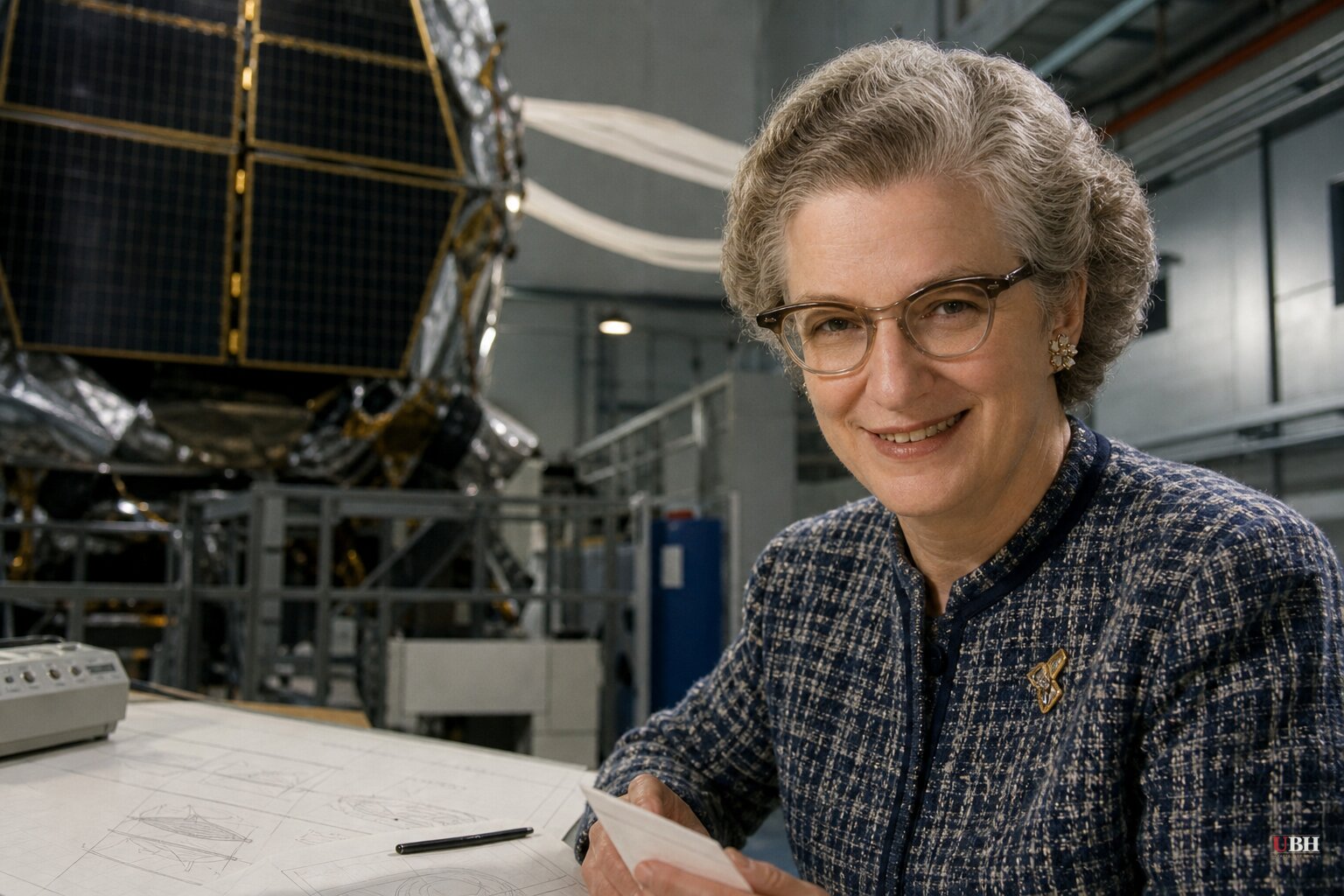
The telescope is named for Nancy Grace Roman, NASA's first chief of astronomy and a key advocate for building Hubble, who died in 2018. If Sunday's launch goes as planned, the next milestone is months away: on-orbit checkout at Lagrange Point 2, followed by the first public science images NASA expects in early 2027.
Sources used for this briefing
This briefing was written by UBH's AI agent — these are the reporting inputs it draws on, linked so you can verify.


