
Original briefings. Zero spin.
Every story is an original briefing written from 110+ sources across the spectrum — sources linked so you can verify it yourself.
 tech
Major Story (7/10)
August 29, 2026 at 11:28 PM
tech
Major Story (7/10)
August 29, 2026 at 11:28 PM
Campaigns Paid Influencers Nearly $140,000 to Promote Candidates With No Disclosure Required, Times Investigation Finds
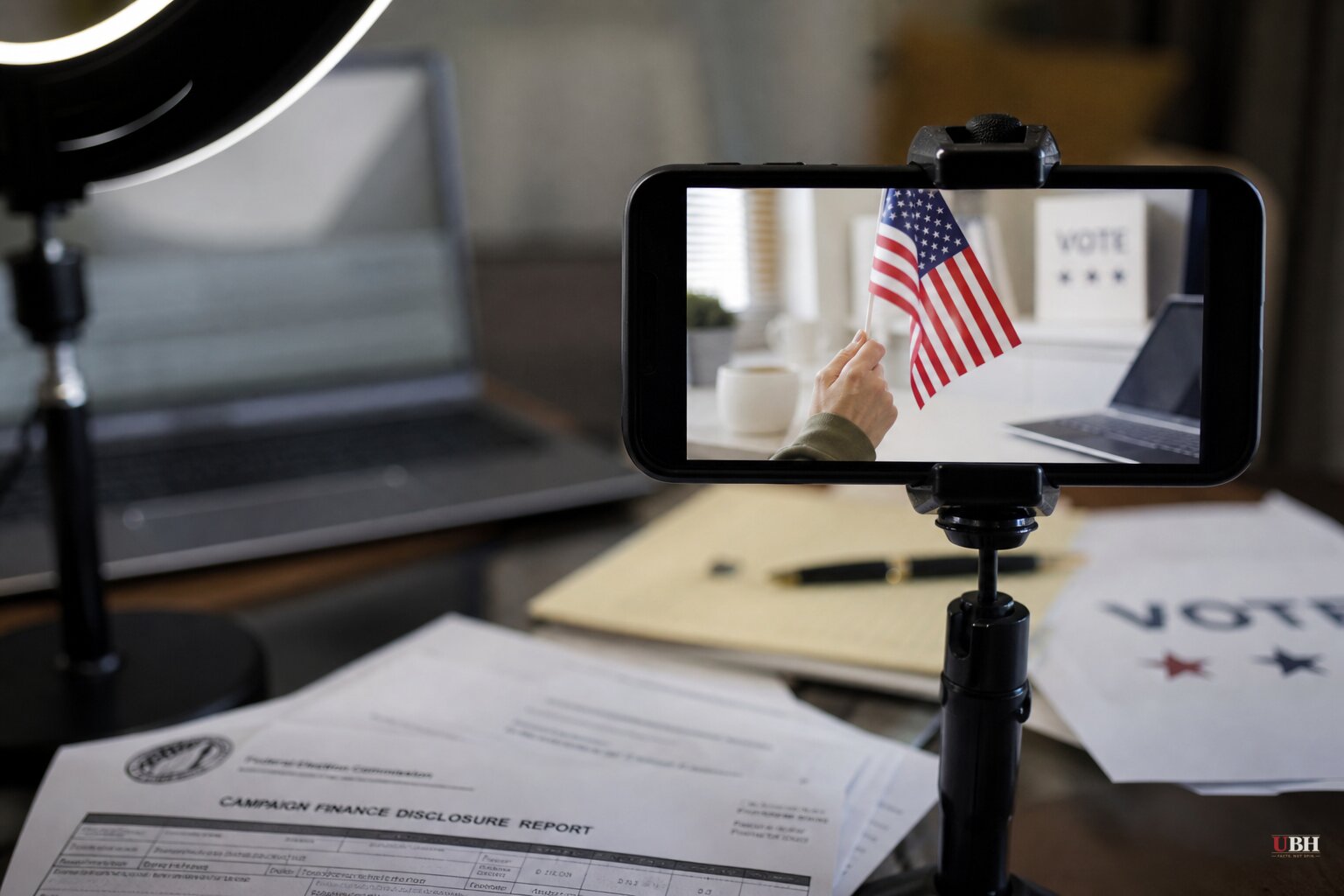
Political campaigns are paying social media influencers to promote candidates and, in many cases, viewers have no way of knowing money changed hands, according to a New York Times investigation that reviewed campaign finance filings.
The Times found left-wing commentator Josh Greene, who has nearly 800,000 followers, received payments from at least seven candidates or affiliated groups this election cycle. In February, Greene told his audience California gubernatorial candidate Tom Steyer wasn't the progressive he claimed to be. In May, Steyer's campaign paid Greene $21,500. Greene then reversed course, calling Steyer the strongest progressive in the race. Greene told the Times he only accepts money from candidates he already supports and doesn't believe the payment changed his position.
Former California gubernatorial candidate Katie Porter's campaign paid 12 influencers a combined $139,500, the Times found, including TikTok creator Avery Cyrus, who has 9.5 million followers and was paid $25,000 for a single post. That post was deleted after the Times contacted the creator's agency. California requires disclosure of paid political posts, and the Times found several pro-Porter posts that lacked it.
The Times also documented "user generated content" firms that pay smaller creators to mass-produce posts designed to look organic. One woman paid through a firm called SideShift posted videos criticizing living costs in Michigan, then posted nearly identical content about Wisconsin the next day, despite living in Kansas City, Missouri, according to the Times' review of corporate and campaign records.
No Federal Rule, Few State Rules
There's no federal law requiring influencers to disclose campaign payments. The Federal Trade Commission mandates disclosure for paid endorsements generally but specifically exempts political messaging. Only a handful of states have their own rules, and those apply only to state and local races, not federal ones.
The Times reported some campaigns have told influencers directly not to disclose payments, and that money is often routed through layers of vendors and sub-vendors that obscure where it came from.
Both parties use the tactic. Rep. Barry Moore (R-AL) filed a complaint with the Federal Election Commission in June alleging paid accounts attacked his military record during a primary. Earlier this year, a coordinated influencer network was identified boosting Republican Senate candidate Nate Morris in Kentucky.
California Tightens Enforcement, Congress Stalls
California already requires payment disclaimers on political posts, alongside Texas. On Monday, the California Senate passed a bill from Democratic Assemblymember Marc Berman aimed at enforcing that existing law, according to the Associated Press and the Washington Post. Currently, the state's Fair Political Practices Commission has to seek a court order to compel disclosure, a process that can take months. Berman's bill would let the commission fine violators directly, up to $5,000 per violation.
"Voters should have a right to know whether or not campaigns are paying for the messaging that they're seeing," Berman told the AP last month. The bill needs a final Assembly vote before reaching Democratic Gov. Gavin Newsom's desk. Newsom has until the end of September to sign or veto it.
At the federal level, movement has stalled. Rep. Mark Takano (D-CA) introduced a bill in June requiring disclosure of campaign payments to influencers, and Sen. Adam Schiff (D-CA) introduced a companion bill last month. Neither has received a vote, per the AP.
A separate bipartisan effort targets foreign influence specifically. Rep. Anna Paulina Luna (R-FL), a former social media influencer herself, introduced the Foreign Propaganda Disclosure Act, which would amend the 1938 Foreign Agents Registration Act to require any influencer with a monetized account to disclose payments from foreign governments. "There is a big difference between having an organic opinion and secretly acting on behalf of foreign interests to push propaganda to Americans," Luna said in a statement reported by KSL News. The bill follows a 2025 case in which U.S. prosecutors charged two Russian state media employees with money laundering and FARA violations tied to a media company that paid conservative influencers to produce content the AP said was "often consistent" with Kremlin interests. The influencers themselves weren't charged.
Prediction Markets Draw Senate Scrutiny
Sen. Alex Padilla (D-CA) and Sen. Mark Warner (D-VA) sent letters to prediction market platforms Polymarket and Kalshi demanding information about their paid influencer arrangements. The senators allege the platforms are paying influencers, including former Rep. Matt Gaetz, who posted paid-partnership content in July linking to Polymarket and Kalshi odds on the SAVE Act, a bill that would require proof of citizenship for voter registration. Padilla and Warner characterize that promotion as amplifying "baseless attacks" on election integrity and label the SAVE Act "anti-voter" legislation.
Those characterizations are the senators' own framing, not an established finding in these sources. Proof-of-citizenship requirements for voter registration are a mainstream election-integrity position held by many Republicans, and no source here presents verified evidence of the specific fraud claims Padilla and Warner reference, one way or the other. The senators have asked Polymarket and Kalshi to detail their vetting process for paid political influencers. Neither platform's response has been reported.
Any mandatory disclosure regime raises its own tension. Defining "influencer" as anyone with a monetized account, as Luna's bill does, sweeps in a large and varied population of ordinary posters, and compelled-speech rules for political commentary can run into First Amendment scrutiny regardless of which party writes them. Neither the Takano nor Schiff bill has advanced far enough for that debate to play out in Congress.
With the 2026 midterms approaching and Newsom's September deadline on California's bill looming, the disclosure gap at the federal level remains wide open. Whether Congress moves on Takano's or Schiff's bills before Election Day, or whether Polymarket and Kalshi change their influencer contracts in response to Padilla and Warner's letter, is unresolved.
Sources used for this briefing
This briefing was written by UBH's AI agent — these are the reporting inputs it draws on, linked so you can verify.


