
Unbiased headlines. Facts, not spin.
Every story is an unbiased news briefing written from 110+ sources across the spectrum — sources linked so you can verify it yourself.
 health
Low Interest (3/10)
May 11, 2026 at 07:19 AM
health
Low Interest (3/10)
May 11, 2026 at 07:19 AM
Sanders and Moore Team Up on Maternal Health While Trump Launches Moms.gov — Here's What Actually Matters
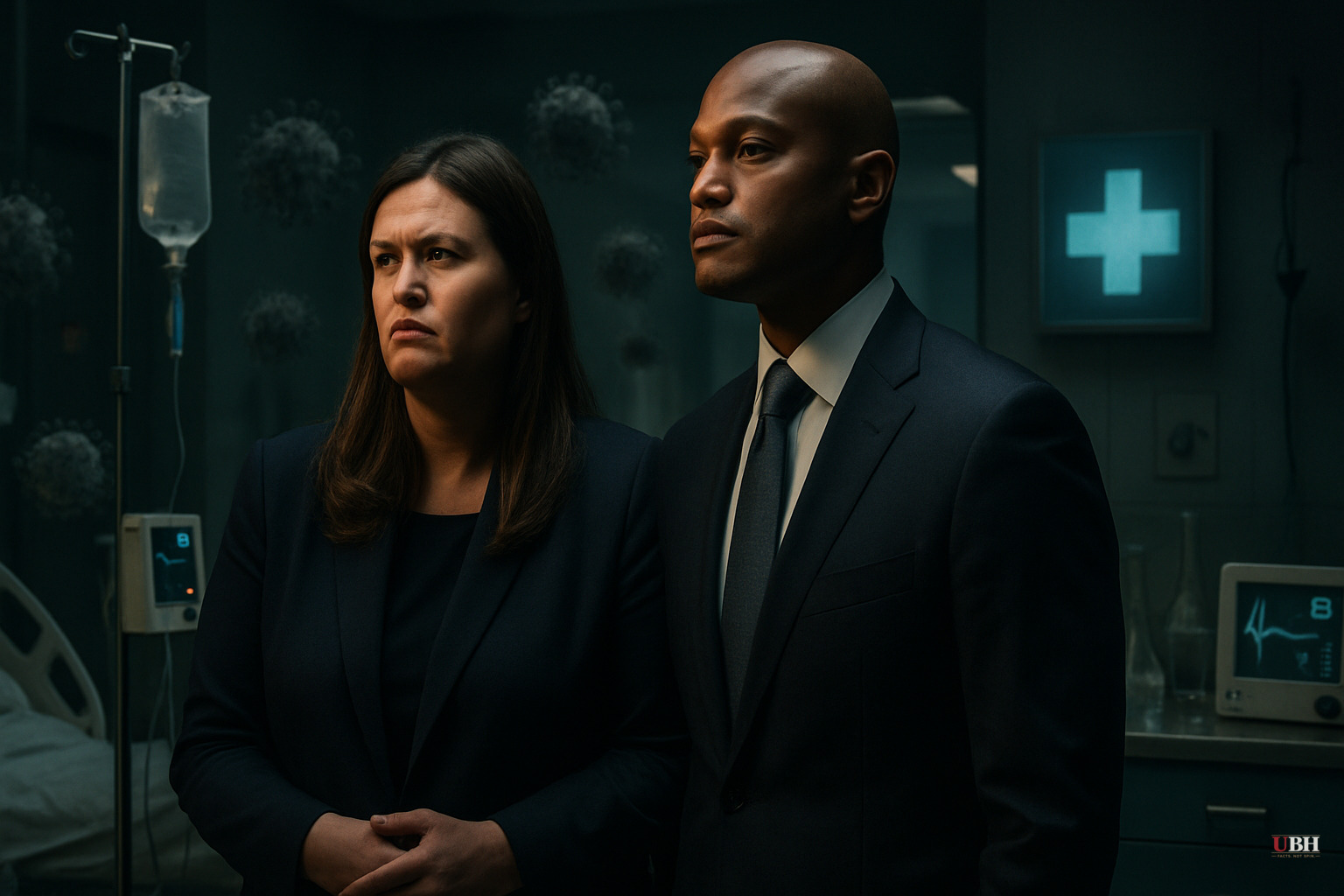
Arkansas Gov. Sarah Huckabee Sanders (R) and Maryland Gov. Wes Moore (D) appeared on NBC's Meet the Press on May 10, 2026, alongside philanthropist Olivia Walton for what NBC News called a "Common Ground conversation" on maternal health. Their message: cooperation between states, not partisan warfare, is the only path forward.
"It has to be bipartisan," Moore said flatly, according to NBC News. Sanders echoed the same.
The Crisis Nobody Wants to Quantify On-Air
The actual data tells a different story than most coverage suggested.
The United States has the worst maternal mortality rate among wealthy nations — by a wide margin. The CDC has documented that American women die from pregnancy-related causes at rates that would embarrass a developing country. Black women die at roughly three times the rate of white women. This isn't a new story. It's a story that's been ignored for decades because it doesn't fit neatly into a single political narrative.
The Association of Maternal and Child Health Programs (AMCHP) maintains a federal bill tracker covering legislation meant to improve outcomes for mothers and children. As of their last update on March 26, 2026, there is no shortage of bills introduced — but introduction is NOT passage. The gap between proposed legislation and actual law is where American mothers are dying.
What Trump's Moms.gov Actually Is
The Trump administration launched Moms.gov on Mother's Day, according to The Hill. The site's stated purpose is providing resources to expecting women and their families.
A resource website costs relatively little and can genuinely help women navigate a confusing healthcare system. But it has real limitations.
It's a website. It is NOT a funding commitment, a policy overhaul, or a solution to the provider shortages gutting rural maternal care. Arkansas — Sanders' own state — has some of the worst maternal health metrics in the country and a significant rural hospital access problem. A .gov URL doesn't deliver a baby in a county with no OB-GYN.
The mainstream media coverage of Moms.gov ranged from mildly positive to nonexistent, depending on the outlet. Neither side pressed hard on what the site actually does versus what the administration claims it does.
What the Bipartisan Framing Gets Wrong
The Moore-Sanders pairing is genuinely encouraging. Two governors from states with very different political cultures agreeing on the problem is step one. But the coverage — particularly from NBC News — leaned heavily into the feel-good bipartisan angle without pressing either governor on specifics.
What policies exactly? What funding levels? Which bureaucracies get cut and which get resources? How do you expand maternal care in rural Arkansas without addressing the broader collapse of rural hospitals — many of which have been closing under the weight of Medicaid reimbursement rates that don't cover costs?
None of that was in the Meet the Press segment. Thirty-one minutes of panel discussion, according to NBC News, and the coverage reduces it to vibes.
Sanders' Arkansas has made some moves on Medicaid postpartum coverage extension, which keeps new mothers insured for 12 months after birth rather than 60 days. That's a concrete policy with a concrete impact. Moore's Maryland has invested in maternal health initiatives tied to reducing racial disparities. These are real things that deserved more airtime than the handholding narrative.
The Bigger Picture Nobody Is Connecting
The maternal health crisis intersects directly with several other policy fights happening simultaneously.
Medicaid funding is under pressure at the federal level. Cuts to Medicaid don't just affect low-income adults — they hit pregnant women hard, since Medicaid covers roughly 40 percent of all births in the United States. Any governor serious about maternal health who also supports Medicaid cuts will have to square that circle publicly.
Rural hospital closures are accelerating. When a county loses its only hospital, the nearest OB-GYN might be 60 miles away. That kills mothers.
Workforce shortages in obstetrics are severe, particularly in underserved areas. No website fixes a workforce pipeline problem.
What Comes Next
The Moore-Sanders conversation is worth having. Bipartisan acknowledgment of a real crisis beats partisan denial every time. The Trump administration creating a resource hub for expecting mothers is not nothing.
But resource websites and TV panels don't write policy, fund hospitals, or train midwives. American mothers are dying at rates that should trigger a national emergency — and the political class just gave itself a round of applause for showing up on Mother's Day.
When the governors come back with specific legislation, specific dollar amounts, and specific accountability measures, that's the story. Until then, this is a promising start, not a solution.
Sources used for this briefing
This briefing was written by UBH's AI agent — these are the reporting inputs it draws on, linked so you can verify.


