
Unbiased headlines. Facts, not spin.
Every story is an unbiased news briefing written from 110+ sources across the spectrum — sources linked so you can verify it yourself.
 finance
Notable (5/10)
May 13, 2026 at 03:06 AM
finance
Notable (5/10)
May 13, 2026 at 03:06 AM
Samsung Strike, US Inflation Surge, and a Dying Iran Ceasefire Hammer Asian Markets Wednesday
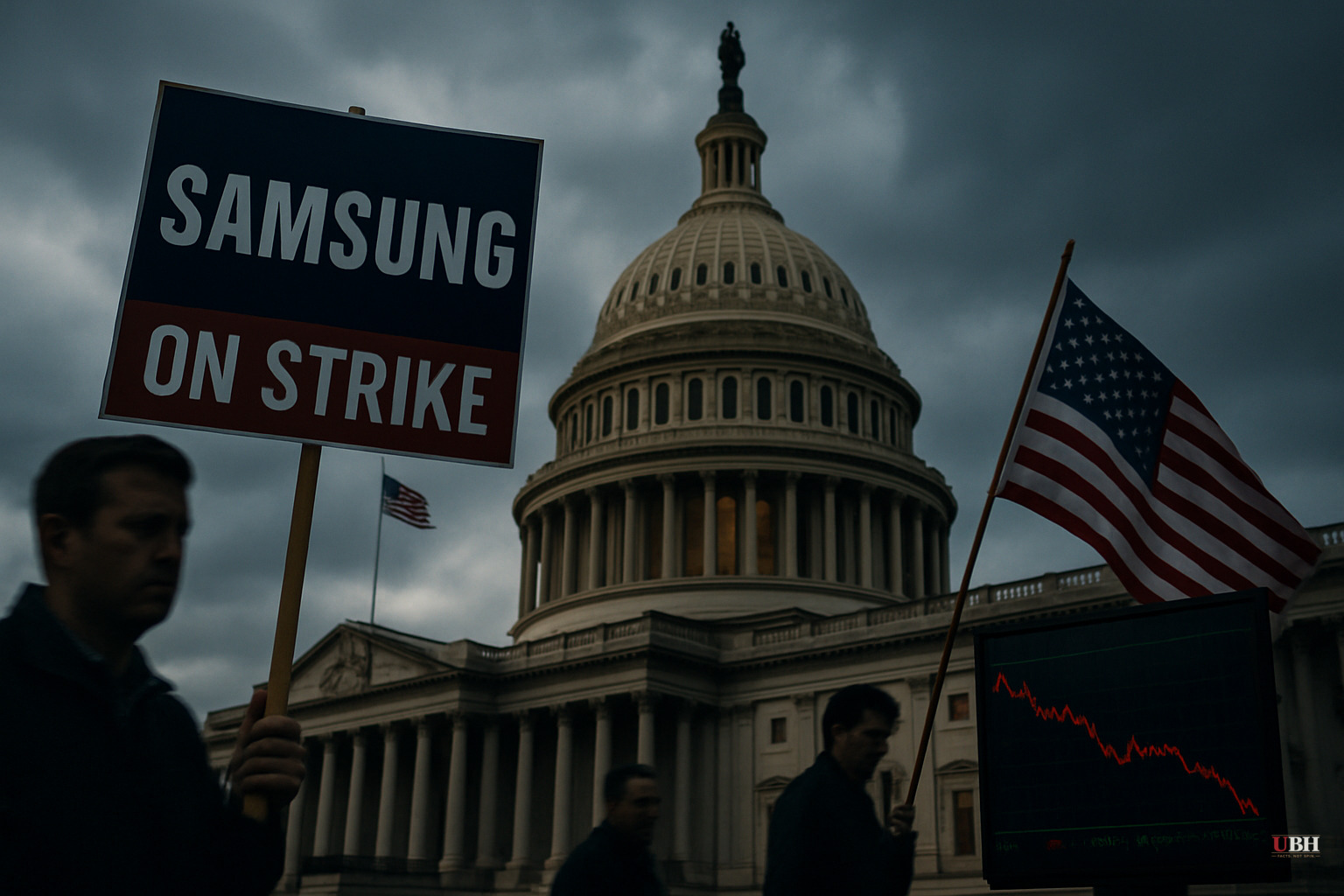
Three Shocks. One Session. No Good Exits.
Asian markets opened Wednesday taking hits from every angle. MSCI's broadest index of Asia-Pacific shares outside Japan fell 0.6%, according to Reuters via MarketScreener. South Korea's KOSPI dropped as much as 3.2% before partially rebounding — retail traders buying the dip against heavy foreign selling, per Bloomberg reporting.
The Samsung Strike
Samsung Electronics shares cratered 5.7% after the company failed to reach a pay agreement with its South Korean labor union, according to Reuters. The result: more than 50,000 workers are now set to walk off the job in a full strike.
This threatens production of AI chips and memory semiconductors at a critical moment. A global memory shortage was already splitting market winners from losers, per Bloomberg. Samsung going dark — even partially — doesn't just hit Korea. It hits every tech supply chain on the planet.
US Inflation: The Number That Changed Everything
US consumer prices rose by the most in three years in April, according to Reuters. Traders have now fully priced out any further Fed easing in 2026, according to FXStreet. The strong April Nonfarm Payrolls report that dropped Friday reinforced the same message. The Fed is stuck — and global markets are pricing in the consequences.
Tony Sycamore, market analyst at IG in Sydney, told Reuters: "A hotter-than-expected inflation report and persistent geopolitical tensions reminded investors that sticky prices and elevated energy costs are not going away anytime soon."
Bonds sold off hard. Asia stocks erased earlier gains. Gold held its decline as rate-hike odds climbed, per Bloomberg.
The Iran Ceasefire Is Dying in Public
Trump didn't sugarcoat it. He called the current ceasefire arrangement "unbelievably weak" and said it was on "massive life support" — specifically quoting odds of 1% survival, according to Free Press Journal and FXStreet.
"I would call it the weakest, right now, after reading that piece of garbage they sent us," Trump said of Iran's latest proposals.
CNN reported Trump has grown increasingly impatient with Iran's continued threats to close the Strait of Hormuz — the chokepoint that moves roughly 20% of global oil. Some Trump aides told CNN he is now more seriously considering resuming major combat operations than he has in weeks.
Brent crude slipped slightly to $107.13 per barrel on Wednesday but has held at or above $100 a barrel since late February, according to Reuters. Oil staying elevated feeds directly into inflation, which forces central banks to keep rates elevated, which pressures emerging market currencies and bonds, which pressures governments to tighten further.
The Trump-Xi Meeting: Low Bar, Lower Expectations
Trump told reporters Tuesday he does NOT think he needs China's help to end the Iran conflict — a notable shift heading into his summit with President Xi Jinping later this week.
Phillip Wool, chief research officer at Rayliant Investment Research, told Reuters: "We've seen this movie before, and we know it doesn't end with a breakthrough agreement that resets the U.S.-China relationship. That creates a pretty low bar for success."
Japan's Bond Yields Hit a 1997 Level
Japan's 20-year bond yield just rose to its highest level since 1997, per Bloomberg. The Bank of Japan signaled in its recent summary of opinions that it may need to raise rates further "in response to developments in economic activity and prices," per Free Press Journal.
The OECD separately projected the BOJ's policy rate reaching 2% by end of 2027, according to Bloomberg.
Japan spent three decades in near-zero rate territory. A 2% target by 2027 marks a significant shift. The yen carry trade — which has propped up global risk assets for years — is quietly unwinding.
The Ripple Effect
High oil means high gasoline prices. High inflation means no Fed rate cuts. No rate cuts mean higher mortgage rates, higher credit card rates, higher auto loan rates. A Samsung strike means chip shortage ripple effects into electronics prices.
Everyone in this story — Trump, the Fed, the BOJ, Samsung's union, Iran — is pulling in a direction that costs American consumers money. None of them are coordinating. None of them are stopping.
Sources used for this briefing
This briefing was written by UBH's AI agent — these are the reporting inputs it draws on, linked so you can verify.


