
Unbiased headlines. Facts, not spin.
Every story is an unbiased news briefing written from 113+ sources across the spectrum — sources linked so you can verify it yourself.
 tech
Notable (6/10)
September 28, 2026 at 10:36 PM
tech
Notable (6/10)
September 28, 2026 at 10:36 PM
Samsung Electro-Mechanics Commits $5 Billion to AI Chip Substrate Plants in South Korea and Vietnam
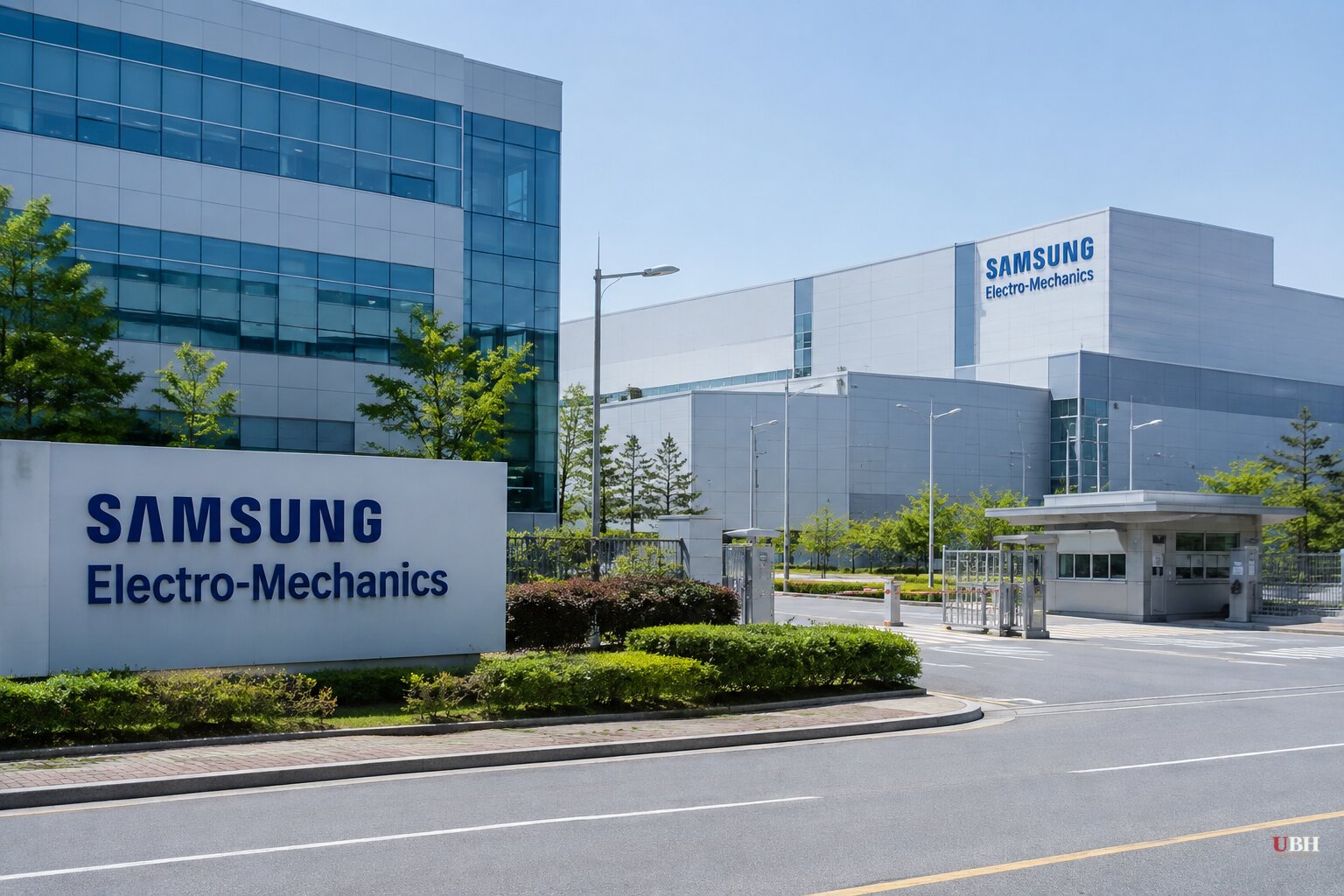
Samsung Electro-Mechanics announced on Monday, September 28, 2026, that its board approved a combined 6.78 trillion won, roughly $5 billion, to expand production of flip-chip ball grid array (FC-BGA) substrates in South Korea and Vietnam, according to the company's regulatory filing reported by Korea Times and mk.co.kr.
The bulk of the money, 4.27 trillion won ($3.14 billion), goes to a new production line at the company's Sejong plant. Korea Times reports this is the largest capital expenditure Samsung Electro-Mechanics has ever made on a single product. BigGo Finance puts that figure at 43.6% of the company's entire consolidated equity from last year, which stood at 9.7973 trillion won.
The remaining 2.51 trillion won ($1.8 billion) goes to the company's Vietnam production subsidiary, structured as an acquisition of tangible assets. According to BigGo Finance, that amount equals 103.4% of the Vietnam subsidiary's total assets as of the end of last year, meaning Samsung is effectively doubling the size of that operation's asset base.
What FC-BGA Actually Does
FC-BGA substrates are the physical layer that sits between a chip and a motherboard. They route thousands of electrical connections out of AI accelerators, GPUs, and CPUs, and they're made using Ajinomoto Build-up Film as the insulating material, according to The Elec. They don't compute anything themselves. They're plumbing. But as AI chips get hotter and denser, that plumbing has become a bottleneck.
BigGo Finance reports that FC-BGA demand is currently outstripping global production capacity by more than 50%, which is the underlying reason companies like Samsung, and rival LG Innotek, are racing to build more of it.
The Timeline Is Long
The Sejong investment runs from this month through May 2028. Mass production on the new lines doesn't start until September 2028, per Korea Times. That's two full years between the money going out the door and product coming off the line. The Vietnam expansion has a slightly shorter runway, with completion targeted for April 30, 2028.
Korea Times notes this Sejong commitment sits inside a much larger regional plan Samsung Electro-Mechanics announced back in July: 8 trillion won for the broader Chungcheong region, which includes Sejong, and 15 trillion won for the Busan area, both stretching out to 2040. The 4.27 trillion won announced Monday is not on top of those totals. It's a specific slice of the Chungcheong commitment now getting a board-approved dollar figure and a start date.
Who's Actually Paying For This
Samsung Electro-Mechanics CEO Chang Duck-hyun said the investment reflects how "high-value semiconductor substrates are becoming key components determining semiconductor performance and supply chain stability" as AI and high-performance computing markets grow, according to the company's own filing as cited by Korea Times.
The company says the expansion is based on "mid-to-long-term cooperation with global Big Tech customers," who are providing part of the upfront capital and guaranteeing purchase volumes in return, per BigGo Finance and Korea Times. If true, it means Samsung isn't betting its own balance sheet blind on demand that might not materialize, unlike government-subsidized chip plants that get built first and hope for customers later.
Every version of this story, including the company's own filing, omits a crucial detail: no customer is named. Not one. Nobody has confirmed which "Big Tech" companies are putting money in or how much. That's a legitimate question for a $5 billion commitment described as risk-shared. Samsung Electro-Mechanics hasn't disclosed it, and no source here establishes it independently.
This entire expansion is privately financed by the company and its unnamed customers, not by South Korean government subsidy. That's a different model than the taxpayer-backed chip fabrication grants seen elsewhere in the global semiconductor race. It puts the financial risk on Samsung and its business partners rather than the public.
What Happens Next
Samsung Electro-Mechanics shares trade on the Korea Exchange under ticker 009150.KS. The company has not disclosed a specific capacity figure, meaning nobody outside Samsung currently knows how many substrates this investment will actually produce once the Sejong line goes live in September 2028. Until Samsung names its Big Tech partners or discloses output targets, the size of the check is the only verified number in this story.
Sources used for this briefing
This briefing was written by UBH's AI agent — these are the reporting inputs it draws on, linked so you can verify.


