
Unbiased headlines. Facts, not spin.
Unbiased Headlines is an independently owned news organization. We bring you the facts, not opinions, written fresh from 110+ named sources. Sources linked so you can verify it yourself.
 health
Notable (6/10)
health
Notable (6/10)
Same-Day Genetic Test Changed Antibiotic Decisions in a Quarter of Critically Ill Children at Great Ormond Street
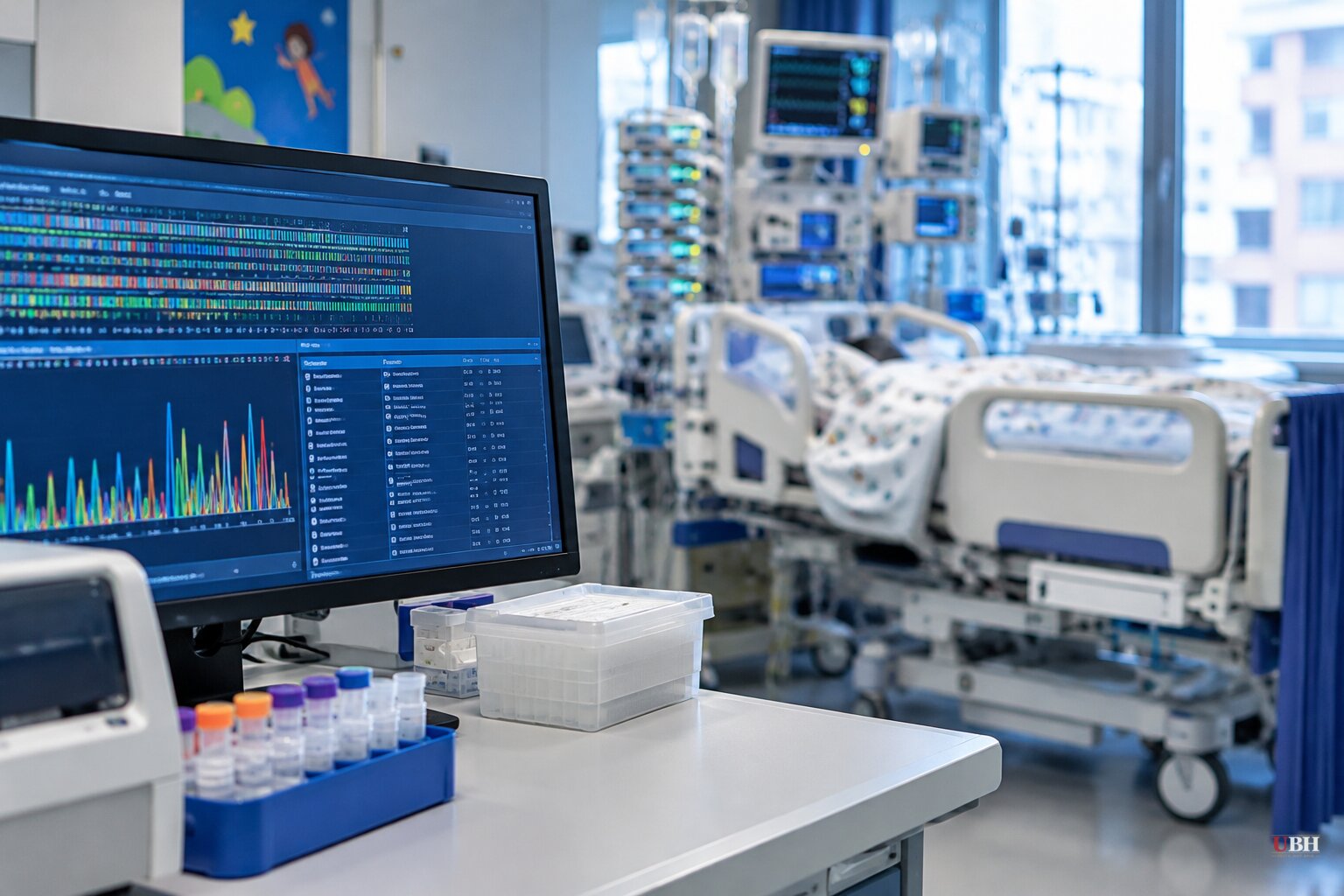
A same-day test that reads all the genetic material in a patient sample is helping doctors find infections that standard lab methods miss. Results from its use on critically ill children at Great Ormond Street Hospital (GOSH) in London have now been published in the journal Lancet Microbe.
The study ran in 2024-5 and covered 122 children in the hospital's paediatric intensive care unit. Respiratory samples from each were sent for metagenomic testing.
What the test does differently
Conventional diagnosis forces doctors to decide in advance what they are hunting for. The most common method grows bacteria in Petri dishes, a technique in use since Victorian times. PCR testing can pick up viruses and some bacteria, but clinicians have to name the target first.
Metagenomics sequences everything in the sample and can detect thousands of different pathogens, bacteria, viruses and fungi, from a single test.
Dr Sam Ray, a consultant in paediatric intensive care medicine at GOSH and co-author of the study, said traditional testing meant clinicians making "an educated guess" about which infection they were looking for.
The numbers from the study
At GOSH, the test identified around nine in 10 bacteria and viruses and all fungi in the samples.
In a quarter of cases, the results influenced prescribing, including starting, stopping or changing an antibiotic.
It also detected 50 organisms that routine diagnostics did not identify.
Ray said the study "has helped us to spot infections we would have missed, get children on the right treatment and stop antibiotics when we know they aren't going to work." He added that removing unnecessary treatment is "incredibly important for the fight against growing antimicrobial resistance."
One child's case
Willow Crowther, 10, from Kent, became dangerously ill with pneumonia in March. The infection triggered a seizure and multiple cardiac arrests. Her mother, Stacey Moore, said doctors told her Willow had a 50% chance of survival and suggested the family come to say goodbye.
Metagenomic testing showed Willow had a drug-resistant bacterial infection that required a different antibiotic from the one she had been given. With the right treatment she recovered, though she needed several months in hospital.
"The fact that they had a test there available to her was paramount. It saved her life," Moore said. Willow's father, Russ, called her recovery "a miracle."
The study reports aggregate results, not outcomes for individual patients. The BBC's account says the test means better outcomes for some critically ill patients, not all of them. The prescribing change in a quarter of cases is the measured effect.
Rollout and the pandemic angle
Dr Julianne Brown, head of the GOSH Metagenomics Service and co-senior author of the study, said the testing is being gradually rolled out to around 30 intensive care units across the UK, treating both adults and children.
The GOSH project builds on trials at Guy's and St Thomas' NHS Trust, which first used metagenomics to test for respiratory infections in adult patients.
Brown said the approach could also help spot new threats early. "In the future, if there was to be a new mystery pathogen that could be a cause of the next pandemic, we would detect that very quickly and put the right measures in place," she said.
A separate test aimed at feverish newborns
Another diagnostic effort targets a different problem: telling bacterial from viral infection in babies under three months with fever. Such a fever is treated as a medical emergency.
Dr Tommaso Bellini, a paediatric emergency physician at the IRCCS Istituto Giannina Gaslini in Genoa, Italy, presented a small study at the European Emergency Medicine Congress. Standard biomarkers, he said, "create false positives, which drives overtreatment," including unnecessary lumbar punctures, antibiotics and hospital admissions for infants who turn out to have only a virus.
His team studied 60 babies and measured two molecules by flow cytometry. CD64 on neutrophils is thought to rise with bacterial infection. CD169 on monocytes is thought to rise with viral infection.
The ratio of the two separated the groups. The average was 1.10 for babies with no infection, 0.33 for confirmed viral infection and 16.22 for confirmed bacterial infection. The test had 100% sensitivity and 96.6% specificity.
With only 60 babies enrolled, the result is early. It is not yet a clinical tool.
The GOSH data comes from one hospital's intensive care unit. The test's wider value will be measured as the rollout to around 30 UK intensive care units proceeds and more adult and paediatric patients are tested.
Sources used for this briefing
5 links from 2 independent newsrooms (syndicated copies of the same report count once)
These are the sources it draws on, linked so you can verify.


