
Unbiased headlines. Facts, not spin.
Every story is an unbiased news briefing written from 110+ sources across the spectrum — sources linked so you can verify it yourself.
 tech
Major Story (7/10)
July 8, 2026 at 08:39 AM
tech
Major Story (7/10)
July 8, 2026 at 08:39 AM
SambaNova Raises $1 Billion at $11 Billion Valuation, Lands JPMorgan as Inference Partner
$1 Billion in Five Months
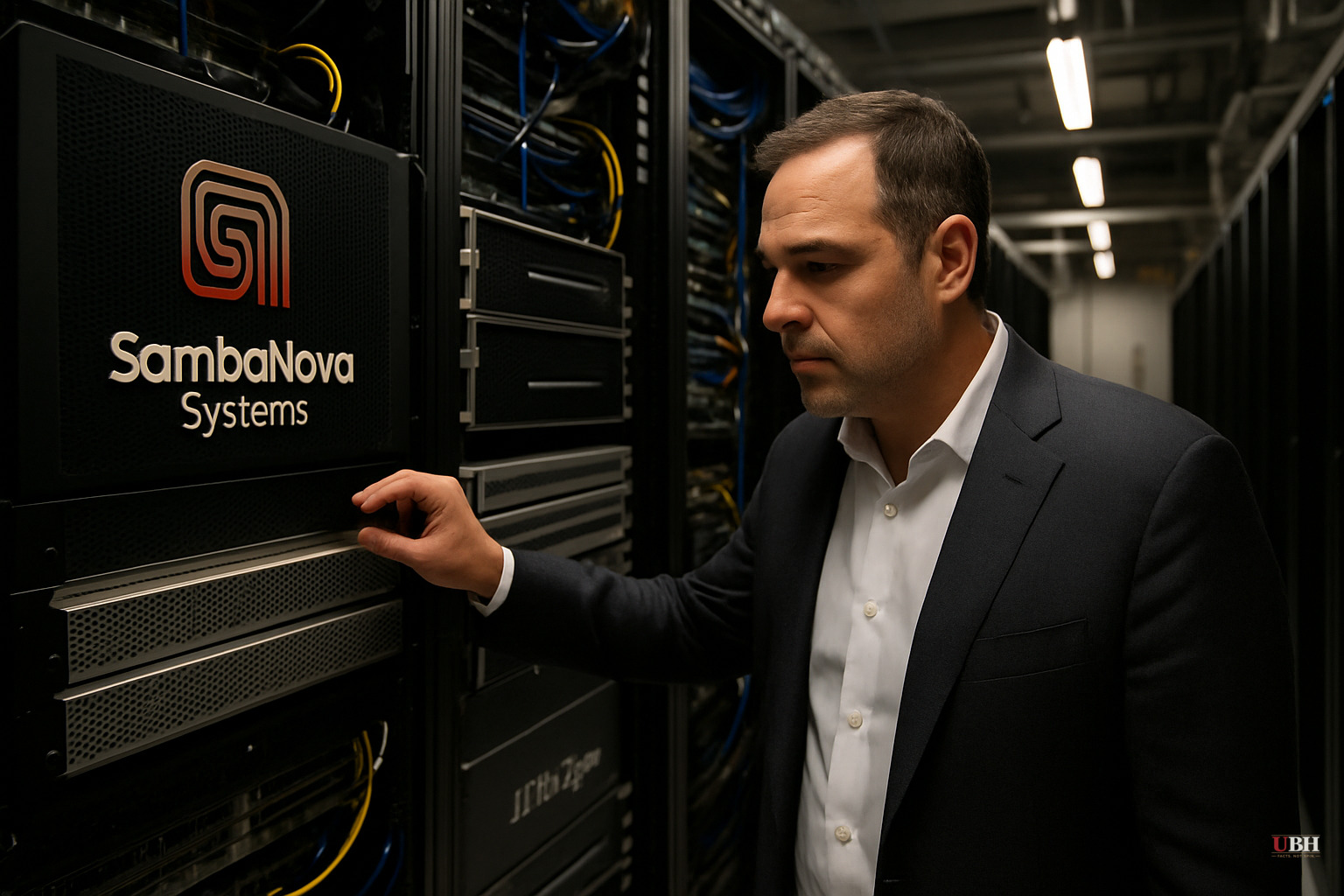
SambaNova Systems has now pulled in $1.35 billion in roughly five months. The Palo Alto-based chip startup closed a $350 million Series E in February 2026, then announced a $1 billion Series F round led by General Atlantic, with participation from Seligman Ventures, T. Rowe Price, and Capital Group, according to both CNBC and TechCrunch.
The Series F is described as a first close. Rodrigo Liang, SambaNova's CEO and co-founder, told TechCrunch that additional investors are expected to join in the coming weeks before a second close wraps up.
The new round values the nine-year-old company at $11 billion. For context, Bloomberg News reported in December 2025 that SambaNova had been in acquisition talks with Intel at a valuation of roughly $1.6 billion. Six months later, the company is worth nearly seven times that figure on paper.
What SambaNova Actually Sells
SambaNova is not building general-purpose chips. Its focus is inference: running large AI models quickly and cost-efficiently after they've been trained. That's a different product category than the GPUs Nvidia has dominated for model training.
The company sells its SN40L and SN50 chips packaged into server rack units that can be deployed in data centers. Its SN40L launched in September 2023 (available in the cloud) and went on-premises in November 2023. The next-generation SN50, unveiled in February 2026, is due to begin shipping to customers in the second half of 2026. SoftBank is the SN50's first announced deployment partner, according to TechCrunch.
Liang told CNBC that inference has "broken everything open" for standalone companies, arguing the market now rewards speed across a broad range of sectors.
The JPMorgan Win
The most concrete commercial signal in this announcement is JPMorgan Chase. The bank said it will deploy SambaNova's SN40L and SN50 systems for on-premises AI inference across its enterprise AI workloads, according to both outlets.
Liang called it a significant signal to the industry. "Having JPMorgan Chase decide they're going to use SambaNova for their inference solution is a big deal," he told TechCrunch. "It sends a message to the banking industry that it's time not to completely depend on cloud services."
The core pitch for on-premises inference is security and control. A bank running its most sensitive AI models on its own hardware rather than routing data through a third-party cloud keeps that data inside its own perimeter. SambaNova is betting that enterprises and governments, which Liang says are still in the early stages of their AI deployments, will increasingly make that same calculation.
The Intel Relationship
Intel participated in this Series F round and has been a SambaNova backer since its Series C. The two companies announced a multi-year partnership in February 2026 to support AI inference development built on Intel's Xeon chip. They now co-develop products and take them to market jointly.
Liang told TechCrunch the relationship lets SambaNova "leverage the scale of Intel with the technology we have." That's a strategically important point: SambaNova gets distribution and enterprise credibility through Intel's sales channels while Intel gets a credible AI inference story to sell alongside its chips.
IPO Watch
Liang told CNBC he is strongly considering a U.S. IPO in 2027. When TechCrunch asked whether the back-to-back funding rounds signaled a commitment to staying independent, he didn't give a definitive answer. He said the company continues to field acquisition interest and "the door is open," but that growth momentum would most likely push SambaNova toward a public listing.
SambaNova is not alone in this space. CNBC reported that South Korean startup Rebellions is separately targeting a Kospi IPO in the first or second quarter of 2027, and that Nvidia signed a deal last year to license technology from inference chip startup Groq. The inference chip market is crowded, and every new entrant is implicitly pitching a story about why Nvidia's GPU architecture, designed primarily for training, isn't the optimal tool for running models at scale.
The Honest Question About Valuation
SambaNova has gone from a $1.6 billion acquisition target in December 2025 to an $11 billion self-reported valuation six months later in a private market where investors are demonstrably euphoric about anything attached to AI chips. The PHLX semiconductor index is up roughly 80% in 2026 alone, according to CNBC. Private valuations set during peak enthusiasm don't always survive contact with public markets, and SambaNova has not yet publicly disclosed revenue, margins, or profitability figures that would let outside observers stress-test the $11 billion number.
The JPMorgan partnership is a real customer commitment, not a letter of intent. A major global bank deploying on-premises inference hardware is a different level of validation than a press release.
The unresolved question as of July 8, 2026: whether SambaNova can convert its momentum into enough recurring enterprise revenue to justify an $11 billion entry point for public market investors who, unlike General Atlantic and T. Rowe Price in a private round, will be able to sell the moment results disappoint.
Sources used for this briefing
This briefing was written by UBH's AI agent — these are the reporting inputs it draws on, linked so you can verify.


