
Unbiased headlines. Facts, not spin.
Unbiased Headlines is an independently owned news organization. We bring you the facts, not opinions, written fresh from 110+ named sources. Sources linked so you can verify it yourself.
 defense
Major Story (8/10)
defense
Major Story (8/10)
Russian Officials Say Ukrainian Drones Hit Ryazan Refinery Hours After Zelensky Declares Energy Truce Over
Since Trump declared an "energy ceasefire" on Sunday, Oct. 11, the truce has produced no visible pause in the fighting, and as of today, Oct. 15, it is effectively dead.
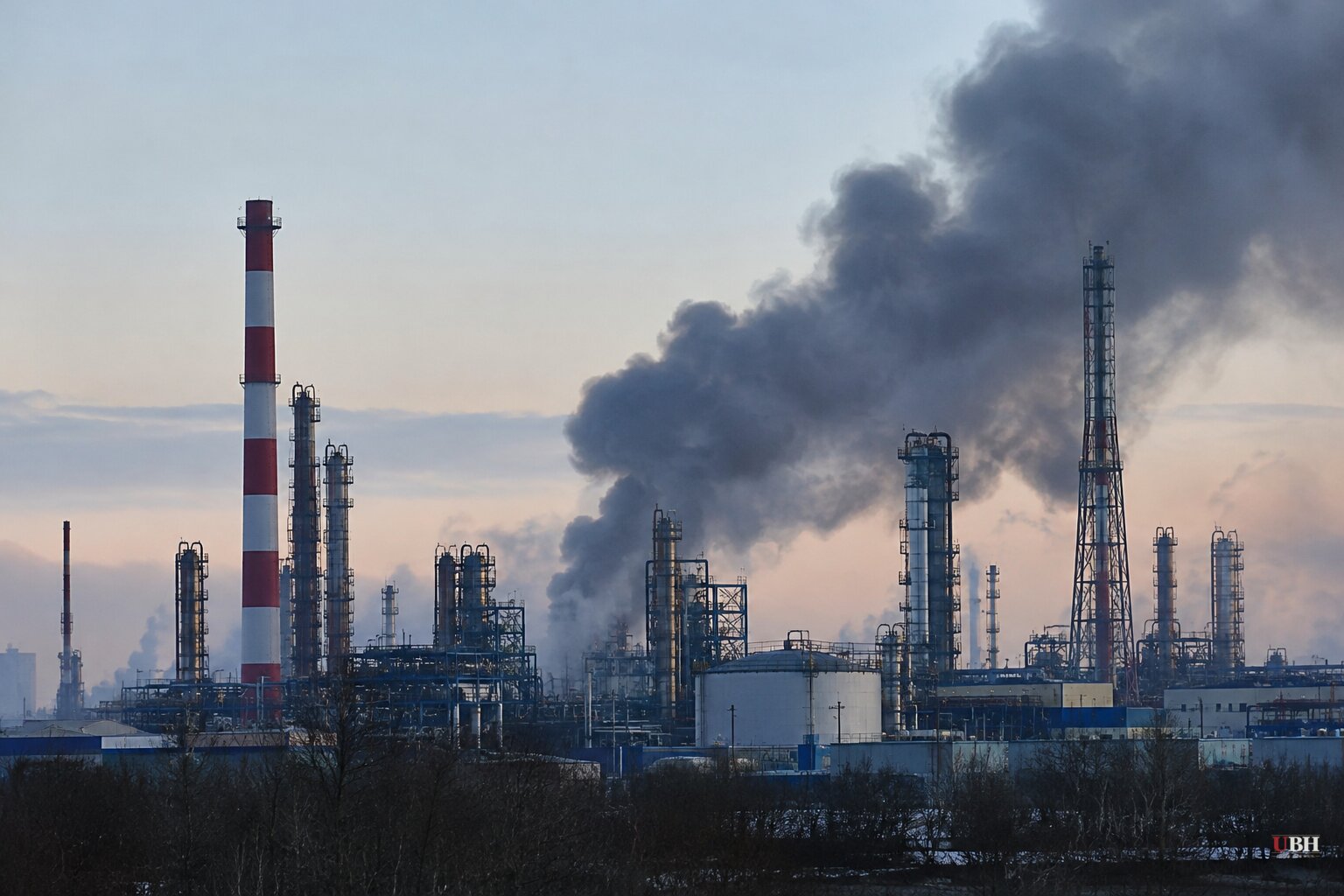
Ukrainian drones hit a refinery in Russia's Ryazan region early Thursday, about 300 kilometers (180 miles) southeast of Moscow. Russia's Defense Ministry and Ryazan Gov. Pavel Malkov confirmed a fire at the site. Malkov described a "massive drone attack" and said damage was still being assessed. A warehouse and several vehicles were damaged at another Ryazan facility.
A senior Ukrainian official, speaking anonymously because he was not authorized to discuss it, confirmed Ukraine carried out the strike. Kyiv has not commented officially.
What Moscow says it was hit with
Regional officials said the refinery was targeted by 69 drones and four Flamingo cruise missiles. The Russian ministry claimed the fire began when debris from a drone shot down by anti-aircraft fire fell on the facility. Those are Russian claims. Astra, a Russian online outlet, posted a photograph it said showed the blaze.
Zelensky: "We're done"
The strike followed a Financial Times interview with Zelensky in London, published Thursday. "The block [on attacking refineries] is out. We're done," he said.
Ukraine had paused refinery attacks after Trump's announcement. Zelensky said Kyiv held off to show it was ready for peace talks, while Russia kept hitting Ukrainian energy sites. He said Wednesday that the bombardment had left 600,000 people without power.
Trump's Truth Social post said "Both parties have agreed. Do not break it!" Neither government publicly confirmed that. Ukraine said it was heeding the halt. Russia's strikes on Ukrainian power plants, including a Kharkiv plant hit hours after Trump's announcement, continued.
The overnight Russian barrage
Russia answered with one of its largest drone assaults of the war. Zelensky said Russia launched more than 850 Shahed drones. More than 360 targeted the Kirovohrad region in central Ukraine, which has been hit less often than areas nearer the front. Governor Andriy Raikovych said three people were killed and six injured, and that the attacks hit "critical infrastructure, transport enterprises, logistics facilities and residential homes."
Zelensky said Russia escalated "after receiving sanctions relief and seeing attempts to pressure Ukraine." He tied the scale of the assault to restrictions on Ukraine's air defenses.
Intelligence and Starlink
The core of the dispute is Washington's conduct. Ukrainian officials say they received no U.S. early-warning alerts for incoming Russian ballistic missiles in recent days. They also say the military version of Starlink, Starshield, was slowed across the country, hampering frontline operations and medium-range strikes on Russian military sites.
Zelensky said Ukrainian commanders were told by their U.S. counterparts: "If you will not stop [the energy strikes], we will block intelligence." He said Kyiv was told the Starlink problem was a technical glitch and rejected that. "It was not a technical problem, it was the will," he told the FT.
Elon Musk said Wednesday on X that Starshield is owned and controlled by the U.S. government, which decides on any speed limits. That puts the decision at the White House or Pentagon, not at SpaceX. Neither has publicly explained the slowdown in the terms Zelensky describes. Trump has said intelligence sharing continues.
Washington's stated aim
Trump's stated goal is lower fuel prices. He has blamed Ukrainian strikes on Russian refineries for pushing up global diesel costs, which have climbed since the U.S.-Israeli war with Iran began in February. Last week he announced a deal with Putin to import Russian diesel. CNN reported the push comes as Trump works to cut energy costs ahead of the midterm elections. The diesel deal drew bipartisan criticism in the U.S. and anger from European allies.
On Saturday, Trump called for Ukraine to replace Zelensky and railed against the refinery strikes, a day after announcing the diesel deal.
Zelensky has not been quiet in return. In an interview with Piers Morgan on Wednesday, asked if he felt betrayed by Trump, he said "Yes," adding, "Our country has to survive, and we count on our real partners, strategic partners, the United States and President Trump." He called the diesel agreement a "simple victory" for the Kremlin and said, "It's painful when President Trump chooses one side, not our side."
The accounting
Trump announced a deal that neither belligerent had signed onto, and the announcement did not stop Russian strikes on Ukrainian grid targets. U.S. efforts under Trump to end the war have made no progress, more than 4½ years after the full-scale invasion began.
Zelensky, for his part, is resuming attacks on Russian fuel infrastructure at the moment Washington is signaling it will punish exactly that, and he has just met British Prime Minister Andy Burnham at 10 Downing Street on Wednesday, Oct. 14.
Malkov said the damage assessment in Ryazan is under way. What remains unanswered is whether the U.S. restores Ukraine's Starshield speeds and early-warning alerts, or whether the pressure Zelensky describes continues now that the refinery strikes are back.
Sources used for this briefing
7 links from 6 independent newsrooms (syndicated copies of the same report count once)
These are the sources it draws on, linked so you can verify.


