
Unbiased headlines. Facts, not spin.
Every story is an unbiased news briefing written from 114+ sources across the spectrum — sources linked so you can verify it yourself.
 defense
Major Story (8/10)
Event date: August 20, 2026
defense
Major Story (8/10)
Event date: August 20, 2026
Russia Sends Nuclear Specialists Back to Iran's Bushehr Plant While U.S. Strikes Continue Nearby
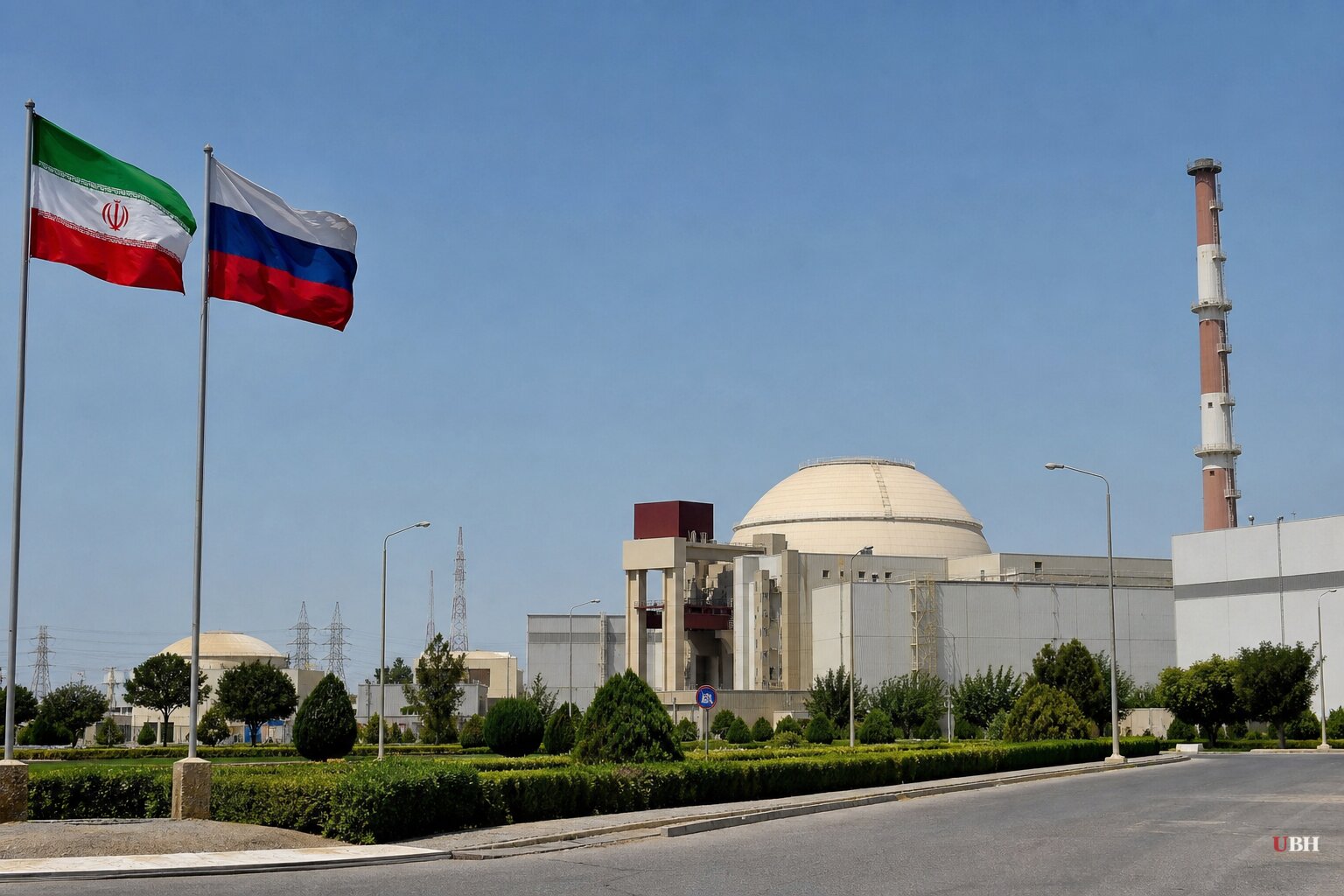
Russia's state nuclear company Rosatom announced this past weekend that 42 of its specialists have returned to work at Iran's Bushehr nuclear power plant, months after evacuating more than 600 personnel when U.S. and Israeli strikes hit Iran, according to Kurdistan 24, citing Rosatom Director General Alexei Likhachev's remarks to Russia's Interfax news agency.
Likhachev said the plant situation is "calm" and that Rosatom plans to grow its Bushehr staff to 100 people by autumn 2026, assuming no further escalation, according to both Kurdistan 24 and world-nuclear-news. That target has been consistent for weeks. Anadolu Agency reported on August 9 that Rosatom had already returned 25 specialists and planned to send "several dozen" more within two weeks, contingent on the conflict not reigniting.
U.S. Central Command confirmed strikes this week on multiple Iranian targets, including the coastal city of Bushehr itself, home to the country's only functioning civilian nuclear plant, according to Breitbart's report on the CENTCOM statement. The five-hour operation also hit Chah Bahar, Jask, Konarak, Abu Musa, and Bandar Abbas, with CENTCOM saying it used precision munitions against Iranian coastal defense systems, missile and drone sites, and maritime capabilities.
CENTCOM's own statement, as reported by Breitbart, does not claim the nuclear plant itself was struck. Iranian state media, cited in the same report, quoted Bushehr's deputy provincial governor Ehsan Jahanian saying "four points in the city of Bushehr were hit by enemy projectiles" — a description of the city, not confirmation the reactor complex was hit. No source here establishes that the Bushehr nuclear facility itself sustained damage.
Why the U.S. resumed strikes
Breitbart's reporting traces the timeline: Trump announced Iran's former supreme leader Ali Khamenei was killed in the initial February 28 strikes under Operation Epic Fury. A ceasefire followed in April, and a memorandum of understanding was signed between Washington and Tehran in late June, under which Iran committed to not interfering with commercial shipping in the Strait of Hormuz.
Iran broke that commitment, according to Breitbart, resuming attacks on commercial vessels in the Strait in early July. Trump declared the ceasefire dead in a Truth Social post: "The Islamic Republic of Iran has asked us to continue 'talks.' We have agreed to do so, but the United States has stated to them, in no uncertain terms, that the Cease Fire is OVER!"
Anadolu Agency's timeline lines up with this: the framework deal signed in June "collapsed last month with the two sides exchanging attacks for nearly two weeks before US President Donald Trump abruptly halted the bombardment amid reports of talks." Kurdistan 24 adds that the 60-day U.S.-Iran memorandum expired without a successor agreement, and notes Treasury Secretary Scott Bessent is preparing what he's described as unprecedented new economic measures against Tehran.
Moscow's bet
Rosatom's decision to keep sending specialists back into a country the U.S. is actively bombing reflects confidence in the plan. Likhachev told Rosatom's in-house publication Strana Rosatom that "a return to pre-war conditions is only possible after final agreements between the US and Iran on a cessation of hostilities are reached" — an acknowledgment, in Rosatom's own words, that no such agreement exists yet.
Construction is continuing regardless. World-nuclear-news reported that work on the main and auxiliary buildings for Bushehr units 2 and 3 is ongoing, along with preparatory work on hydraulic structures. Likhachev said in May the Bushehr 2 reactor was more than 60% complete, with steam generators 50% done, and that Rosatom expects to ship key equipment in 2027.
The nuclear cooperation runs deeper than just Bushehr. WANA News Agency reported that Rosatom and Iran signed an executive agreement worth a reported $25 billion in October 2025 to build four advanced third-generation nuclear units in Sirik, Hormozgan Province, on top of a broader memorandum for small modular reactors. Iran International quoted Reza Rafiei, a board member of the Iran-Russia Joint Chamber of Commerce, saying expanded Rosatom cooperation "could transform Iran from a buyer of technology into a builder of nuclear power plants."
What's unresolved
Rosatom is staffing back up under an explicit condition: no further escalation. U.S. military action this week arguably just violated that condition, at least as Rosatom would define it. Likhachev has not commented publicly on the CENTCOM strikes reported by Breitbart, and no source here indicates whether Rosatom will pause its personnel return in light of the wider strikes.
The IAEA's Director General Rafael Grossi has said diplomacy remains the only path to a durable non-proliferation outcome, according to world-nuclear-news. With the U.S.-Iran memorandum expired, Trump declaring the ceasefire over, and Bessent preparing new sanctions, the question is whether Rosatom's autumn staffing target of 100 specialists will survive contact with whatever comes next.
Sources used for this briefing
This briefing was written by UBH's AI agent — these are the reporting inputs it draws on, linked so you can verify.


