
Unbiased headlines. Facts, not spin.
Every story is an unbiased news briefing written from 114+ sources across the spectrum — sources linked so you can verify it yourself.
 defense
Major Story (8/10)
Event date: August 19, 2026
defense
Major Story (8/10)
Event date: August 19, 2026
Russia Is Now Shipping Explosives and Drone Parts to Iran Through the Caspian Sea, Document Shows
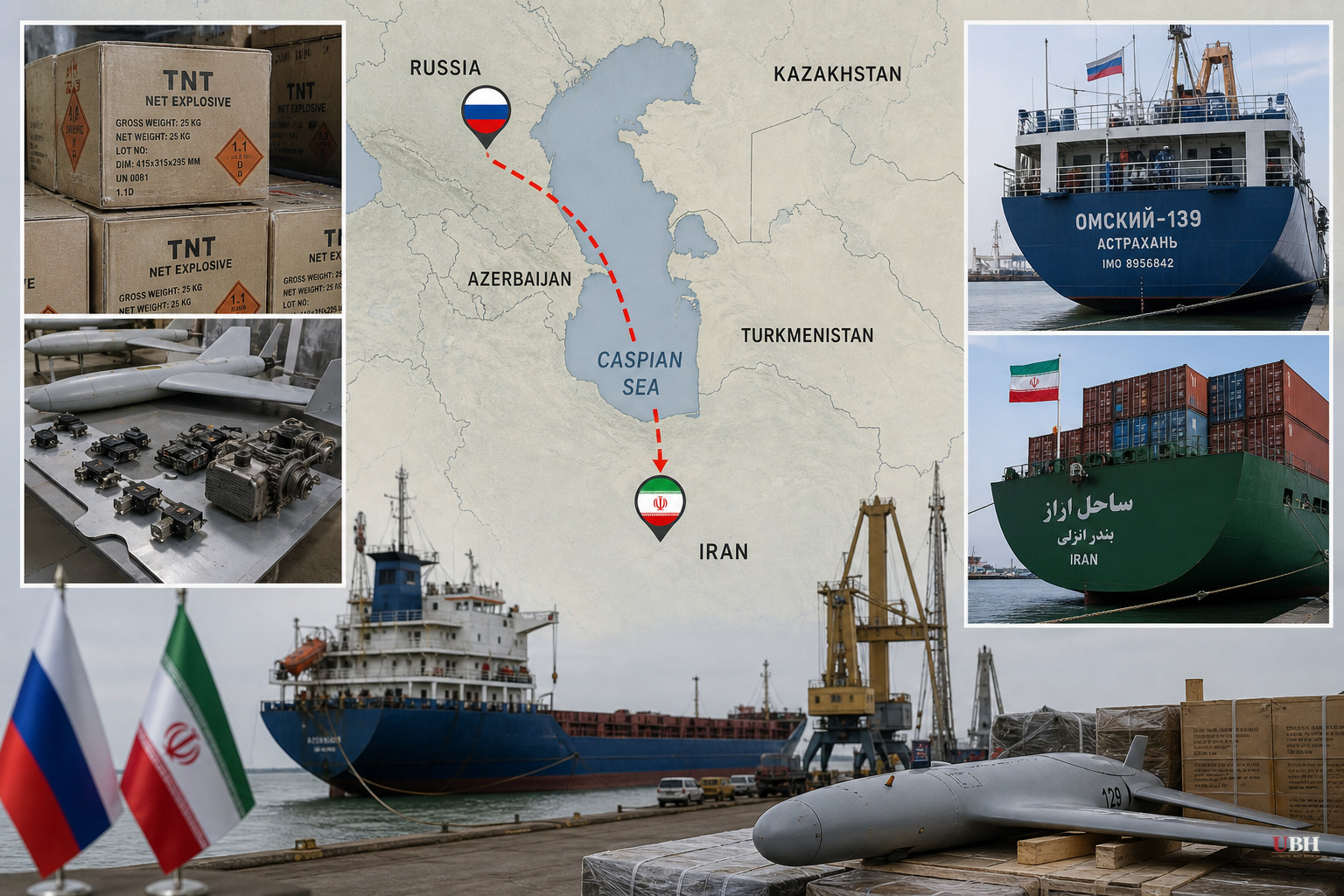
For years the traffic ran one direction. Iran sent Russia Shahed drones and the know-how to build them at the Alabuga plant, and hundreds of Russian Shahed-type drones originally designed by Iran regularly target Ukrainian civilians in Russian attacks, according to the Kyiv Independent. Now, according to a European government document obtained by NBC News and confirmed by a Western official, the traffic is running the other way.
The document shows Russia sending TNT, drone components, and ammunition to Iran across the Caspian Sea, according to NBC News reporting cited by the Kyiv Independent, the Times of India, and RFE/RL. More than two dozen ships made the crossing, the Kyiv Independent reported, as Tehran works to replenish stockpiles hit hard during nearly six months of conflict with the United States and Israel. Satellite imagery reviewed by analysts also suggests some cargo includes components tied to ballistic missile production, according to the Times of India.
Why the Caspian matters
The Caspian Sea is bordered by exactly five countries: Russia, Iran, Kazakhstan, Turkmenistan, and Azerbaijan. Under international convention, it falls entirely within their jurisdiction. No Western warship has legal access. No allied vessel can board or inspect cargo moving between Russian and Iranian ports. Ships can shut off their transponders with no one the wiser.
Geography and maritime law explain why Moscow and Tehran picked this route. The Times of India laid out the legal framework plainly.
Glen Howard, president of the Saratoga Foundation, told RFE/RL the Caspian is "a natural kind of secure lifeline supply line that goes both ways for the Russians and for the Iranians." Barry Pavel, a former senior director for defense policy at the National Security Council, told RFE/RL that as the two countries deepen cooperation, "one should expect increased traffic and use of this corridor."
What we don't know
Howard told RFE/RL flatly: "We just don't know what's in the cargoes of those ships. But we know it's there. We know it's vibrant." Grain and ordinary trade goods move on this route too. Not every ship is running munitions.
Senior US administration officials told RFE/RL they're watching the broader Russia-Iran logistics relationship closely, but declined to discuss specific intelligence or confirm whether wartime supply arrangements are becoming permanent infrastructure. They also wouldn't confirm or deny speculation about outside assistance to Ukrainian operations targeting the corridor.
That speculation exists because Ukraine has already struck the route directly. Ukraine's security service, the SBU, hit an Iranian ship carrying military cargo between Iran and Russia in the Caspian on July 25, according to the Kyiv Independent. Iran's Foreign Ministry claimed the vessel was commercial, said the strike killed one sailor and wounded another, and called it "an act of aggression that could further inflame and expand the flames of war." Ukrainian Foreign Minister Andrii Sybiha and his Iranian counterpart, Abbas Araghchi, held what the Kyiv Independent described as a "frank conversation" three days later.
Israel has also targeted the corridor from the air. Strikes earlier this year hit Bandar Anzali, an Iranian Caspian port identified as part of the supply route, damaging port infrastructure and naval assets, according to reporting from the Times of Israel cited by the Times of India.
The escalation crowd
Not everyone thinks watching is enough. Breitbart's Joseph O'Donnell argued for treating this as one more artery to sever, calling for strikes on "Caspian Sea ports" and northern Iranian rail and transfer hubs to cut off what he called the IRGC's revenue jugular, citing an unnamed leaked CIA report claiming Iran could hold out under blockade for three or four months. That's a policy argument, not a reported fact, and no source here verifies the CIA assessment independently.
Anders Corr, writing in the Epoch Times, tied the Caspian corridor to a wider pattern of China and Russia helping Iran and its proxies evade pressure, pointing to reported Chinese shoulder-fired missile shipments to Iran and Chinese ships reportedly getting preferential treatment from the IRGC and the Houthis in exchange. Corr also cites reports that Russia is separately assisting Iran and the Houthis with satellite targeting intelligence. Corr's framing treats Beijing as a co-belligerent enabler; it's a serious allegation resting on reports he describes as "alleged," and it should be read as such.
Fox News flagged the story in a brief segment August 19, reporting that Russia is providing weapons components and satellite intelligence to Iran via the Caspian. The satellite-intelligence piece of that claim isn't part of the NBC document on TNT, drone components, and ammunition described by the other outlets; the Times of India separately reports that Russia is providing satellite imagery to help Iranian forces monitor military sites, as part of broader cooperation alongside China's support to Tehran. Fox's own clip offered no additional sourcing beyond the segment itself.
What's next
US officials aren't confirming specific cargoes or intelligence, and the Caspian's legal isolation means outside verification will stay hard to come by. The open questions are whether Ukraine or Israel escalate strikes on the corridor itself, whether Washington moves beyond monitoring to some form of interdiction pressure on the countries that do have Caspian access, and whether this wartime supply arrangement, as US officials put it to RFE/RL, hardens into permanent infrastructure between Moscow and Tehran.
Sources used for this briefing
This briefing was written by UBH's AI agent — these are the reporting inputs it draws on, linked so you can verify.


