
Unbiased headlines. Facts, not spin.
Every story is an unbiased news briefing written from 110+ sources across the spectrum — sources linked so you can verify it yourself.
 politics
Notable (5/10)
June 3, 2026 at 07:14 PM
politics
Notable (5/10)
June 3, 2026 at 07:14 PM
Rubio Spends a Full Day on Capitol Hill Defending Iran War, Foreign Aid Cuts, and a $33.6 Billion State Department Budget
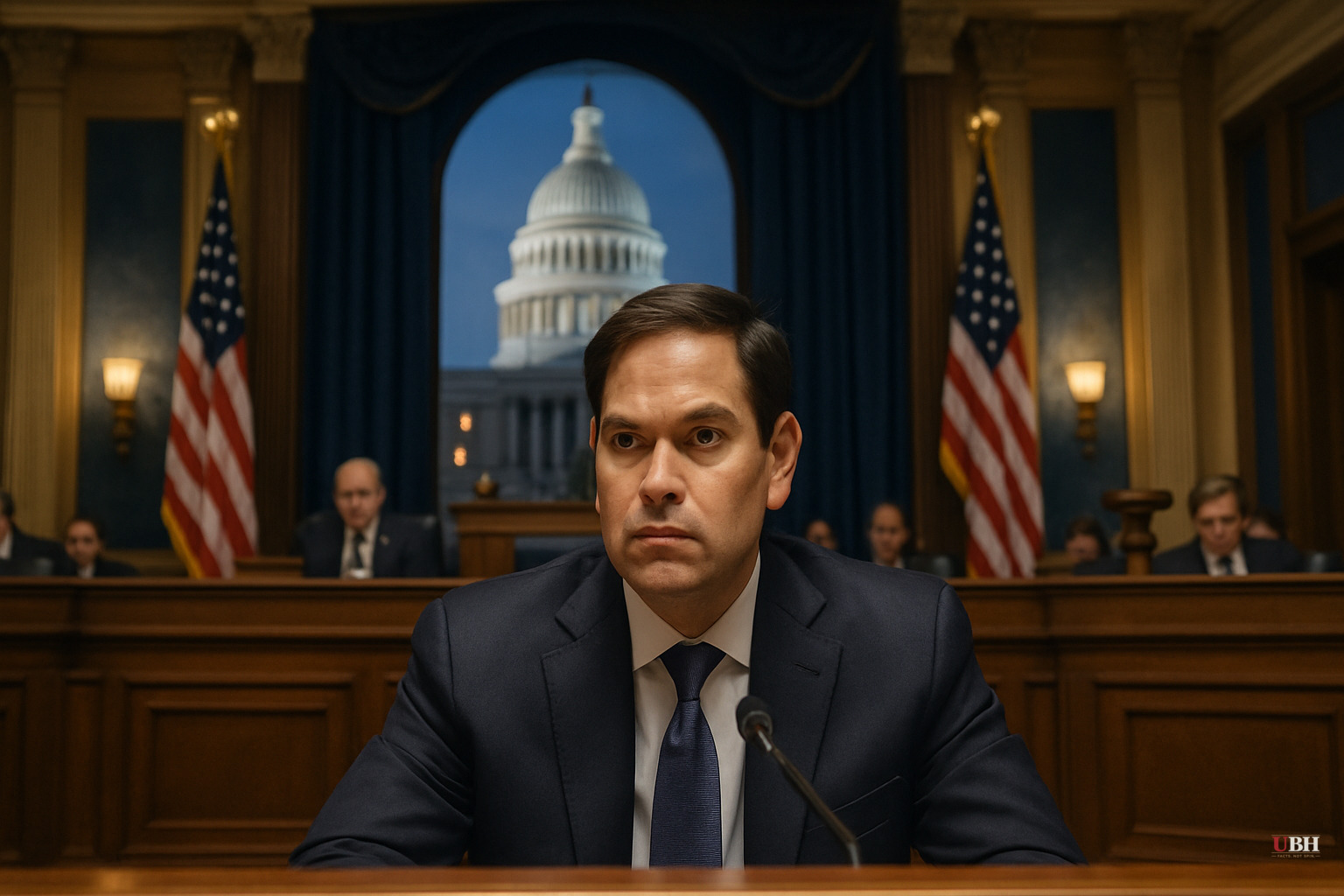
Since the Iran war kicked off in late February, Secretary of State Marco Rubio had avoided public congressional testimony — until June 2, when he logged a full day on Capitol Hill facing both the Senate Foreign Relations Committee and a House Appropriations subcommittee, according to PBS NewsHour and The Hill.
What Rubio Actually Said
Rubio's headline claim: Iran has agreed to negotiate aspects of its nuclear program that, quote, "just a month ago, just a year ago, they were refusing to even mention." He told the Senate he's optimistic about resumed nuclear talks.
But he immediately hedged. There's no guarantee "it will lead to a deal that's acceptable," he said, and negotiations are complicated by the instability of Iran's own leadership.
That optimism collided almost immediately with reality. Two semiofficial Iranian news agencies reported Iran had stopped communicating with mediators after Israel threatened to bomb Beirut during its ongoing fight with Hezbollah, according to PBS NewsHour. President Trump called those reports "false and erroneous." As of June 3, U.S. forces had struck Qeshm Island and Iran had droned Kuwait's airport — which contradicts the diplomatic narrative Rubio presented.
The Budget Numbers
Rubio defended a $33.6 billion budget request for the State Department in fiscal 2027, according to ms.now. For context, Homeland Security Secretary Kristi Noem was simultaneously on Capitol Hill defending a $71.7 billion DHS request, and Treasury Secretary Scott Bessent was before the Senate Finance Committee justifying an $11.5 billion Treasury budget.
The combined ask across just three departments on a single day exceeded $116 billion.
Foreign Aid on the Chopping Block — With One Exception
Rubio also defended drastic cuts to foreign assistance. Democrats hit hard on what those cuts mean for global disease response and humanitarian programs.
But there's a notable carve-out. Rubio signaled the U.S. may reengage with GAVI, the global vaccine alliance, reversing a decision by Health Secretary Robert F. Kennedy Jr. to freeze that funding over vaccine concerns, according to The Hill. The administration that made vaccine skepticism a cabinet-level priority is now reversing the financial consequences of that skepticism without announcement or press conference — just a line in a hearing.
Democrats Were Not Buying It
Senator Jeanne Shaheen publicly blasted Rubio for ignoring Senate requests for information on Ukraine, Iran, and other active files, according to PBS NewsHour. Congress has constitutional authority to receive information from the executive branch, and stonewalling constitutes a legitimate oversight complaint regardless of which party does it.
Rubio was briefly disrupted by protesters at both hearings.
The Trump-Sleeping Question
Rep. Ted Lieu asked Rubio whether he had ever seen Trump fall asleep in meetings. Rubio said no, per The Hill.
Context and Timeline
June 2 marked Rubio's first public testimony since the war began in late February. He faced the Senate under optimistic framing about Iranian nuclear negotiations, yet by June 3, U.S. forces had struck Qeshm Island, Iran had droned Kuwait's airport, and Iranian news agencies reported communications had stopped between Iran and mediators.
Noem's simultaneous DHS hearing included a threat to halt international flight processing to sanctuary cities — a significant escalation of using aviation as leverage in immigration enforcement.
The Record
Rubio is now on record — under oath — saying Iran is willing to negotiate. The June 17 deadline on Russian oil sanctions waivers, the ongoing Gulf strikes, and Iran's reported communications blackout will either validate that claim or expose it. Congress received one day of testimony after four months of war, with a $33.6 billion State Department budget built around a diplomatic strategy that faces immediate contradiction from military activity on the ground.
Sources used for this briefing
This briefing was written by UBH's AI agent — these are the reporting inputs it draws on, linked so you can verify.


