
Unbiased headlines. Facts, not spin.
Unbiased Headlines is an independently owned news organization. We bring you the facts, not opinions, written fresh from 110+ named sources. Sources linked so you can verify it yourself.
 economy
Notable (6/10)
Event date: October 19, 2026 ·
Rubio Leaves Samarkand With 54 Uzbek Deals Valued at $12 Billion and an Artemis Accords Signature
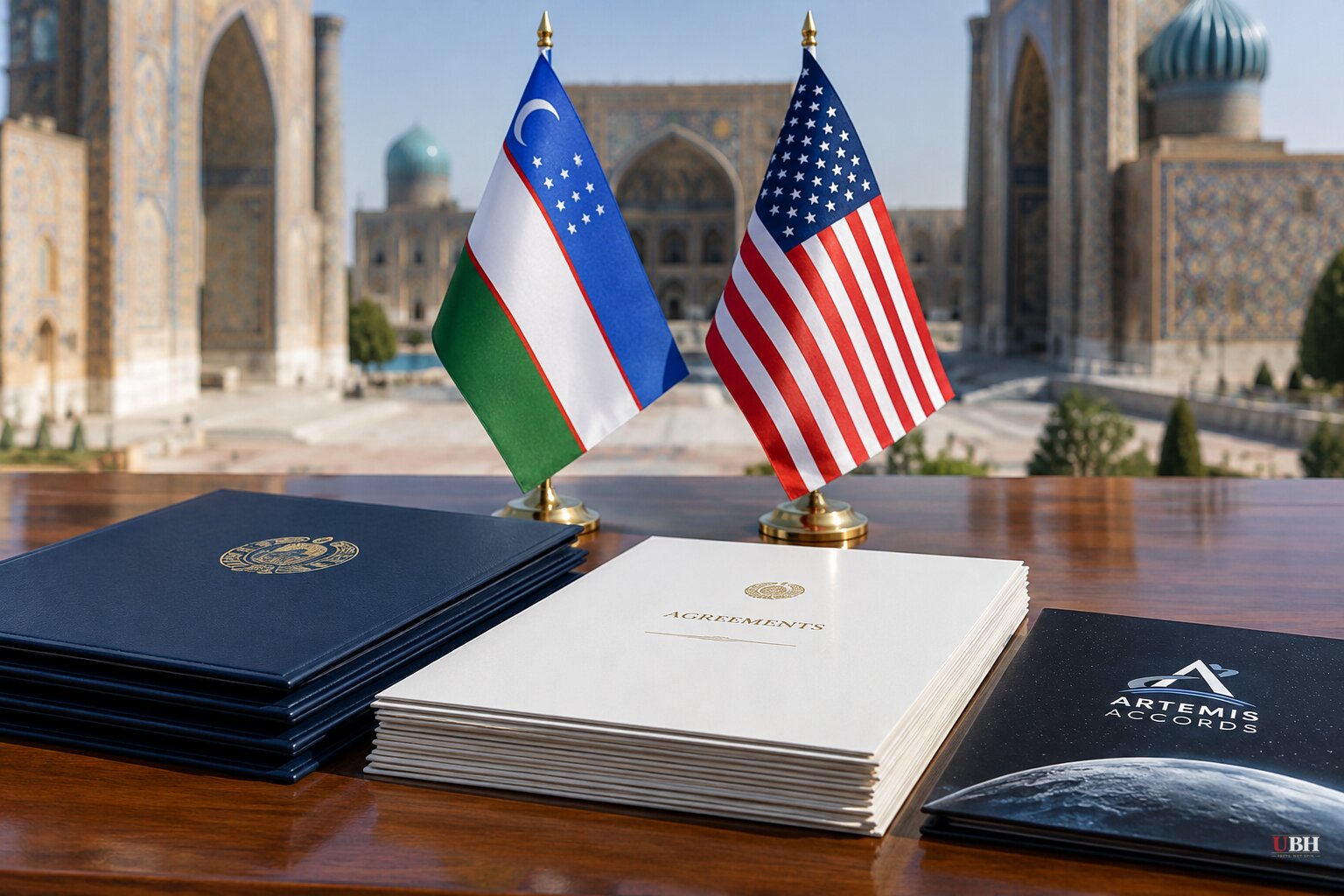
Since Secretary of State Marco Rubio arrived in Samarkand late on Sunday, Oct. 18, with a delegation of nearly 300 American businesses, Uzbekistan has put a $12 billion price tag on the trip. Rubio left for India on Oct. 20.
The Uzbek Ministry of Investment, Industry and Trade says the visit produced at least 54 business deals. The State Department put the count at more than 50 contracts worth a combined $12 billion. They cover industry, transport, energy infrastructure, critical minerals, finance, digital technology, agriculture, healthcare and education.
Uzbek President Shavkat Mirziyoyev called the result "a great achievement" on Monday, Oct. 19.
What was actually signed
Uzbekistan also joined the Artemis Accords, the U.S.-led framework for civil space exploration.
Several named companies are tied to the package. Wabtec CEO Rafael Santana is attached to an initiative to localize production of railway equipment in Uzbekistan. Franklin Templeton, Oppenheimer & Co., Citigroup and BlackRock will help Uzbek companies get wider access to global capital markets. Franklin Templeton CEO Jenny Johnson met Mirziyoyev on Monday.
Project-level details and timelines have not been made public. RFE/RL reported that the parties described the investment agreement as totaling $12 billion "when implemented." The qualifier matters: announced deals and money in the ground are different things.
The joint statement from the five Central Asian foreign ministers and Rubio did not specifically mention artificial intelligence or critical minerals, both priorities for the Trump administration. It did say it "envisions expanded opportunities for mineral extraction." It also pledged U.S. help for the region to build value-added exports and reach international markets.
Mirziyoyev concedes the investment climate needs work
Mirziyoyev did not oversell it. He said Uzbekistan must make its investment climate more transparent and predictable, and that a U.S.-Uzbek business council would work on systematic fixes.
"Investors coming to Uzbekistan should be able to start doing business immediately, without wasting time on administrative procedures," he said. Uzbek officials said an action plan would be drawn up to implement the agreements.
That admission matters for anyone putting American capital into the country. Washington wants access to a region rich in uranium, gold, copper and other strategic minerals. The paperwork has to function first.
Competition with China, and a lower-key view from Washington's side
The timing was not subtle. Two days before Rubio's meeting with Mirziyoyev, the Uzbek president hosted China's Premier Li Qiang in Tashkent.
Asked by AFP whether the push was meant to counter China, Rubio answered: "It's competition." He added: "There's no part of the world in which we feel like America and American business should not have a fair shot to compete."
U.S. Ambassador to Uzbekistan Jonathan Henick told RFE/RL the trip is "not simply a contest between outside powers." He said Washington wants to give Central Asian states more options to protect their independence. He also credited Mirziyoyev's reform push for creating the opening.
Not everyone read the visit as a breakthrough. Luke Coffey, a senior fellow at the Hudson Institute, told RFE/RL the Samarkand meetings were largely a maintenance exercise to keep on track the agreements from the November 2025 White House summit with the five leaders. He considered that summit more consequential. He did say the administration's actions in its second term have put Central Asia back on Washington's strategic map.
Kazakhstan leaves without deals
Kazakhstan, the region's other big economy, announced no specific U.S. business deals. Its state news agency Kazinform nonetheless ran a commentary under the headline "Rubio's Samarkand visit gives fresh momentum to US-Central Asia ties."
Astana's takeaway was that Washington is not demanding a choice between the American and Chinese models. Kazakhstan belongs to both the U.S.-led Pax Silica technology grouping and the Chinese-organized WAICO. Kazinform said Rubio "was not asking regional countries to abandon their existing partnerships with Russia, China or other powers."
Kazakh officials want one concrete thing in return: repeal of the Jackson-Vanik trade restrictions. The Trump administration supports repeal. The restrictions remain on the books, so the gesture has not yet become law.
What comes next
The next test is whether the 54 agreements produce signed financing, construction and shipments. Uzbek officials have promised an action plan, and the U.S.-Uzbek business council is meant to handle the regulatory friction Mirziyoyev himself flagged. Neither has published a schedule.
Rubio's trip also ran alongside a U.S. war with Iran and the unresolved war in Ukraine, which AFP noted have kept him traveling while President Trump handles those conflicts and the midterm campaign. Central Asia is a long game. The first checkpoint is whether the $12 billion shows up as projects, and whether Congress acts on Jackson-Vanik.
Sources used for this briefing
7 links from 7 independent newsrooms (syndicated copies of the same report count once)
These are the sources it draws on, linked so you can verify.


