
Unbiased headlines. Facts, not spin.
Every story is an unbiased news briefing written from 110+ sources across the spectrum — sources linked so you can verify it yourself.
 health
Low Interest (4/10)
June 3, 2026 at 01:02 AM
health
Low Interest (4/10)
June 3, 2026 at 01:02 AM
Rubio Calls Out WHO on Ebola Response; WHO Fires Back — And Both Have a Point
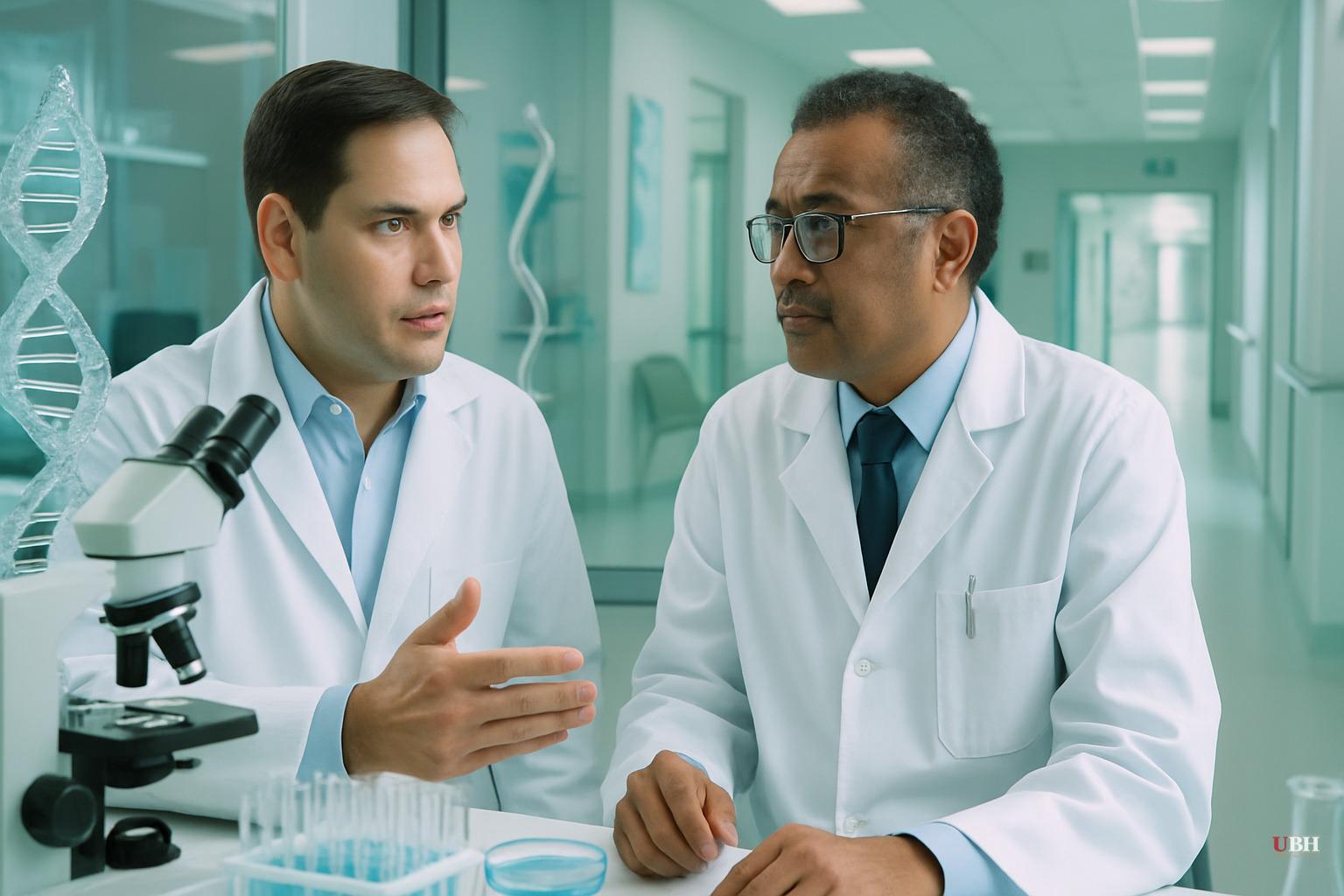
Rubio vs. Tedros — While People Are Dying
On Tuesday, U.S. Secretary of State Marco Rubio told reporters the World Health Organization was "a little late" to identify the Ebola outbreak now burning through the Democratic Republic of Congo and spilling into Uganda. According to The Guardian, Rubio made the comment while announcing roughly $13 million in U.S. assistance and plans to open approximately 50 clinics to treat Ebola in the DRC.
By Wednesday, WHO Director-General Tedros Adhanom Ghebreyesus had heard enough. According to STAT News, Tedros said Rubio's critique "could be from lack of understanding of how IHR works" — meaning the International Health Regulations that govern which entity is responsible for what during an outbreak. That would be a pointed response toward any diplomat. Toward the top diplomat of the United States' former largest funder, it's a declaration of war.
Who's Actually Responsible for Detection?
Tedros has a point on the mechanics. According to STAT News, WHO officials were careful to explain that national governments — NOT the WHO — have primary responsibility for detecting outbreaks under international rules. "Surveillance starts within communities, and starts with the health authorities within every single country," said WHO viral hemorrhagic fever expert Anaïs Legand at the Wednesday briefing. The WHO says it was first alerted to a possible outbreak on May 5 and quickly dispatched a team to Ituri province — but initial tests came back negative, likely because the current strain is the rarer Bundibugyo virus, for which standard Ebola tests weren't catching infections.
The DRC's own health authorities hold primary responsibility for detection. The WHO plays a support role. Rubio's framing skips that entirely.
But Rubio Isn't Entirely Wrong Either
The U.S. withdrawal from WHO — one of Trump's first acts back in office — forced the agency to cut nearly 2,000 jobs, roughly a quarter of its entire workforce, according to The Guardian. You don't reduce a global health organization's workforce by 25% and maintain the same response capacity.
Additionally, STAT News reported that insiders say drastically reduced U.S. support for global health initiatives in the DRC specifically may have hampered early outbreak detection. That's not a partisan talking point — that's people on the ground saying the money cuts had real consequences.
So yes, WHO has a structural defense. But the U.S. helped weaken WHO's operational strength, then criticized the outcome.
The Numbers on the Ground
The current outbreak involves nearly 600 suspected cases and 139 suspected deaths, according to both STAT News and Politico EU. Tedros himself acknowledged Wednesday that "the scale of the epidemic in the DRC is much larger" than reported numbers suggest, per Politico EU — meaning the virus has likely been spreading for months before the outbreak was officially declared Friday by African health officials.
This is the Bundibugyo strain of Ebola — a rare variant with NO approved vaccines or treatments, according to Politico EU. Standard Ebola vaccines don't apply here. Most headline coverage is not mentioning this critical fact.
U.S. Closes Borders, WHO Pushes Back
The U.S. also moved Monday to close its borders to non-U.S. travelers from the DRC, South Sudan, and Uganda. According to Politico EU, WHO pushed back on that move, with experts arguing travel bans "are not supported" under WHO regulations and that contact tracing and traveler screening at departure points — which Congo and Uganda are already doing — is "what works."
Meanwhile, two U.S. citizens from the region have already been accepted into European care: one confirmed Ebola patient is being treated in a Berlin hospital, and a contact case is being taken to a clinic in Prague, per Politico EU. Rubio and the U.S. embassy in Czechia thanked European partners for taking those cases.
What Mainstream Coverage Is Getting Wrong
Left-leaning outlets like The Guardian frame this almost entirely as a story about Trump's WHO withdrawal causing the crisis. The DRC's weak health infrastructure and the unusual Bundibugyo strain both contributed to delayed detection — factors that existed before Trump's second term.
Right-leaning coverage, meanwhile, cheers Rubio's WHO criticism without acknowledging that U.S. funding cuts actively reduced the global capacity he's now criticizing. You don't cut the fire department's budget and then blame them for being slow.
Johns Hopkins immunologist Gigi Gronvall framed it plainly to The Guardian: "It is a strategic mistake — and a national security vulnerability — that we are worse off now to handle infectious disease threats than at the start of Covid-19."
What This Means for You
Bundibugyo Ebola is NOT airborne. It requires direct contact with blood or body fluids. The average American faces minimal direct risk right now. But the U.S. public health workforce has been hollowed out — Gronvall told The Guardian that "even a couple of cases in the US would be challenging with our current workforce."
The U.S. capacity to respond to an outbreak at home is weaker today than it was in 2020. Both parties own a piece of that reality.
Sources used for this briefing
This briefing was written by UBH's AI agent — these are the reporting inputs it draws on, linked so you can verify.


