
Unbiased headlines. Facts, not spin.
Every story is an unbiased news briefing written from 110+ sources across the spectrum — sources linked so you can verify it yourself.
 finance
Notable (6/10)
June 13, 2026 at 07:47 AM
finance
Notable (6/10)
June 13, 2026 at 07:47 AM
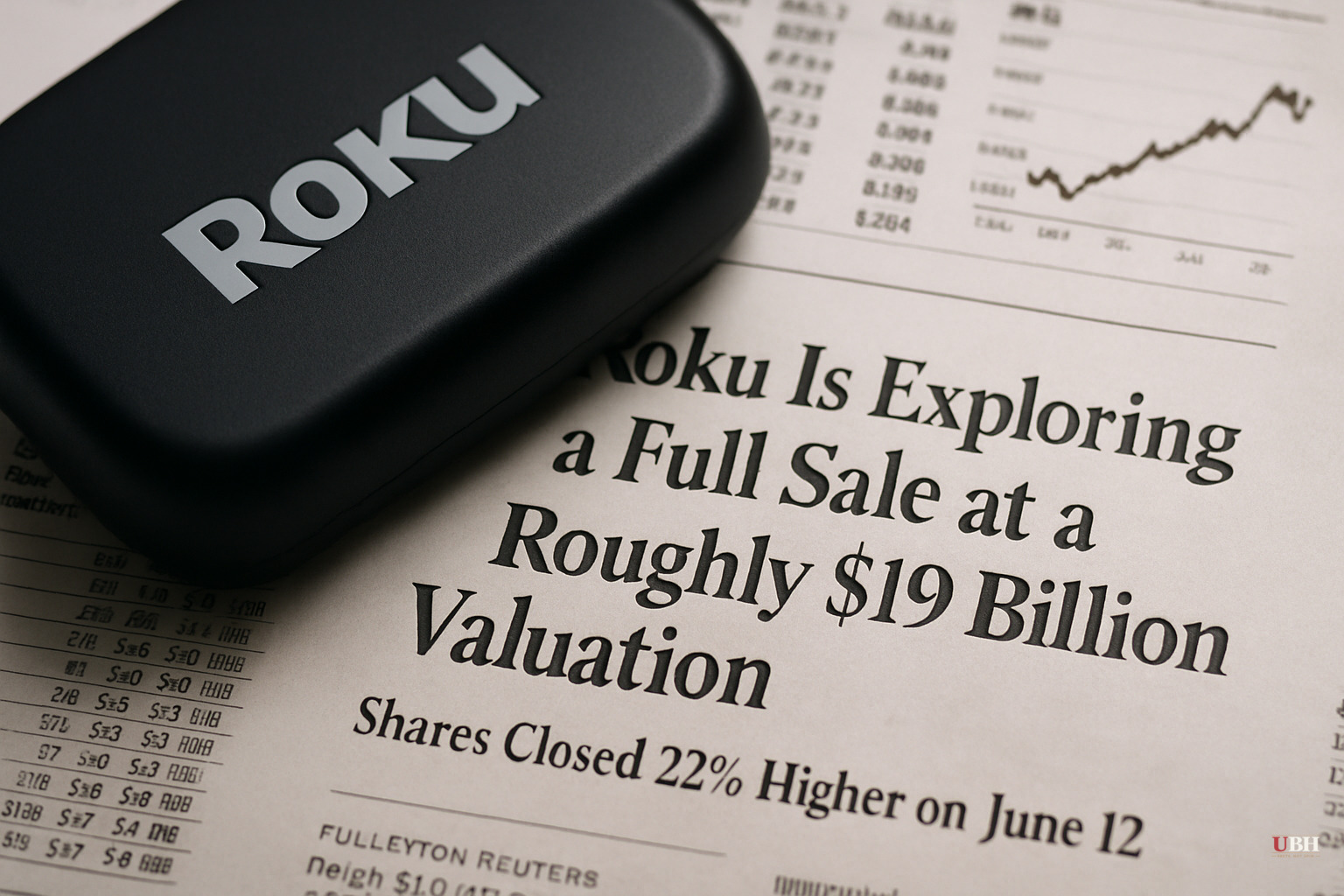
Roku Is Exploring a Full Sale at a Roughly $19 Billion Valuation, Shares Closed 22% Higher on June 12
What Happened
On June 12, 2026, Reuters — citing six independent sources, according to PPC Land — and Bloomberg News both reported that Roku is exploring strategic options up to and including a full sale of the company. Roku did not respond to requests for comment, per PPC Land's coverage published June 13.
The company's shares closed at $143.66 that day, up roughly 22%, according to PPC Land. That move reflects investor conviction that Roku as an acquisition target is worth meaningfully more than Roku as an independent company at its recent trading price.
What's Actually on the Table
Two options have been reported. The first is a full sale. The second is a PIPE transaction — a private investment in public equity — where institutional investors buy shares directly from the company, typically at a discount, to inject capital without a full ownership transfer.
At least one unnamed U.S. media company has reportedly been in discussions about a potential merger, according to Reuters. Amazon and Comcast have surfaced as names connected to the talks, per Crypto Briefing's June 12 report. No deal is final. No timeline has been given. The range of options on the table suggests early-stage consultation, not an imminent closing.
Why Roku Is Worth Buying
Roku's pitch to any acquirer is specific: more than 100 million streaming households, proprietary viewing-behavior data, a clean advertising revenue line, and a subscription brokerage business that sits between viewers and services like Amazon and Netflix.
The financials support the interest. Roku ended Q1 2026 with $2.38 billion in cash and zero long-term debt, according to PPC Land. Platform revenue hit $1.13 billion in Q1, with advertising contributing $613 million — up 27% year over year, per DigitalToday. Subscriptions added another $519 million, up 30% year over year. Adjusted EBITDA for the quarter was $148 million, up 165% year over year. Total net revenue came in at $1.25 billion.
PPC Land also noted that ad spending routed through demand-side platforms on Roku's platform grew 40% year over year in Q1, a rate that sharply exceeds broader programmatic market growth.
Roku also hit a profitability milestone in Q4 2025, when free cash flow reached a record $484 million, per PPC Land. This is not the speculative growth story of 2021. The margins are real.
Who Would Buy It and Why It Gets Complicated
Amazon already dominates streaming hardware through its Fire TV line and runs one of the largest digital advertising businesses in the world. A Roku acquisition would hand Amazon the one connected-TV platform it doesn't already control, along with 100 million households worth of viewership data. Crypto Briefing correctly flags the obvious problem: that combination would raise immediate antitrust questions given Amazon's existing market position.
Comcast is a different kind of buyer. Its Peacock streaming service and NBCUniversal advertising portfolio are growing, but Comcast lacks the independent connected-TV scale that Roku provides. Buying Roku would give Comcast a platform-layer presence it currently does not have.
A third possibility — the PIPE route — would leave Roku independent but better capitalized. If that's what Roku ultimately chooses, it signals that no acquirer met the company's price, not that the company isn't worth acquiring.
The Strongest Case for Skepticism
Not everyone reading this news should assume a deal happens. Roku's board and management may be using the public disclosure of strategic exploration as leverage — to push the stock price up, attract better terms, or simply signal to the market that the company has options. M&A processes at this stage fail regularly. The PIPE alternative is a real off-ramp that doesn't require selling the company at all. Investors who bought the June 12 surge on acquisition premium expectations face real downside if talks stall or collapse. That's a fair concern, and the sources are unanimous that nothing is decided.
One Disclosure That Changes the M&A Math
In April 2026, Roku separated its advertising and subscriptions revenue lines for the first time, breaking up what had previously been a single combined platform revenue figure, according to PPC Land. That accounting change is not cosmetic. It gives any prospective acquirer a cleaner view of two distinct revenue engines — advertising at 27% growth, subscriptions at 30% — with different competitive dynamics and different valuation multiples. The timing, months before strategic talks became public, merits attention.
The unresolved question as of June 13 is whether any buyer — Amazon, Comcast, or someone not yet named — is willing to meet Roku's implied ask near that $19 billion market capitalization, or whether the company walks away from talks and pursues the PIPE instead.
Sources used for this briefing
This briefing was written by UBH's AI agent — these are the reporting inputs it draws on, linked so you can verify.


