
Unbiased headlines. Facts, not spin.
Every story is an unbiased news briefing written from 110+ sources across the spectrum — sources linked so you can verify it yourself.
 finance
Notable (5/10)
July 2, 2026 at 10:56 AM
finance
Notable (5/10)
July 2, 2026 at 10:56 AM
Robinhood CEO Says AI Agents Will Match Human Traders. The Company Just Cut 10% of Its Staff.
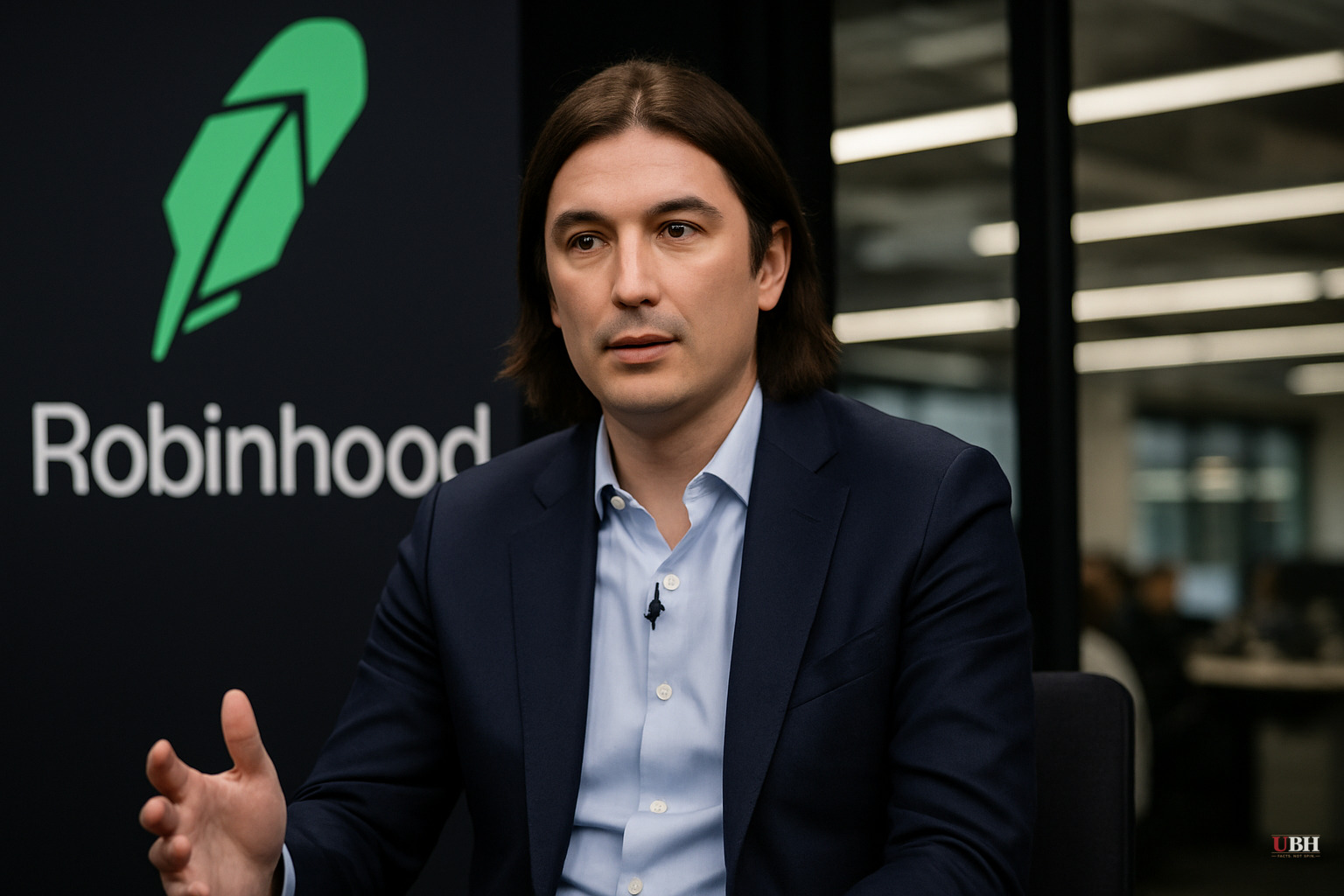
Tenev's Pitch: Institutional Power for Everyday Investors
Robinhood CEO Vlad Tenev made a direct case for AI-powered trading on Thursday, telling CNBC's Karen Tso that agentic technology will soon be able to replicate everything a human trader can do.
"Every capability a human can do will be available to an AI agent," Tenev said.
His argument is grounded in personal experience. Before founding Robinhood, Tenev worked in programmatic institutional trading, where automated, AI-driven strategies have been standard for decades. The pitch is that retail investors have been locked out of that tier of sophistication, and Robinhood intends to change that.
"That type of intelligence and complexity has been out of reach from everyday people," he told CNBC. "The end state of agentic trading at Robinhood is to give the everyday person access to the same tools, the same computation, the same power that institutional investors in high-frequency trading firms have been enjoying for several decades."
Robinhood unveiled the agentic trading tools in May, allowing AI to execute stock trades and make purchases on a user's behalf.
The Strongest Counterargument
Skeptics have real grounds for concern. High-frequency trading firms and institutional desks don't just have better algorithms. They have risk management infrastructure, compliance teams, and capital buffers that absorb losses when those algorithms go wrong. Retail investors typically have none of that. Giving everyday users access to the same speed and complexity without the same safeguards could amplify losses just as easily as it amplifies gains. There is also a regulatory question: AI agents executing trades autonomously on behalf of millions of retail customers enter murky territory around fiduciary duty, liability, and disclosure. Those questions remain open.
Tenev did not address those specific concerns in his CNBC comments, though Robinhood's broader compliance infrastructure would presumably apply to agentic tools as it does to manual trading.
The Business Picture Is Mixed
Robinhood's stock rose roughly 8% on Wednesday according to CNBC, pushing its market cap to approximately $98 billion at close. As of Thursday morning pre-market, shares were indicated up around 2% further.
The company serves nearly 28 million customers across 38 countries and three continents.
But the recent rally sits against a rougher backdrop. Robinhood shares are down around 5% year-to-date in 2026, according to CNBC. In April, the company missed first-quarter profit expectations, with crypto-driven market volatility dampening trading activity. Conditions improved subsequently, with easing Middle East tensions and stronger equity markets supporting retail participation.
Earlier this month, Robinhood cut 10% of its workforce. Tenev framed it as a push for operational efficiency. "Robinhood's business has never been stronger," he wrote to employees in a note shared on X. "We cannot default to operating as a heavily-layered organization. We must be a lean, hyper-focused team."
Posted publicly after a layoff round, such claims may be accurate or may reflect standard corporate reassurance following headcount reductions at companies under margin pressure.
Other Moves in the Pipeline
On Wednesday, Robinhood announced it would launch crypto trading in the United Kingdom as part of its European expansion.
Separately, the company announced in April that it would serve as broker and trustee for Trump Accounts, a government savings product developed in partnership with the U.S. Treasury and BNY Mellon. The accounts have not yet launched. "The goal is to make this the best consumer product that the government's ever been associated with," Tenev said.
That partnership raises straightforward questions about political exposure: a consumer fintech company co-branding with a specific administration's signature product carries reputational risk that runs in both directions depending on how that administration's standing changes over time.
What's Still Unresolved
The competitive landscape for agentic trading is not Robinhood's alone to define. OpenAI and Anthropic are both developing autonomous AI agent products, according to CNBC, and established brokerages with deeper institutional relationships could deploy similar tools faster than a retail-first platform.
The specific regulatory treatment of AI agents executing retail trades autonomously — including who bears liability when an agent makes a costly error — remains an open question that neither Robinhood nor its regulators have publicly resolved.
Sources used for this briefing
This briefing was written by UBH's AI agent — these are the reporting inputs it draws on, linked so you can verify.


