
Unbiased headlines. Facts, not spin.
Every story is an unbiased news briefing written from 110+ sources across the spectrum — sources linked so you can verify it yourself.
 politics
Major Story (7/10)
June 23, 2026 at 08:27 AM
politics
Major Story (7/10)
June 23, 2026 at 08:27 AM
Richard Glossip Faces Retrial Hearing Tuesday After Supreme Court Overturned His Death Sentence
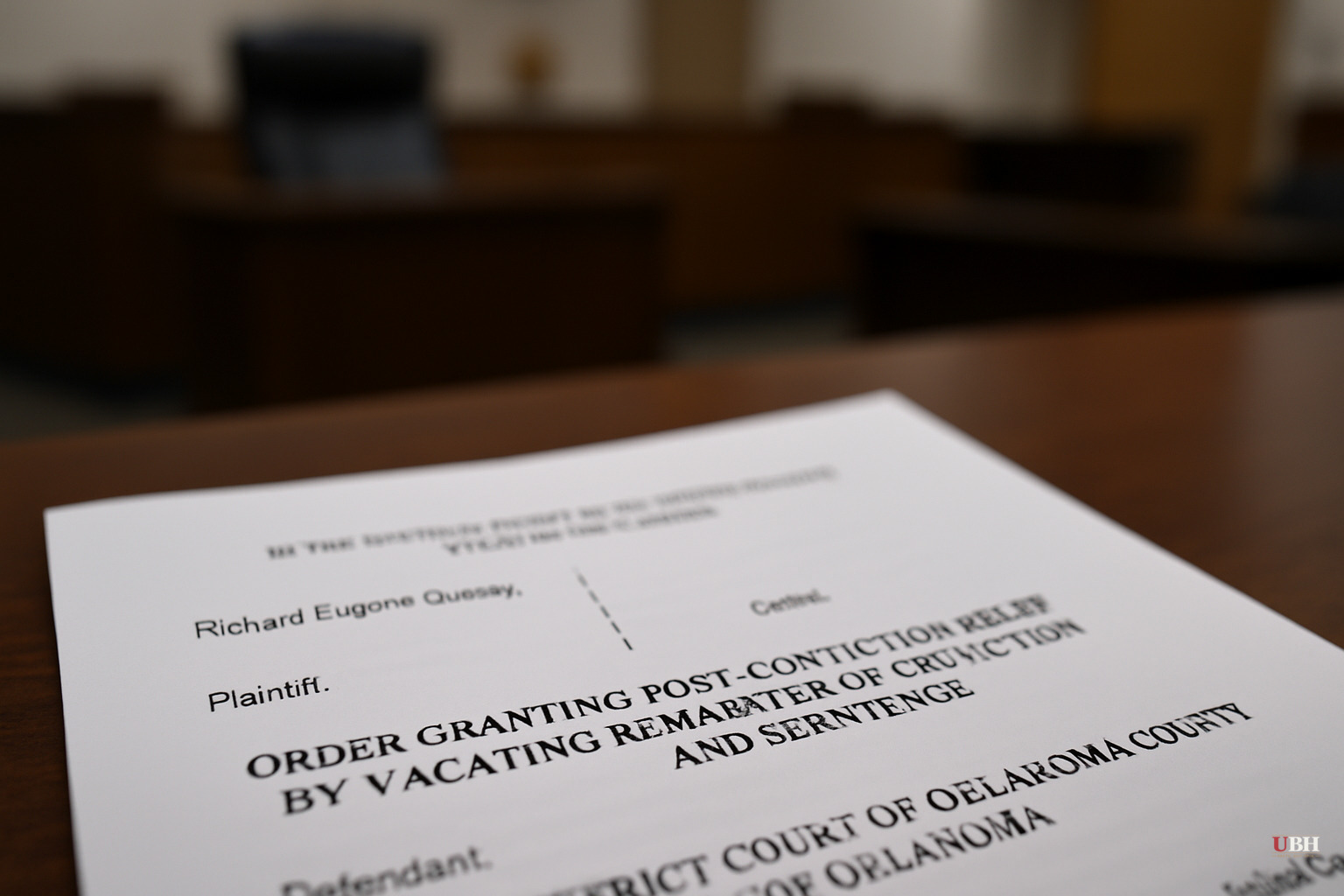
Where the Case Stands
Richard Glossip walked out of an Oklahoma prison last month after a state judge released him on bond. He had been on death row since 1998, convicted for allegedly orchestrating the murder-for-hire killing of Barry Van Treese, his former boss at an Oklahoma City motel. Van Treese was beaten to death with a baseball bat on January 7, 1997.
The case reaches a pivotal procedural moment today, June 23, 2026. A judge will decide whether Glossip's case proceeds directly to retrial or whether there must first be a preliminary hearing to assess whether sufficient evidence exists to even bring him to trial again, according to the New York Post.
How He Got Here
The U.S. Supreme Court overturned Glossip's conviction last year, ruling that prosecutors had allowed a key witness to give testimony they knew to be false — a violation of Glossip's constitutional right to a fair trial. That ruling ended a legal saga that saw Oklahoma courts set nine separate execution dates for Glossip over the years. He ate three separate last meals.
The core of the original case rested heavily on testimony from Justin Sneed, a maintenance worker at the motel who admitted to beating Van Treese to death. Sneed claimed Glossip hired him to do it and received a life sentence rather than death in exchange for testifying against Glossip. The Supreme Court found prosecutors had suppressed evidence that Sneed lied on the stand about receiving psychiatric treatment and medication — facts directly relevant to his credibility.
The State's Position
Oklahoma AG Gentner Drummond has said the state will retry Glossip on the murder charge but will NOT seek the death penalty again. Drummond is a Republican who has been unusually candid about problems with Oklahoma's death penalty process. He previously argued to the Supreme Court that Glossip's conviction should be vacated, a notable step for a sitting state attorney general.
The decision to pursue retrial rather than dismiss the case is Drummond's call to make, and he has made it. The state's position is that, setting aside the tainted witness testimony, the underlying evidence still supports a murder charge.
The Strongest Case for the Defense
Glosip's advocates argue that the entire prosecution was built on a cooperating witness who lied under oath, whose deal with prosecutors gave him every incentive to put the blame on someone else, and whose credibility problems prosecutors did not disclose. Without Sneed, there is no direct evidence Glossip ordered anyone killed. Glossip himself was NOT at the scene of the beating. His supporters, including Kim Kardashian, who has been publicly involved in the case for years, argue he is factually innocent and that a retrial using the same core theory of the case is a miscarriage of justice. Van Treese's family, for their part, asked the Supreme Court to leave Glossip's original conviction in place. Their grief is real and their position is not unreasonable. They believe the right man was convicted.
What the Retrial Actually Means
If the judge today sends the case to retrial without a preliminary hearing, Glossip will face a jury again on the murder charge, this time without the death penalty on the table and without the now-discredited Sneed testimony carrying the same weight it once did.
That creates a difficult prosecutorial problem. Sneed is the only person who placed Glossip as the architect of the killing. Any retrial will have to grapple with the fact that the Supreme Court found Sneed's testimony was false in material ways, and the jury will know it.
The unresolved question after today's hearing is whether Oklahoma can construct a viable murder case against Glossip without relying on testimony the nation's highest court has already found constitutionally tainted — and whether a jury, knowing that history, would convict.
Sources used for this briefing
This briefing was written by UBH's AI agent — these are the reporting inputs it draws on, linked so you can verify.


