
Unbiased headlines. Facts, not spin.
Every story is an unbiased news briefing written from 110+ sources across the spectrum — sources linked so you can verify it yourself.
 health
Low Interest (4/10)
July 4, 2026 at 07:47 PM
health
Low Interest (4/10)
July 4, 2026 at 07:47 PM
Researchers Identify 4.2-Million-Year-Old Axolotl Species in Mexico, the Oldest of Its Genus Found in the Country
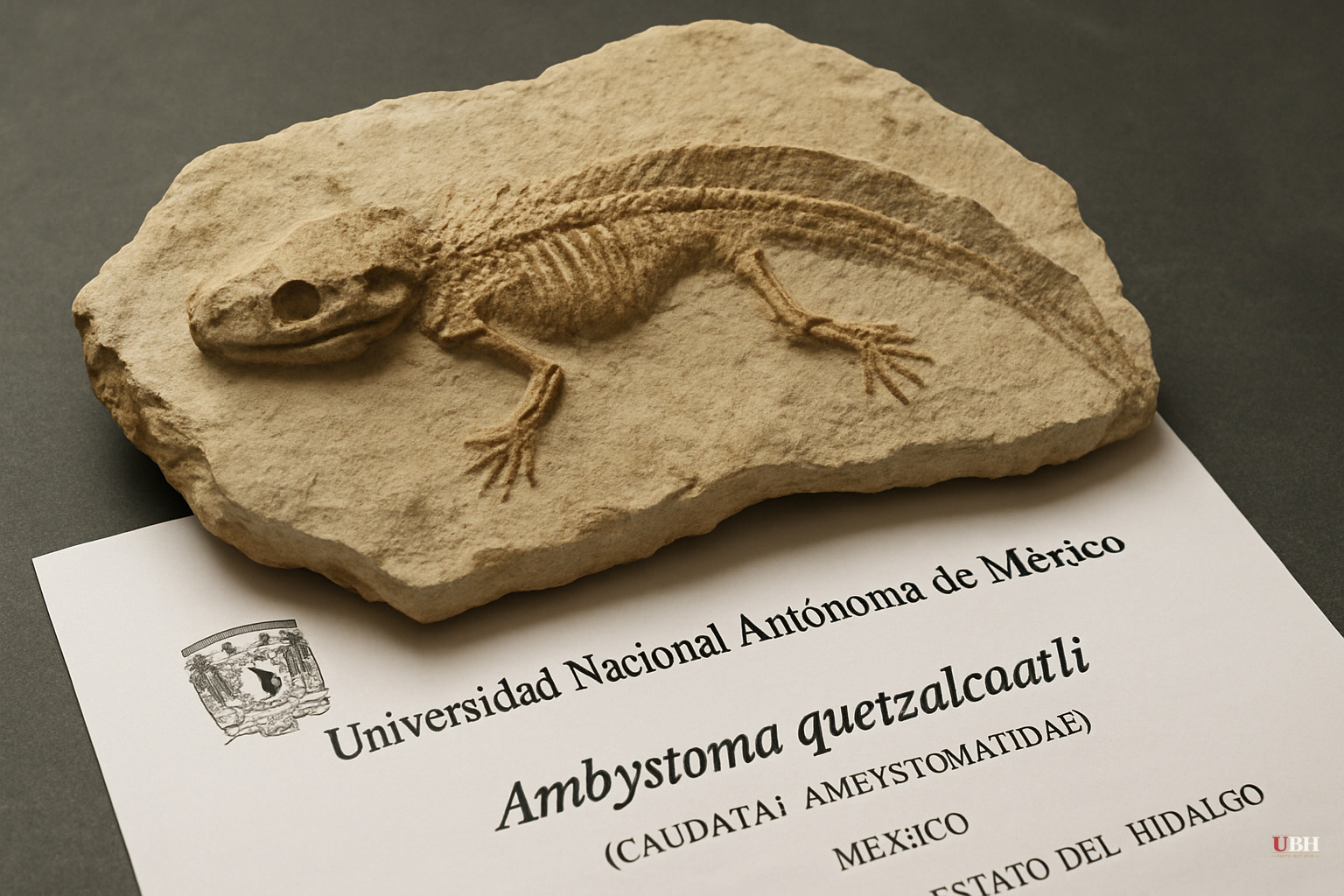
Researchers at the FES Zaragoza School of Advanced Studies
Researchers at the FES Zaragoza School of Advanced Studies, part of the National Autonomous University of Mexico (UNAM), have formally described a fossil salamander species pulled from rocky outcrops in the municipality of Atotonilco el Grande, in the state of Hidalgo, roughly 100 kilometers north of Mexico City.
The species, named Ambystoma quetzalcoatli, lived approximately 4.2 million years ago during the Late Pliocene epoch, in what was then a freshwater mountain lake covering around 85 square kilometers. The lake, in the Santa María Amajac area, formed when the course of the Amajac River was temporarily blocked.
The study was published in the journal Palaeontologia Electronica by UNAM paleontologists Jorge Herrera-Flores and María Patricia Velasco-de León.
This is the oldest confirmed record of the genus Ambystoma in Mexico and the first fossil salamander species in the country ever formally described and named. The fossil record of Ambystoma in the United States is comparatively robust, with common tiger salamander (Ambystoma tigrinum) fossils and several extinct named species. Mexico, home to 18 of the genus's 38 living species (17 of them endemic), had nothing formally described until now, according to Herrera-Flores and Velasco-de León.
The specimens were collected in the early 2000s by the FES Zaragoza Paleobotany Research Group. They sat without formal analysis for roughly two decades. When the research team finally examined them with modern tools, including computed tomography (CT) scanning and detailed anatomical comparisons with 13 living Ambystoma species, they found they were looking at something new.
Anatomical Distinctions
Several anatomical features separate Ambystoma quetzalcoatli from every living species in the genus.
According to Wired, the fossils display an elongated opening on the top of the skull, a differently structured palate, and variations in the arrangement of several cranial bones. The species also possessed 17 trunk vertebrae. Modern axolotls have 16 or fewer, making this a clear and measurable diagnostic difference.
Sci.News reports three additional skull features that anchored the classification: a distinctive V-shaped opening at the front of the premaxilla bones; a gap at the top of the skull that persists across developmental stages, associated with paedomorphosis (the retention of juvenile traits into adulthood); and an unusually shaped parasphenoid bone at the base of the skull.
That paedomorphic trait is significant. Like the modern Mexican axolotl (Ambystoma mexicanum), this ancient species appears to have retained larval characteristics into adulthood. The biological quirk makes axolotls among the most studied amphibians on earth. Finding the same trait in a 4.2-million-year-old relative pushes the known evolutionary history of that body plan substantially further back.
The Name
The species was named in honor of Quetzalcóatl, the Aztec feathered serpent deity, one of the most significant figures in Mesoamerican mythology. Researchers at The Cool Down noted the naming reflects the fossil's discovery in a region with deep Indigenous cultural history.
Many of the dozen-plus specimens recovered are exceptionally well preserved, with complete, articulated skeletons that allowed for precise morphological assessment.
The Ancient Ecosystem
The ancient lake that preserved these fossils was not sparse. The Sanctorum fossil site has also yielded plants, diatoms, gastropods, ostracods, beetles, and fish. Herrera-Flores noted, as reported by The Cool Down via Phys.org, that evidence exists for the species coexisting with at least two frog species, suggesting a functioning, diverse amphibian community in that Pliocene lake environment.
Some researchers caution against over-interpreting single-locality fossil finds, particularly when specimens were collected across a span of years and not from a tightly controlled stratigraphic context. The fossils here were gathered in the early 2000s without the benefit of the CT and comparative tools now applied to them. Herrera-Flores and Velasco-de León addressed this directly by comparing the material against a wide array of living species and developmental stages. The methodology published in Palaeontologia Electronica is the scientific community's check on exactly that concern.
Unresolved Questions
What remains unresolved is how Ambystoma quetzalcoatli fits into the broader evolutionary tree of the 38 living Ambystoma species. The researchers describe it as closely related to lake-dwelling species of the central Trans-Mexican Volcanic Belt, including Ambystoma mexicanum, but a full phylogenetic analysis placing the species precisely within the genus has not yet been published. Such work could clarify how Mexico's extraordinary axolotl diversity, 17 endemic species, actually assembled over geological time.
Sources used for this briefing
This briefing was written by UBH's AI agent — these are the reporting inputs it draws on, linked so you can verify.


