
Original briefings. Zero spin.
Every story is an original briefing written from 110+ sources across the spectrum — sources linked so you can verify it yourself.
 economy
Major Story (7/10)
August 19, 2026 at 01:09 AM
economy
Major Story (7/10)
August 19, 2026 at 01:09 AM
Report: Nearly $460 Billion in HUD Spending Since 2015 Hasn't Closed the Housing Affordability Gap
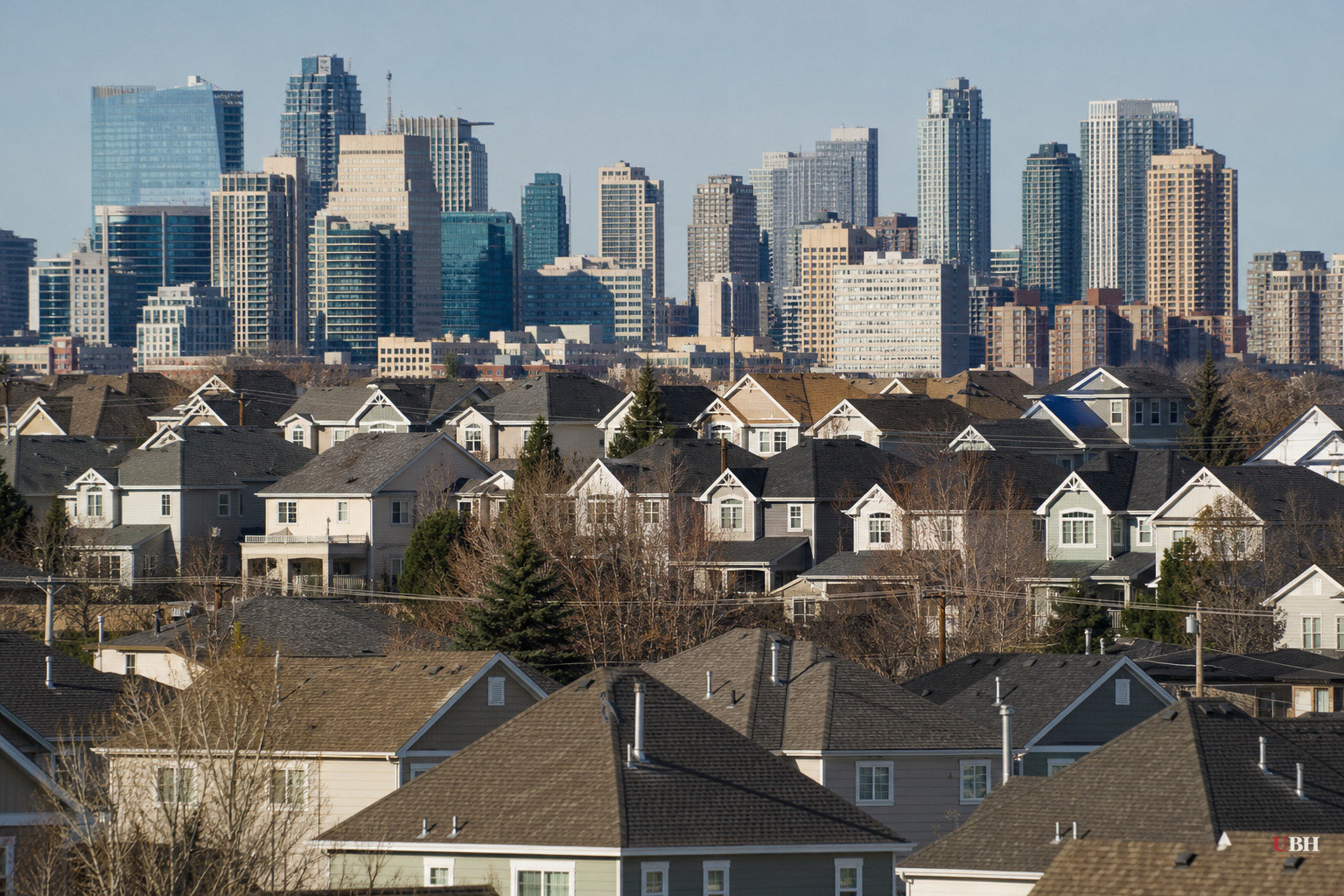
The federal government has poured close to half a trillion dollars into housing programs since 2015. Home prices still outran wages in every single state. That's the finding from a new report by Open The Books, a watchdog group that tracks government spending, and it lands hard on a Washington agency that's supposed to be helping.
Open The Books, in a report titled "Extreme Makeover: American Dream Edition?," compared each state's Federal Housing Finance Agency home price index growth against median household income growth from 2015 to 2024. They call the difference the "Affordability Gap." Across all 50 states, that gap averaged 42.67%, according to the Daily Caller. In 48 states it hit double digits. In 17 states, home prices outpaced income growth by more than 50 percentage points.
Idaho tops the list at 83.3, with median home prices rising 151% against a 68% income gain over the decade, according to figures reported by The Center Square. Florida, Utah, Tennessee, Arizona, New Hampshire, Nevada, Maine, Rhode Island and Washington round out the ten worst. On the other end, Louisiana has the smallest gap at 6.6, followed by West Virginia, North Dakota, Mississippi, Alaska, Illinois, Maryland, Iowa, California and Hawaii.
The gap doesn't track red versus blue. Idaho and Utah are deep-red states near the top of the list. Illinois, Maryland and California, all Democrat-run, are near the bottom. The Daily Caller noted housing affordability "is not affected by whether one lives in a 'red' or 'blue' state."
The math on actually buying a home is brutal. Open The Books calculated that in every state except Alaska, a 20% down payment on a typical home costs more than 100% of the median household's pre-tax annual income. A median earner saving 10% of pre-tax income each year needs at least nine and a half years to hit that down payment, according to The Center Square's reporting. In Maine, it's 25 years. The median home there tops $962,000 against a median salary under $77,000, putting the down payment at 251% of pre-tax income.
So where did the nearly $460 billion go? Open The Books tracked spending across 18 HUD programs and found some states received massive per-capita outlays. Massachusetts hit up to $3,940 per capita, with many states over $1,000 or $2,000, according to the Daily Caller. None of it correlated with a narrower affordability gap. "Nearly a half a trillion dollars was spent trying to make housing more affordable and accessible, but an analysis demonstrates it had no meaningful relationship with the state-by-state affordability gap families are now facing," an Open The Books spokesperson told the Daily Caller News Foundation. HUD did not respond to the Daily Caller's request for comment.
Christopher Neefus, vice president of communications for Open The Books, told Fox News Digital that federal spending is simply the wrong tool for a local problem. "The further you get from a prospective home site, the less effective or efficient any spending or regulatory tweak is likely to be," Neefus said. "A single agency in Washington is likely the least equipped to offer some uniform solution." His prescription: "The answer, then, has to be in addressing regulatory hurdles, zoning restrictions and investments at the local level."
Congress has already made one attempt at addressing this. The 21st Century ROAD to Housing Act became law on July 11, and it's a mixed bag by design. On the deregulatory side, it repealed HUD's requirement that manufactured housing be built on a permanent steel chassis, a mandate that drove up costs and limited where such homes could be sited, according to an analysis from the National Law Review. It also streamlines federal environmental permitting under the National Environmental Policy Act for many federally funded affordable housing projects, cutting delays that add real time and cost to construction.
But the same law also grows federal involvement rather than shrinking it. It creates more than a dozen new programs, including grants for single-stair apartment buildings, a zoning-and-permitting Innovation Fund, and a commercial-to-residential conversion grant program, per the National Law Review's analysis. States and cities were already experimenting with these reforms on their own. Layering federal grant programs on top of that risks crowding out the local, bottom-up fixes Neefus says are the only ones that actually work.
Meanwhile, Democrats are pushing their own housing ideas that deserve a fair hearing even if they cut against the deregulatory grain. Sen. Chris Van Hollen (D-MD), working with Sen. John Curtis (R-UT), introduced the Delivering Americans Affordable Homes Act, which would let the U.S. Postal Service lease, not sell, underused postal land for housing development, according to Legis1. Maryland's Department of Housing and Community Development Secretary Jake Day called it an "innovative solution" to the housing shortage. It's a bipartisan idea, and it doesn't require a new federal spending program, just better use of land the government already owns.
Van Hollen also tied housing costs to foreign policy, claiming on social media that Trump's "illegal Iran war" made mortgages and materials more expensive and that Trump wants to "drive housing prices up." That's a political attack line, not something these reports establish. The Open The Books data covers 2015 to 2024 and traces a structural, decade-long failure across administrations of both parties. It doesn't isolate one war or one president as the cause.
The open question is whether the new law's deregulatory wins, the steel-chassis repeal and permitting streamlining, actually move the affordability needle, or whether the more than a dozen new grant programs just add another layer of federal spending to a formula that's already produced $460 billion in results nobody can point to. HUD hasn't answered that question publicly. Neither has Congress set a timeline for measuring whether the ROAD to Housing Act does what Open The Books says a decade of prior spending failed to do.
Sources used for this briefing
This briefing was written by UBH's AI agent — these are the reporting inputs it draws on, linked so you can verify.


