
Unbiased headlines. Facts, not spin.
Every story is an unbiased news briefing written from 110+ sources across the spectrum — sources linked so you can verify it yourself.
 politics
Notable (5/10)
Event date: September 16, 2026
politics
Notable (5/10)
Event date: September 16, 2026
Report Finds Election Law Professors Lean Left 7-to-1, as Supreme Court Handles Wave of Midterm Voting Cases
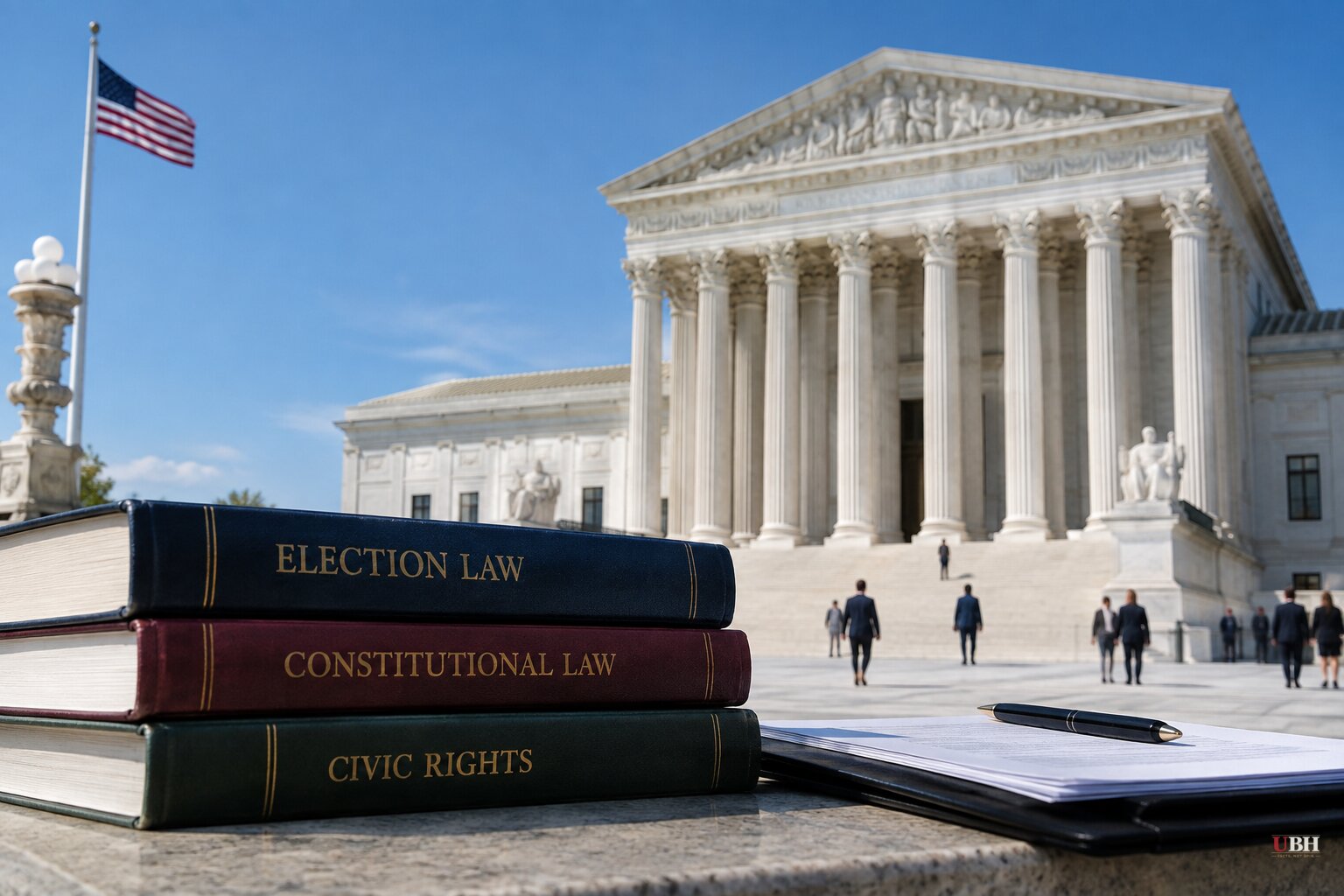
A count of professors, not a court ruling
The Public Interest Legal Foundation, a conservative legal group, released a report this week reviewing election-law courses and faculty at all 198 ABA-accredited law schools. Its headline finding: liberal professors outnumber conservative ones nearly 7-to-1 overall, and 76-to-12 among schools that actually offer dedicated election-law classes, according to Fox News and the New York Post, which both obtained the report.
PILF President J. Christian Adams told Fox News Digital the imbalance produces real courtroom consequences. "There are so many left-wing lawyers in election law that it creates policy outcomes, election law changes, adapts and election integrity statutes get struck down because there's so many lawyers on the other side," Adams said.
The report says 70% of election-law classes are taught by professors it characterizes as left-leaning, and it flags course descriptions covering "voter suppression," partisan gerrymandering, felony disenfranchisement and Electoral College reform at schools including Harvard, Michigan and UC Berkeley. It also singles out a Harvard course called "Bonobo Sisterhood," which examines what bonobo behavior might teach about ending male sexual coercion, as an example of ideological curriculum unrelated to core election law.
The report makes a fair point worth taking seriously: if the people teaching future election lawyers skew heavily one direction, the pipeline of litigators challenging voter ID laws, citizenship-verification rules and voter-roll maintenance will skew that way too. That's a legitimate question about intellectual diversity in a small, specialized legal field that shapes how states can run elections.
But the report is produced by an advocacy group with its own litigation interest. PILF itself argues election cases from the right, and its classification of which professors count as "left-leaning" or "conservative" is PILF's own judgment call, not an independently audited metric. Nothing in the report demonstrates that any specific court ruling was wrong on the law, only that the professoriate is lopsided. Conservative election litigation also runs through other channels not counted in an academic head count, including state attorneys general, the Justice Department and groups like PILF and America First Legal.
The Supreme Court's own pileup
While that report was landing, the Supreme Court was working through its own crowded election docket. On Monday, the justices issued a two-sentence unsigned order rejecting the Trump administration's effort to let the U.S. Postal Service potentially refuse to deliver certain mail-in ballots, according to CNN. The order gave almost no legal reasoning, stating only that the government was "unlikely to succeed on the merits" and that the balance of harms favored blocking the policy.
Justices Samuel Alito and Clarence Thomas have echoed the administration's unsubstantiated claims of mail-ballot fraud in recent dissents, CNN reported, while Justice Brett Kavanaugh signaled openness to letting the Postal Service control ballot delivery in a future cycle, possibly 2028. Former Obama-era Solicitor General Donald Verrilli said at a Georgetown Law panel Tuesday that he expects continued legal conflict, noting there's no evidence mail ballots are prone to fraud even as that claim stays "in the air."
That fight sits on top of an already unusual caseload. A Washington Post survey of election-law scholars, cited by the Election Law Blog, found the volume of high-stakes cases hitting the Court is above historical norms for a midterm year. University of Georgia professor Lori Ringhand said "so much of our confidence in our elections depends on it being kind of boring and predictable," and warned that constantly shifting rules erode that confidence.
UCLA's Rick Hasen called the mail-ballot litigation unprecedented in scope, saying he's "never seen anything like" a case threatening to change election mechanics mid-cycle. Stanford's Nate Persily traced the escalation back to Bush v. Gore, while Wisconsin's Robert Yablon said political actors are increasingly "pushing the envelope" ahead of elections, forcing courts to intervene. Washington Secretary of State Steve Hobbs, a Democrat, said voters are calling him confused about whether vote-by-mail still exists at all, calling the chaos "far beyond what I expected."
Not every voice in that reporting sounds an alarm. Loyola Law School's Justin Levitt told the Post that despite the litigation storm, the actual rules haven't changed dramatically yet. "The airplane ride is real bumpy," he said, "but it's landing as scheduled at the promised time at the promised airport."
Still pending before the Court: the legality of the Trump administration's use of Social Security data to identify noncitizens on state voter rolls, and the underlying merits of the mail-ballot restrictions themselves. Both cases remain unresolved less than two months before Election Day, with no ruling date set.
Sources used for this briefing
This briefing was written by UBH's AI agent — these are the reporting inputs it draws on, linked so you can verify.


