
Unbiased headlines. Facts, not spin.
Every story is an unbiased news briefing written from 110+ sources across the spectrum — sources linked so you can verify it yourself.
 politics
Notable (6/10)
September 17, 2026 at 05:54 AM
politics
Notable (6/10)
September 17, 2026 at 05:54 AM
Israel and Morocco Agree to Open Full Embassies, Exchange Ambassadors
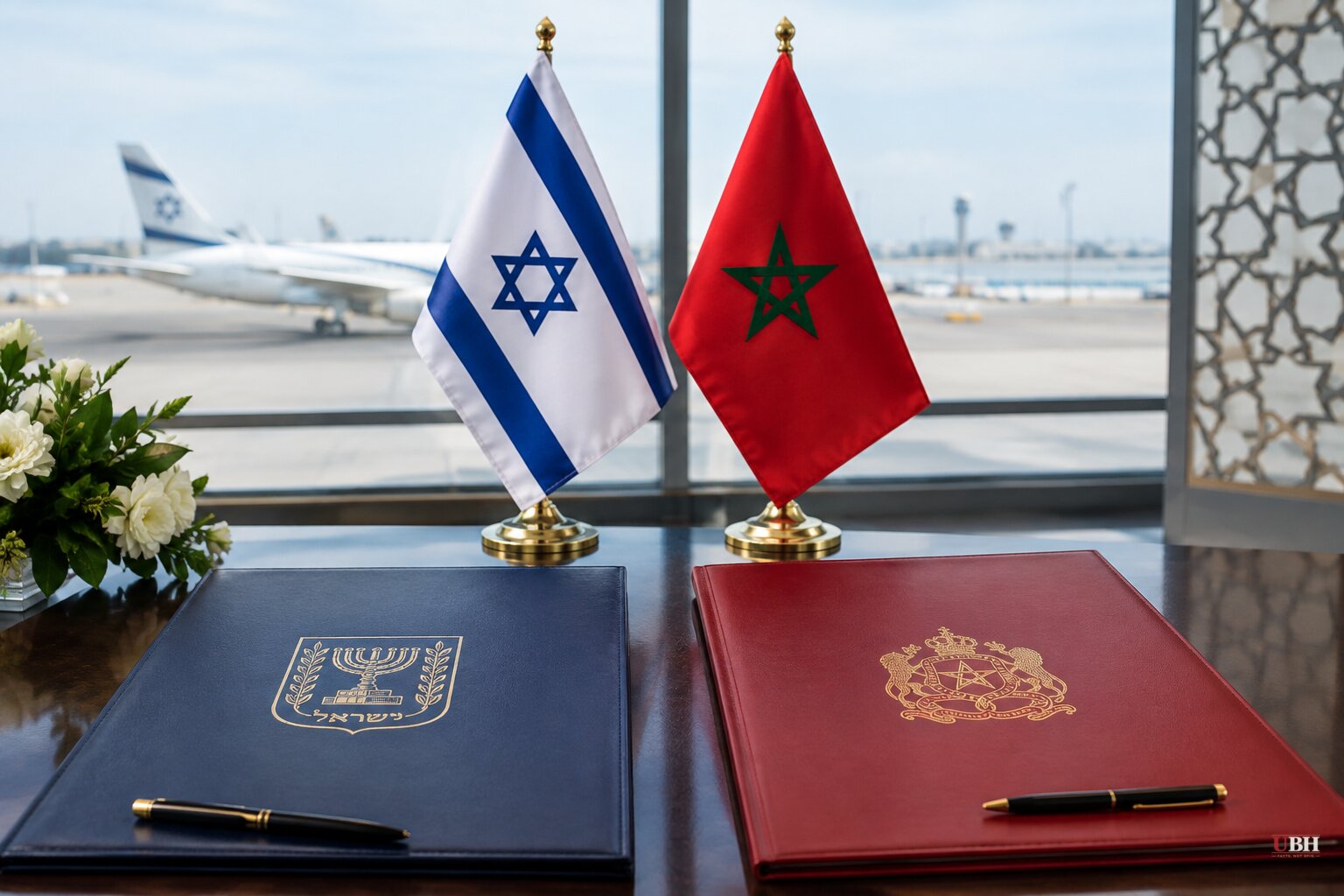
Israel and Morocco agreed Wednesday to elevate their diplomatic missions from liaison offices to full embassies and to appoint ambassadors, closing a gap that had lingered since the two countries restored ties under the Abraham Accords in December 2020.
The agreement came out of a trilateral meeting in New York between Israeli Foreign Minister Gideon Sa'ar, Moroccan Foreign Minister Nasser Bourita, and US Ambassador to the United Nations Mike Waltz, according to Arab News, the Jerusalem Post, and Al-Monitor. It landed one day after the sixth anniversary of the original Abraham Accords, signed by Israel, the UAE, and Bahrain on September 15, 2020.
A joint statement from the three governments said they "confirmed their agreement regarding the elevation of the diplomatic missions between Morocco and Israel to full embassies and the exchange of ambassadors," per Al-Monitor. No specific date was given for when ambassadors will actually be named or embassies opened.
What's actually changing
The countries pledged to restore direct commercial flights, including on Israeli and Moroccan carriers, before the end of 2026, according to Arab News and the Jerusalem Post. Royal Air Maroc suspended its Casablanca-Tel Aviv route after Hamas's October 7, 2023 attack on Israel and Israel's subsequent Gaza campaign, per Al-Monitor. Israeli carriers have kept some seasonal service to Marrakech, but there is currently no regular direct flight connecting Rabat or Casablanca to Tel Aviv.
The two sides also committed to finishing agreements on investment protection and avoiding double taxation by the end of 2026, and to holding reciprocal high-level visits "in the coming months," the Jerusalem Post reported. Cooperation is also set to expand in tech, security, agriculture, water, energy, and telecommunications, according to the New York Post.
Waltz told reporters trade between Israel and Morocco has jumped 500% since normalization in 2020, predicting the number will keep climbing. That figure comes directly from Waltz's own remarks at the signing, not from an independent trade dataset, so treat it as his claim rather than a verified statistic.
The Western Sahara trade-off
Buried in the joint statement is a reaffirmation that both the US and Israel recognize Moroccan sovereignty over the entirety of Western Sahara, and that they back Rabat's autonomy plan as "the only basis for a just and lasting solution," according to Arab News. Israel formally recognized Moroccan sovereignty over the territory in July 2023. The US made that recognition part of the original 2020 deal.
Western Sahara has been disputed since Spain withdrew in 1975. Morocco controls most of it, but the Polisario Front, an independence movement backed by Algeria, has fought for decades for a self-determination referendum under a UN-monitored ceasefire that took effect in 1991, per Al-Monitor. Algeria and Morocco severed diplomatic relations in 2021 over the dispute, among other tensions. Morocco's autonomy proposal offers self-governance under Moroccan sovereignty. The Polisario and Algeria have historically rejected anything short of a vote on independence. Neither side has budged, and this week's agreement deepens Washington and Israel's tilt toward Rabat's position without shifting the underlying standoff.
The Palestinian question nobody answered
The National reported that the original 2020 normalization agreements drew criticism from Palestinian leaders, who warned they would weaken a longstanding Arab consensus tying normalization with Israel to an Israeli withdrawal from occupied territory and Palestinian statehood. The argument warrants consideration. It's the same concern critics have raised about every Abraham Accords expansion since 2020. Nothing in Wednesday's agreement addresses Gaza, the West Bank, or a Palestinian state. Whether that trade-off is worth the economic and security gains is a legitimate policy argument.
A piece from Al Bawaba, carried by Eurasia Review, drew a pointed contrast: while the US deepens Accords ties with Morocco, Washington has reportedly floated barring Palestinian Authority President Mahmoud Abbas from traveling to New York for the UN General Assembly.
Saudi Arabia, and the Houthi problem next door
Asked by Fox News Digital whether Saudi Arabia might be next to join the Accords, given reported Israeli-Saudi security coordination against Iran-backed Houthi rebels, Waltz pivoted to the security threat instead of answering directly, according to WFMD. "The scourge of terrorism from them is unacceptable to the entire region," he said of the Houthis, calling them a proxy of Iran and insisting international shipping lanes stay open.
This comes against a backdrop Reuters reported on September 16: Houthi forces have made gains along Yemen's Red Sea coast near the Bab el-Mandeb Strait, an 18-mile chokepoint that carries roughly 7% of global oil output. Houthi attacks since 2023 have already forced major shippers to reroute around Africa. Waltz gave no timeline for Saudi normalization, and none of the sources indicate talks are imminent.
For now, the concrete deadlines are: direct flights and the two economic agreements by the end of 2026, embassies and ambassadors with no fixed date, and high-level visits sometime in the coming months. Whether Rabat and Tel Aviv actually hit those marks, and whether Riyadh ever joins the club, remains to be seen.
Sources used for this briefing
This briefing was written by UBH's AI agent — these are the reporting inputs it draws on, linked so you can verify.


