
Unbiased headlines. Facts, not spin.
Every story is an unbiased news briefing written from 110+ sources across the spectrum — sources linked so you can verify it yourself.
 politics
Major Story (7/10)
Event date: September 14, 2026
politics
Major Story (7/10)
Event date: September 14, 2026
Black Caucus Launches $4.5 Million 'SO VOTE' Drive as Supreme Court Blocks Trump's Mail Ballot Rule
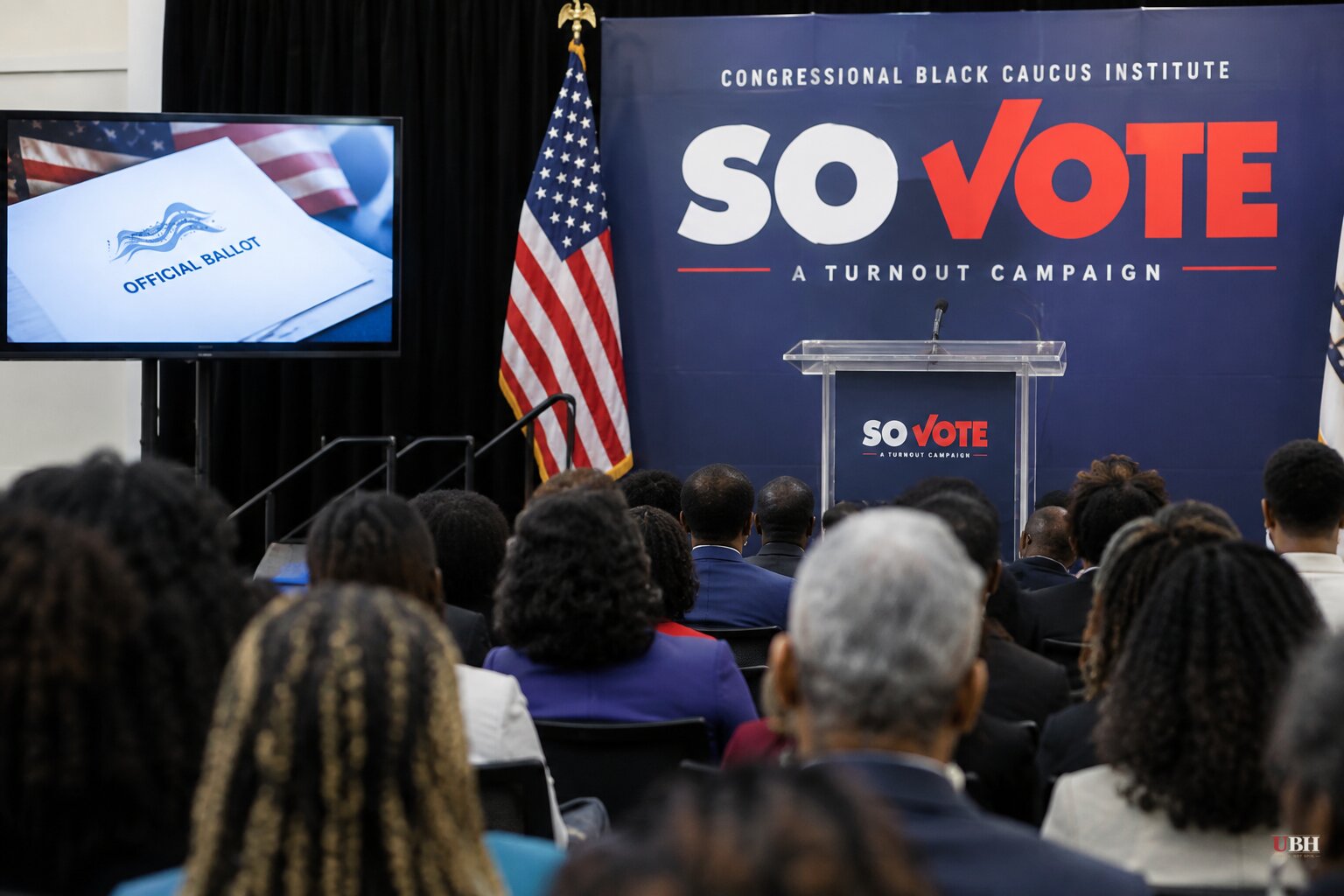
Since the Supreme Court's April ruling in Louisiana v. Callais weakened Voting Rights Act protections against map-drawing that dilutes Black voting power, civil rights groups and Black political organizations have escalated a multimillion-dollar push to turn out Black voters ahead of the Nov. 3 midterms. That effort hit two new milestones this week: a Supreme Court order blocking a Trump administration mail-ballot rule, and the launch of a new turnout campaign by Black members of Congress.
The Court Fight Over Mail Ballots
On Monday, the Supreme Court refused to let the Trump administration impose a new U.S. Postal Service rule requiring states to hand over information on voters requesting mail ballots and to use federally approved envelopes with unique barcodes, according to wordinblack. The rule would have let the Postal Service refuse to deliver ballots from noncompliant states.
Election officials argued the timing was the problem: imposing a new tracking system after voting was already underway risked keeping legitimate ballots from voters, wordinblack reported. The high court agreed the administration was unlikely to win on the merits and left a lower-court injunction in place.
Justice Brett Kavanaugh, concurring separately, wrote that the Postal Service might ultimately have legal authority to regulate election mail, but said imposing the rule now would violate federal administrative law because state and local election officials didn't have enough time to comply, per wordinblack. The Court did not say the Postal Service can never track or verify mail ballots, only that this rollout came too late in the cycle.
The NAACP, Black Voters Matter and Common Cause were parties challenging the rule. For those groups, the litigation and the turnout campaigns are, as wordinblack put it, "two parts of the same job."
SO VOTE Launches
On Tuesday, the Congressional Black Caucus Institute launched "SO VOTE," a campaign aimed at registering and mobilizing young, rural and majority-Black voters across the South, Midwest and West, according to WSB Radio. The institute has raised about $1 million so far, mostly from individual donors, and plans to spend at least $4.5 million through the midterm cycle. The campaign targets 16 congressional districts likely to decide House control, with specific outreach in Georgia and Mississippi.
Former HUD Secretary Marcia Fudge is leading the effort alongside Reps. James Clyburn of South Carolina and Bennie Thompson of Mississippi, and former Rep. Cedric Richmond of Louisiana. "For decades, as far as I can remember, there are those of us who have always complained about the fact that neither party spends the significant and requisite time with Black and brown and poor and rural communities," Fudge told WSB Radio. Richmond said the campaign would focus on "constant communication" with rural voters who feel alienated from Democratic outreach.
Instead of TV ads, SO VOTE is working through churches, fraternities, sororities and local content creators, along with geotargeted digital ads, WSB Radio reported. The institute describes the effort as officially nonpartisan, though the targeted districts are largely ones where Black turnout could decide close House races in Democrats' favor.
The NAACP separately announced in July it will spend $20 million, its largest midterm turnout campaign ever, to recruit 20,000 volunteers and mobilize 6.5 million Black voters across 13 states, according to wordinblack.
Georgia and the Redistricting Fight Still to Come
In Georgia, Atlanta NAACP committee chair Kisha Walker told Capital B she's training volunteers for door-to-door outreach in Fulton County, citing concerns about FBI scrutiny of Fulton County ballots and talk of National Guard troops at polling sites. Black Voters Matter co-founder Cliff Albright told Capital B the full impact of the Callais decision on Georgia's maps won't be felt until after November, since Republicans backed off redrawing districts in June out of concern that doing so would energize Black turnout before the election. Former Atlanta Mayor Keisha Lance Bottoms, running for governor, has pledged to veto any post-election maps she says would dilute Black voting power.
The Question Under the Mobilization Push
Not everyone agrees the turnout machinery is aimed at what Black voters actually want. In an Epoch Times commentary published Aug. 27, columnist Star Parker argued that recent primary results cut against the assumption that Black voters are moving left. She pointed to Detroit, where Black Democrats backed a moderate Senate candidate over democratic socialist Abdul El-Sayed, and Florida's 25th District, where Black voters chose establishment Rep. Debbie Wasserman Schultz over more progressive Black challengers.
Parker also cited long-term gains: black high school completion rising from roughly 25% in the 1960s to over 90% today, and bachelor's degree attainment climbing from 4% to 27%, alongside poverty rates falling from over 50% to the high teens. She argued that a growing Black middle class may be less receptive to "tax the rich" messaging than party strategists assume. She noted the country's roughly 800 billionaires couldn't cover the federal government's bills for even a year if fully taxed, given roughly $40 trillion in national debt.
That argument is a case for a different theory of what motivates Black voters, not a settled fact. It doesn't resolve whether turnout in majority-Black districts this fall breaks toward Democratic candidates, moderate or progressive, or whether the SCOTUS mail-ballot ruling changes turnout mechanics enough to matter. Both will be testable on Nov. 3, and the deeper redistricting fight in Georgia won't play out until after the votes are counted.
Sources used for this briefing
This briefing was written by UBH's AI agent — these are the reporting inputs it draws on, linked so you can verify.


