
Unbiased headlines. Facts, not spin.
Every story is an unbiased news briefing written from 110+ sources across the spectrum — sources linked so you can verify it yourself.
 finance
Notable (5/10)
June 22, 2026 at 12:57 AM
finance
Notable (5/10)
June 22, 2026 at 12:57 AM
Renault Plans to Abstain on Nissan Board Vote, Citing Ties Between Director and Nissan's Primary Lender
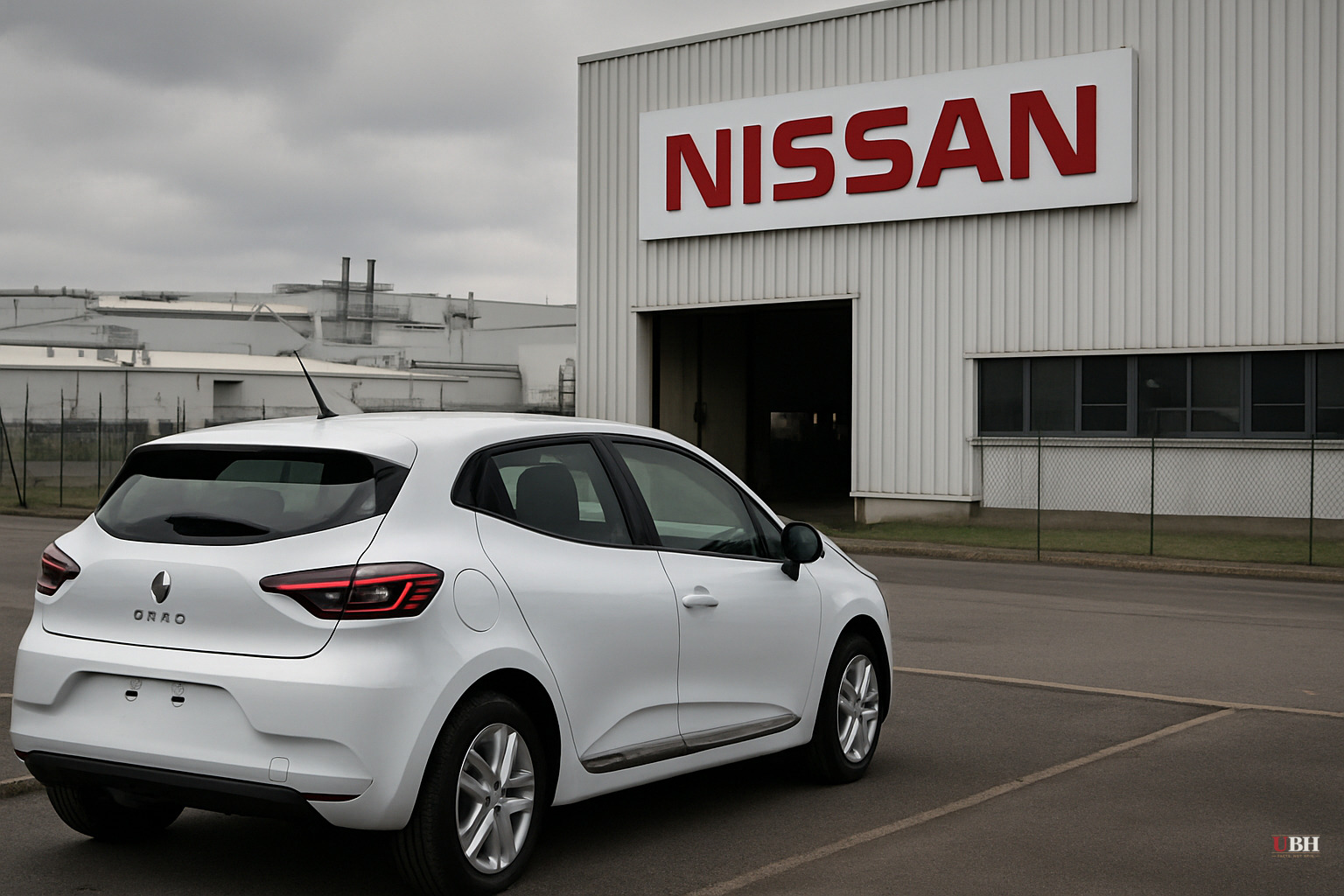
The Vote and What It Means
Renault is not planning to vote no on Motoo Nagai's re-appointment to the Nissan board. It plans to abstain.
For a company holding 15 percent of Nissan's voting shares, abstaining is a public, documented expression of no confidence. It stops short of direct confrontation but registers clearly in Tokyo.
The target of that signal is Nagai, a non-executive director embedded in Nissan's inner circle since 2019 and its independent statutory auditor since 2014.
The Independence Question
Renault's stated rationale is corporate governance, and the argument has real substance.
Before his board roles at Nissan, Nagai spent years rising through Mizuho Financial Group, Nissan's primary lender. Renault insiders, according to source reporting, argue that a director with that biography cannot credibly be labeled "independent." A decade-plus tenure on the board compounds the concern: long-serving directors tend to align with management, not shareholders.
The strongest counter-argument is that these relationships are disclosed, and that experienced financial professionals who understand a company's debt structure can add genuine value to a board even if they lack full arm's-length distance. Japanese corporate governance standards do permit directors with prior institutional ties to hold independent-designated seats under certain conditions. Nagai's supporters could fairly argue that tenure equals expertise, not capture.
But Renault's concern is specific and documented. The question of whether someone who climbed the ranks at a company's primary lender can exercise independent judgment on that company's board is a legitimate governance debate in any market.
The Honda Merger Is the Real Backdrop
Behind the governance language lies a sharper story. Renault has not forgotten late 2024.
In that period, according to source reporting, Nagai was one of only two Nissan board members who openly backed a proposal for a large-scale Honda-Nissan merger. The other was former Nissan chair Yasushi Kimura. The deal would have made Nissan a subsidiary of Honda. Mizuho Financial Group, Nagai's former employer, was actively involved in brokering the transaction.
Renault killed the deal. Its objection was direct: the proposal included no premium for shareholders. The French automaker viewed it as a distressed sale of Nissan's independence at the worst possible price.
The merger talks collapsed within three months. Honda's demands for control were too steep, and Nissan declined to become the junior partner. Shortly after, Honda reported its first net loss since the 1950s, driven by a stumbling electric vehicle transition.
Renault's abstention on Nagai's re-appointment is also a verdict on those events. The company is making clear it remembers who pushed the deal it opposed.
Three Decades of Structural Mistrust
None of this is happening in isolation. The Renault-Nissan alliance is one of the most dysfunctional successful partnerships in automotive history.
The two companies have been interlinked since 1999. Carlos Ghosn built the alliance and then became its biggest scandal when Nissan's board ousted him in 2018 on financial misconduct charges he disputed. Since then, both sides have been incrementally trying to rebalance the power structure. Renault is reducing its voting stake, Nissan is asserting more strategic independence, and both are nominally committed to a future they clearly do not fully agree on.
The abstention over Nagai fits that pattern. It is not a declaration of war. It is Renault reminding Nissan's board that a 15 percent shareholder with a long memory is still sitting at the table.
What Remains Unresolved
The source material does not confirm when Nissan's annual shareholders meeting is scheduled. It also does not include any on-record response from Nagai, from Nissan's current board leadership, or from Mizuho Financial Group.
The sharper unresolved question is structural. If Nissan's board reappoints Nagai over Renault's abstention, which a majority shareholder vote can accomplish, the underlying friction goes nowhere. Renault's 15 percent stake is significant enough to signal displeasure but not large enough to block appointments on its own. Whether this abstention accelerates any renegotiation of the alliance's governance terms or simply gets noted and filed away is the question that matters most for what comes next.
Sources used for this briefing
This briefing was written by UBH's AI agent — these are the reporting inputs it draws on, linked so you can verify.


