
Unbiased headlines. Facts, not spin.
Every story is an unbiased news briefing written from 110+ sources across the spectrum — sources linked so you can verify it yourself.
 politics
Major Story (7/10)
June 23, 2026 at 02:48 AM
politics
Major Story (7/10)
June 23, 2026 at 02:48 AM
Reflecting Pool Repairs Cost $16.4 Million, Go Visibly Wrong. Iran Strait Dispute Strains Vance's Ceasefire Talks.
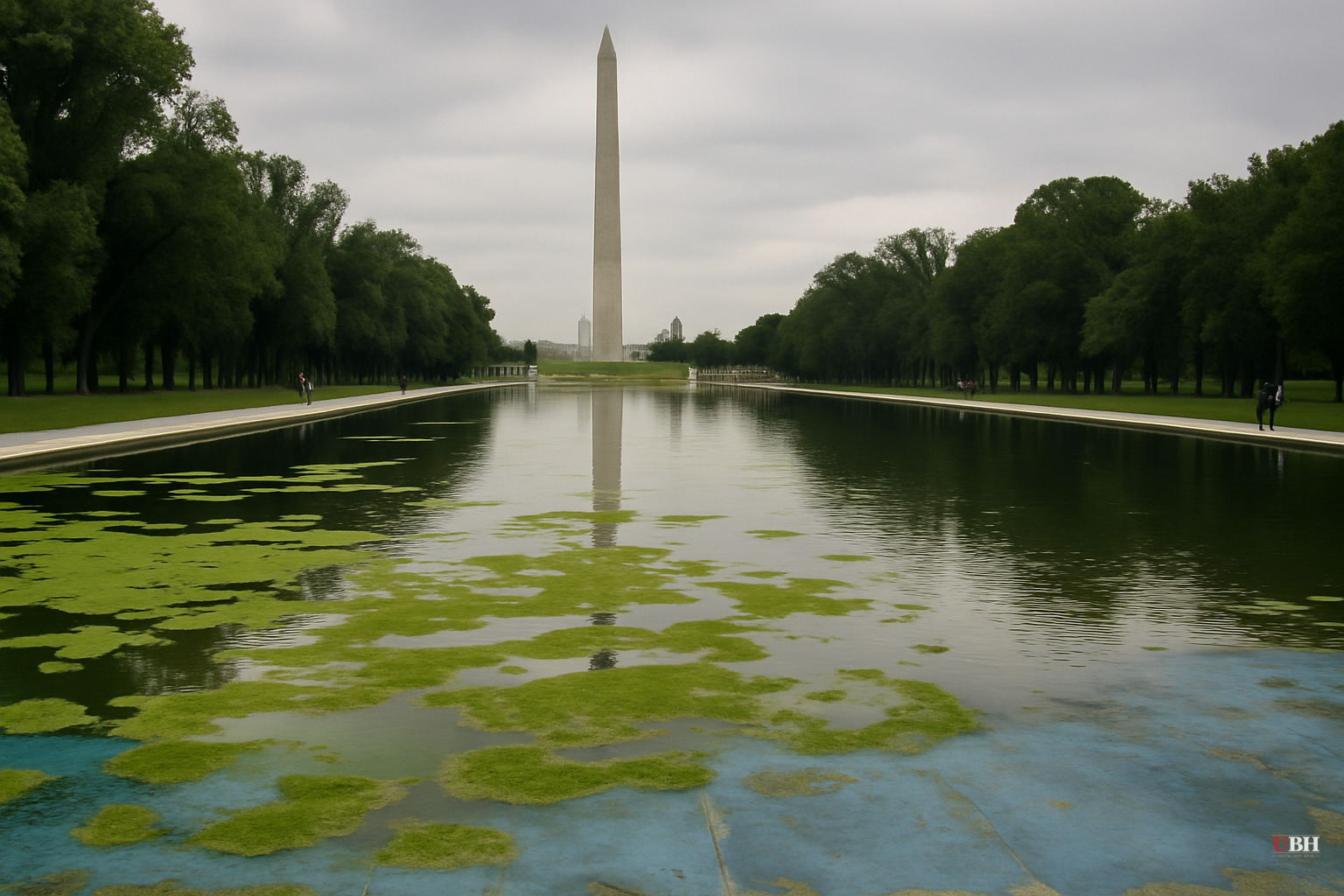
The National Mall's Reflecting Pool is now guarded by National Guard members, and as of this weekend, at least one visitor who touched the pool's broken liner was arrested. He denies causing any damage.
The Reflecting Pool: $16.4 Million, One Arrested Visitor, Zero Results
The backstory is straightforward. The Trump administration awarded no-bid contracts this spring for a blue color coating and a water-purification system. According to The Atlantic's reporting by Matt Viser, the purification contract went to a company tied to a Trump-campaign donor who was previously convicted of conspiracy to bribe. Both contracts have produced visible failure: algae has colonized the pool and the blue coating is peeling off in chunks.
Trump acknowledged this weekend that water will likely need to be removed to conduct "necessary repairs." That means $16.4 million in taxpayer money produced a pool that now has to be drained and redone. The administration also blamed vandals, but the White House has offered no evidence to support that claim.
U.S. Attorney for the District of Columbia Jeanine Pirro vowed to prosecute vandals aggressively. The Atlantic noted that Pirro has a prior record of failing to win D.C. grand jury indictments on prosecutions her office pursued. Whether that pattern continues here is an open question.
The strongest defense the administration could offer is that large public infrastructure projects frequently encounter contractor failures, and no-bid emergency contracts are not categorically illegal. They are used across administrations when time or circumstances demand. If vandalism is later documented, that argument gets stronger. As of June 22, 2026, no such evidence has been produced.
Iran: Trump Threatens, Vance Negotiates, Both at the Same Time
The more consequential situation is in the Persian Gulf.
Iran claimed over the weekend that it had again blocked the Strait of Hormuz, citing renewed fighting between Israel and Hezbollah, which if accurate would violate the fragile ceasefire currently in place. The actual status of the strait is disputed. The Trump administration says traffic is flowing normally. Third-party shipping analysts, according to The Atlantic, say traffic has slowed significantly and remains well below prewar levels, though the strait is not completely closed. None of those analysts are named in the source material, which limits how much weight that framing can carry.
What is on the record: Trump told Fox News reporter Trey Yingst that he told Iranian officials, "You close it and you won't have a country," and, "You won't even make it back to your fucking country." On Truth Social, he warned that if Iran didn't restrain Hezbollah, he would "hit Iran very hard again, just like we did last week, only harder!!!" Those statements landed while Vice President Vance was in Switzerland, actively negotiating with Iranian counterparts.
The case for Trump's approach is not frivolous. Hardline deterrence language has precedent in American foreign policy. The argument is that adversaries respond to credible threats, not polished diplomatic language, and that Iran has exploited soft rhetoric for decades. Supporters would say Trump's willingness to strike Iran last week (per his own statement) gives the threat real credibility, and that strength at the table is the only thing Tehran respects.
The counterargument is operational, not ideological. Vance was in the room with Iranian negotiators when Trump posted the threats publicly. According to The Atlantic, Vance was left to tell Iranian officials they should essentially disregard the president's statements. If your own vice president has to walk back the president in real time to keep talks alive, the unified-front requirement of any serious diplomacy has collapsed.
The ceasefire itself — its terms, who brokered it, what it covers — is not fully detailed in available reporting. What is confirmed: Trump says the U.S. struck Iran last week, a ceasefire is described as fragile and in place, and the Strait of Hormuz dispute is active as of this weekend.
Two Problems, One Pattern
Both situations share a structural feature. In each case, the administration created the problem (no-bid contracts to a donor-connected firm; public threats during live negotiations), then communicated in ways that complicated any clean resolution (blaming unsupported vandalism; publicly threatening interlocutors).
The Reflecting Pool is expensive and embarrassing. The Iran situation carries actual strategic stakes. The Strait of Hormuz handles roughly 20% of global oil trade, according to the U.S. Energy Information Administration, and any sustained closure would drive energy prices across the global economy.
The unresolved question with teeth is this: Can Vance's Switzerland talks survive the credibility gap created when the president publicly contradicts the terms of his own vice president's negotiation? Iran now has every incentive to play both channels against each other. Whether the administration has a coordinated answer to that problem has not been established.
Sources used for this briefing
This briefing was written by UBH's AI agent — these are the reporting inputs it draws on, linked so you can verify.


