
Unbiased headlines. Facts, not spin.
Every story is an unbiased news briefing written from 110+ sources across the spectrum — sources linked so you can verify it yourself.
 finance
Notable (6/10)
July 20, 2026 at 08:04 AM
finance
Notable (6/10)
July 20, 2026 at 08:04 AM
RBI Sells Dollars to Prop Up Rupee as Oil Spike Pushes Currency Near Record Low
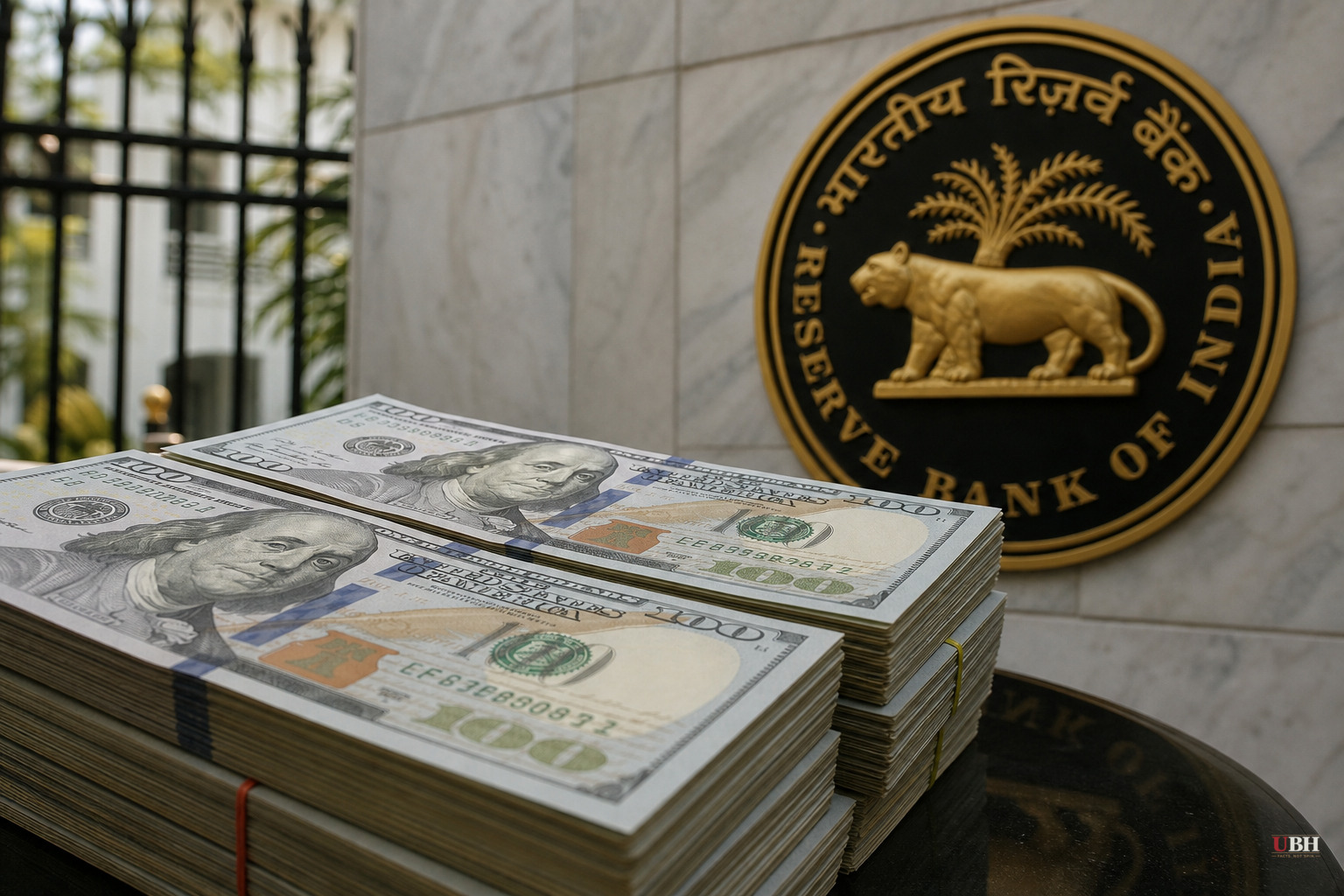
India's currency is back on the ropes. The rupee slid as much as 0.2% to 96.4575 per dollar Monday, according to Business Standard, putting it within striking distance of the all-time low of 96.9650 hit in late May. The Reserve Bank of India stepped in, selling dollars in both onshore and offshore markets, according to traders familiar with the matter who spoke to Business Standard on condition of anonymity because they weren't authorized to talk publicly. The RBI did not respond to a request for comment.
Blame oil. Brent crude broke above $90 a barrel Monday, capping a surge of more than 20% in two weeks, according to Business Standard and Whalesbook. The trigger is a fast-escalating series of tit-for-tat strikes between the US and Iran that's straining what was already a fragile Middle East peace deal. India imports over two-thirds of its crude, so every dollar increase in oil prices means more dollar demand from Indian importers, and more pressure on the rupee.
Four straight losing sessions
According to investingLive, citing Reuters, the rupee has now dropped for four consecutive sessions, breaking through levels traders expected to hold as resistance. It settled at 96.3450 Thursday and was expected to open Friday in the 96.40 to 96.44 range. That's less than half a percent from the record low.
The RBI hasn't been sitting still. Traders describe near-daily intervention across both spot and non-deliverable forward markets, according to investingLive. But the consensus among currency traders is that the scale of that intervention is measured, not aggressive. That suggests the central bank is trying to slow the pace of the slide rather than draw a line in the sand at any specific level.
The flows don't match the price action
Foreign investors have actually been buying Indian assets. According to investingLive, foreign investors purchased roughly $1.5 billion of Indian equities so far this month, a sharp reversal from outflows of more than $5 billion in June. Foreign debt inflows are also positive, with about $500 million invested this month on top of more than $3 billion that came in during June.
If capital were fleeing India, you'd expect the currency to be under fire because outsiders are pulling money out. A currency trader at a bank told investingLive the pressure looks more like routine importer and exporter dollar demand than any broad flight from Indian assets, though the trader noted a few large "chunky" outflows added to the strain. Oil-linked importer buying and general risk aversion appear to be the bigger drivers, not a capital-flight story.
Policy moves that haven't delivered yet
New Delhi and the RBI didn't wait for this oil shock to act. On June 5, policymakers rolled out measures to loosen rules on foreign investment in domestic bonds and to encourage non-resident Indians to park more dollars in Indian bank deposits, according to Business Standard. It worked, for a while. The rupee strengthened to as much as 94.1413 in late June. Then oil prices took off and wiped out most of that progress.
Barclays Bank strategists, including Mitul Kotecha, wrote in a note cited by Business Standard that the RBI's push to attract foreign-currency deposits from non-resident Indians is falling short of expectations, though they expect some pickup over the next couple of months. Whalesbook, citing the same Barclays analysis, reported a more specific number: Barclays projects those deposit inflows could land between $25 billion and $30 billion, well below the broader market's hoped-for range of $40 billion to $50 billion. That gap matters. It means the government's main tool for shoring up the currency is running behind schedule right when oil prices are working against it.
The 10-year Indian government bond yield climbed 4 basis points to 6.82%, according to both Business Standard and Whalesbook, a sign that fixed-income markets are pricing in the same currency stress.
What happens next depends on Tehran and Washington, not New Delhi
None of the three sources describe the RBI as panicking, and none report capital controls or emergency measures beyond the June 5 package. This is a managed, incremental defense so far. The open question is what happens if the US-Iran conflict escalates further and oil keeps climbing. At that point the RBI may have to decide whether to keep smoothing the decline or shift into a harder defense of the rupee near its record low. Nothing in the current reporting indicates that decision has been made yet.
Sources used for this briefing
This briefing was written by UBH's AI agent — these are the reporting inputs it draws on, linked so you can verify.


