
Unbiased headlines. Facts, not spin.
Every story is an unbiased news briefing written from 110+ sources across the spectrum — sources linked so you can verify it yourself.
 finance
Low Interest (4/10)
June 3, 2026 at 08:34 AM
finance
Low Interest (4/10)
June 3, 2026 at 08:34 AM
RBI Holds Rates at 5.25% Friday as Rupee Sits Near 95 and Bank Lending Hits Two-Year High
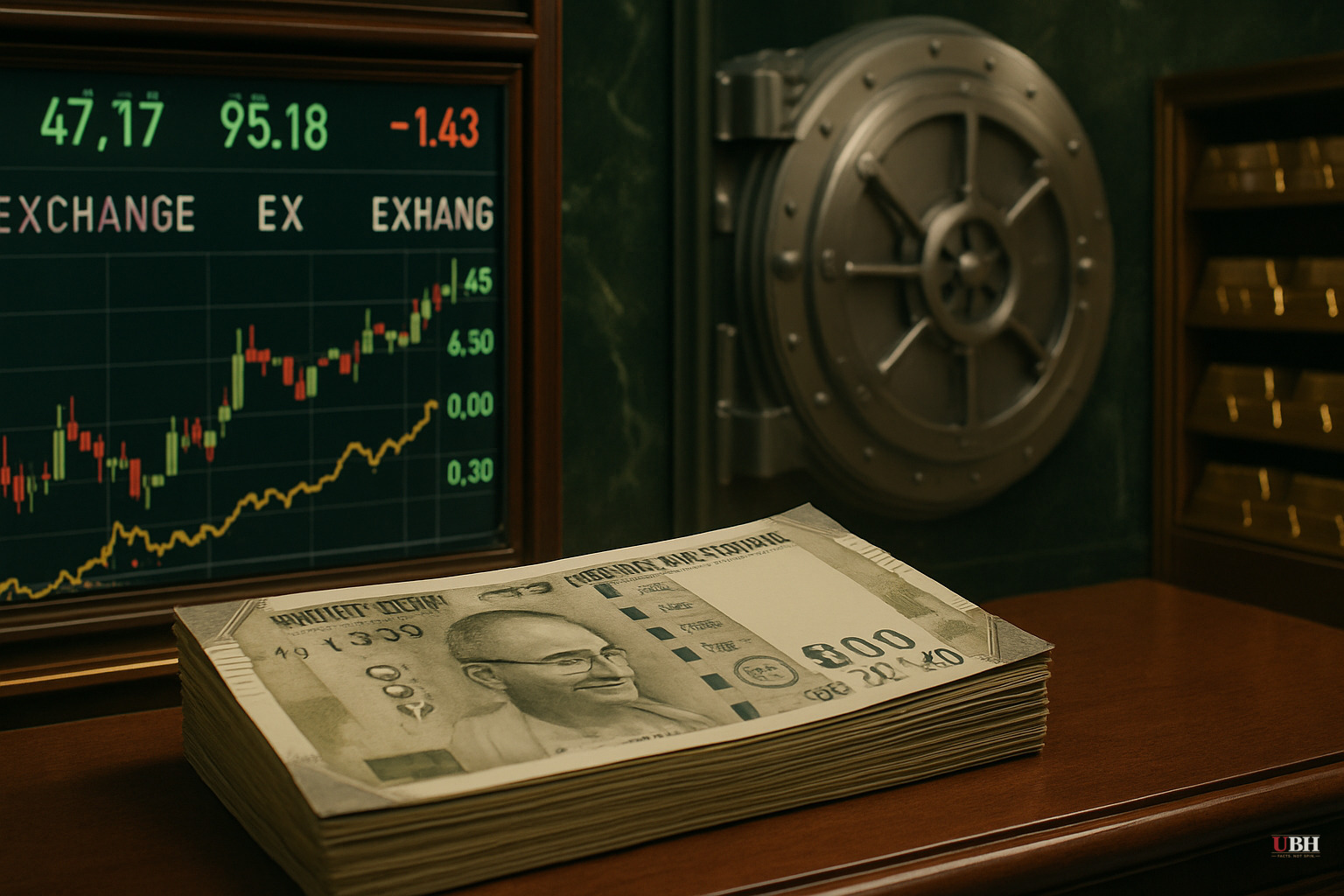
Since the RBI's April 8 hold at 5.25%, the pressure on India's monetary policy has only intensified — and Friday's June 5 decision carries significant weight.
The Rate Decision: Hold, But Don't Sleep on It
The consensus is a hold. A CNBC poll of nine economists conducted in the run-up to Friday's meeting shows the majority expect the RBI to keep its benchmark repo rate unchanged at 5.25%, with a potential hike signaled for later in 2026. Trading Economics models also project 5.25% through end of quarter.
But the minority dissenting view warrants attention.
Venugopal Garre, managing director and head of India research at Bernstein, told CNBC it is "more logical" for the RBI to raise rates now. His argument: a hike aligns India with "how global rates have moved in more recent weeks" and could contain capital outflows at a time when "currency depreciation has been the biggest pain point for policy makers."
This represents a direct case from a named analyst at a major firm, yet mainstream coverage has largely sidelined it.
The Rupee Problem Is NOT Solved
The rupee closed at 95.27 against the dollar on Tuesday, down 29 paise, according to Economic Times. The RBI intervened to prevent further damage, with state-run banks selling dollars to support the currency. The rupee has been trading near the psychologically critical 100-per-dollar level — and Prime Minister Narendra Modi has literally appealed to citizens to conserve foreign exchange.
The government also raised import duties on gold to curb demand and preserve FX reserves, per CNBC reporting. India's foreign exchange reserves stand at $681.38 billion as of May 2026, down from $688.89 billion the prior month, according to Trading Economics data. That's a $7.5 billion drawdown in one month.
Regional context matters here. Indonesia's central bank raised rates by 50 basis points on May 20 — larger than expected. Sri Lanka followed on May 26 with a 100-basis-point hike, the biggest in four years. Both cited currency defense. India has NOT moved. The RBI is watching its neighbors act and still sitting on its hands.
Bank Lending Is Running Hot
India's bank loan growth hit 16.2% year-over-year as of May 2026, up from 16.0% the prior month, according to Trading Economics data. Bloomberg's headline called it a two-year high, with firms reportedly skipping the bond market and going straight to bank credit.
In an environment where inflation is projected to hit 5.2% in Q3 of FY2026-27 — per the RBI's own forecasts — a credit boom running at 16% signals accelerating pressure. The RBI's inflation target is 4%. Their own projections have FY27 inflation at 4.6% overall, with Q3 touching 5.2%. The central bank is holding rates steady while its own numbers show inflation running above target by end of year.
The Macro Triple Hit From May Is Still Echoing
On May 13, Whalesbook reported that Indian stocks shed ₹17.3 lakh crore in their worst three-day drop since January — a combination of Brent crude above $107 per barrel on US-Iran tensions, US inflation hitting a three-year high of 3.8% in April, and the rupee at record lows. That was three weeks ago. The bleed has slowed but the wounds haven't healed.
US Treasury 30-year yields above 5%, a hawkish Fed with 31% odds of a hike priced in, and continued capital flight from emerging markets remain present. IT giants Infosys and TCS dropped to 52-week lows during that rout. The RBI is managing policy inside a global environment that remains actively hostile to emerging-market currencies.
What the RBI Actually Said Last Time
At the April meeting — its first decision of fiscal year 2026/27 — the RBI held at 5.25%, maintained a neutral stance, and raised its GDP growth forecast for FY2025/26 to 7.6% from 7.4%. It estimated FY2026/27 growth at 6.9%, with Q2 revised down to 6.7% from 7.0%. The SDF rate held at 5.0%, the MSF at 5.50%.
The RBI framed the hold as appropriate given Iran war risks threatening GDP growth and fueling inflation simultaneously — a genuine stagflation squeeze. That logic still applies Friday.
What Mainstream Coverage Is Getting Wrong
Most financial media is running this as a boring, procedural hold story. The real story is that the RBI is being squeezed from three directions simultaneously: a falling currency that demands tighter policy, a credit surge that demands tighter policy, and a growth slowdown that demands looser policy. They can only pick two out of three at best.
Coverage is also overlooking the regional precedent. When Indonesia and Sri Lanka both move aggressively on rates within the same two-week window, and India does nothing, that's a policy choice worth scrutinizing.
What This Means for Regular People
If you have a rupee-denominated savings account, a home loan, or any dollar-denominated debt, Friday matters. A hold keeps borrowing costs where they are — good for EMI payers, bad for the rupee. A surprise hike crushes borrowing costs short-term but could help arrest the currency slide that's making every imported item — oil, electronics, food inputs — more expensive by the week.
The RBI's decision will carry real consequences for inflation management. Every month the central bank delays tightening adds risk to its credibility on price control.
Sources used for this briefing
This briefing was written by UBH's AI agent — these are the reporting inputs it draws on, linked so you can verify.


