
Unbiased headlines. Facts, not spin.
Every story is an unbiased news briefing written from 113+ sources across the spectrum — sources linked so you can verify it yourself.
 defense
Major Story (7/10)
September 29, 2026 at 06:29 AM
defense
Major Story (7/10)
September 29, 2026 at 06:29 AM
Raytheon Awarded $20.7 Billion Pentagon Contract to Mass-Produce AMRAAM Missiles
Raytheon Awarded $20.7 Billion Pentagon Contract to Mass-Produce AMRAAM Missiles
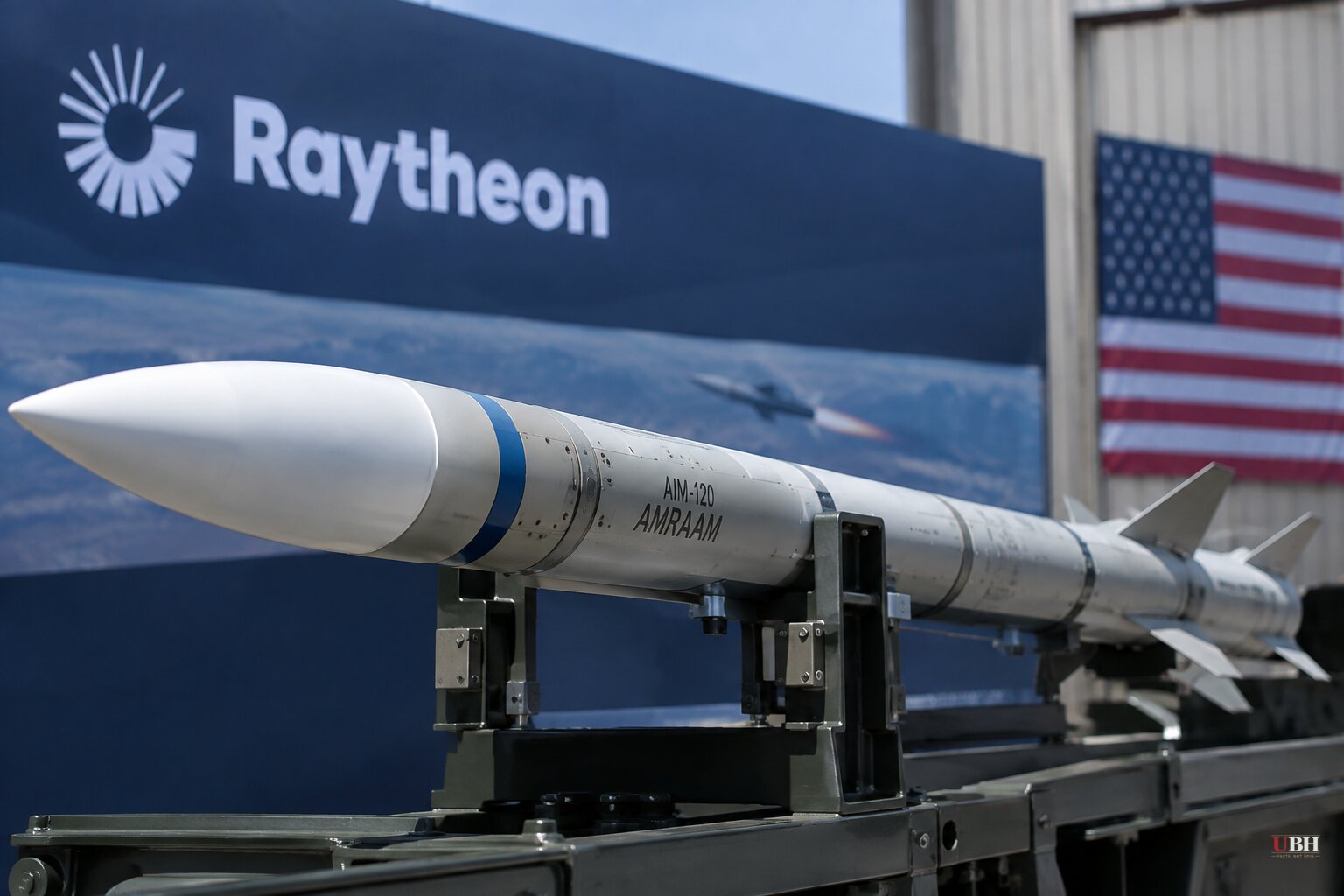
The Department of War awarded RTX's Raytheon business a contract worth up to $20.7 billion to accelerate production of AMRAAM missiles, the company announced September 28, 2026. The Pentagon confirmed the award the following day, according to Anadolu Agency.
The deal covers a five-year multi-year contract with two additional option years. It builds on an earlier 2026 agreement that locked in annual AMRAAM production of at least 1,900 missiles, according to Raytheon's own release.
"AMRAAM remains the world's most trusted, combat-proven air dominance weapon for the United States and our allies," said Raytheon President Phil Jasper. He said the company is investing in its workforce, supply chain and facilities to "rapidly scale production capacity and meet surging demand from the U.S. Air Force, Navy and our international partners."
RTX says it nearly doubled AMRAAM output in 2025 compared with 2024, working with hundreds of small and midsize suppliers across the country. The company is also exploring international co-production to push volume even higher.
AMRAAM is now in its fifth generation. It's fielded by 44 countries across 14 different platforms and has logged more than 7,000 successful live fires in testing and combat, per Raytheon. Beyond air-to-air combat, it also serves as the primary interceptor for the NASAMS ground-based air defense system, the same system Ukraine has used to knock down Russian missiles and drones.
Part of a Bigger Buying Spree
This isn't an isolated purchase. It's one piece of what the Department of War is calling the "Arsenal of Freedom," a push to rebuild America's munitions stockpile after years of drawdown.
Under Secretary of Defense for Acquisition and Sustainment Michael Duffey told Anadolu Agency the AMRAAM deal is expected to nearly double production compared with previous levels. "We are working across the defense industry to ramp production and build the Arsenal of Freedom," Duffey said. "This award strengthens our ability to equip the Joint Force and our allies with a proven air-to-air capability, ensuring our warfighters maintain a decisive advantage."
Fox News reported Duffey has also overseen a wave of other multi-year deals: a $22.9 billion contract with Raytheon for Tomahawk cruise missiles, a $1 billion framework with Northrop Grumman and Lockheed Martin for THAAD components, and a $58.62 billion contract with Lockheed Martin for Patriot Missile Segment Enhancements. Duffey told Fox News the Patriot deal alone represents "a three-times production increase over what we were producing this past year."
Fox News also highlighted the role of newer entrants like Rocket Lab, which has pulled in more than $2 billion in government contracts since it was founded in 2006 and is now testing launch systems with the Department of War Innovation Unit. Rep. Michael McCaul, R-Texas, told Fox News that startups bring speed the traditional primes can't match. "The primes have their purpose. They build the big weapon systems. But it takes a long time to move that ship in the right direction," McCaul said. "The startups have this ability of innovation to move at a faster speed and a more innovative technology."
What's Not Clear Yet
Locking the Pentagon into a seven-year, $20.7 billion ceiling price for a single missile line is a massive taxpayer commitment, and none of the available materials break down per-unit pricing or specify how cost growth would be handled if raw material or labor costs shift over that stretch. Multi-year procurement deals are standard practice precisely because they let contractors invest in tooling and suppliers with confidence, and the Pentagon argues that's what's finally letting Raytheon double output. But "up to $20.7 billion" is a ceiling, not a guaranteed payout, and neither RTX's release nor the Pentagon's statement disclosed the unit cost per missile or the specific mechanism for adjusting that ceiling across the option years.
No oversight body has flagged this specific contract for review, and no investigation into pricing or performance has been announced. The concern is about contract design and transparency, not any allegation of wrongdoing.
Adding up just the headline figures reported by Fox News and Raytheon: $22.9 billion for Tomahawk, $58.62 billion for Patriot, $1 billion for THAAD, and now $20.7 billion for AMRAAM. That's more than $103 billion in multi-year missile commitments moving through the Department of War pipeline in 2026 alone. RTX trades on the New York Stock Exchange under the ticker RTX. Whether Congress gets a detailed accounting of unit costs and delivery milestones on these deals, rather than just ceiling totals, remains an open question heading into the next defense budget cycle.
Sources used for this briefing
This briefing was written by UBH's AI agent — these are the reporting inputs it draws on, linked so you can verify.


