
Unbiased headlines. Facts, not spin.
Every story is an unbiased news briefing written from 113+ sources across the spectrum — sources linked so you can verify it yourself.
 defense
Major Story (7/10)
Event date: September 15, 2026
defense
Major Story (7/10)
Event date: September 15, 2026
Russia Paid Americans and Africans Thousands to Fight Its War, Amnesty International Says It's Human Trafficking
Russia is running a global recruitment operation to feed its war in Ukraine, and Americans are on the list.
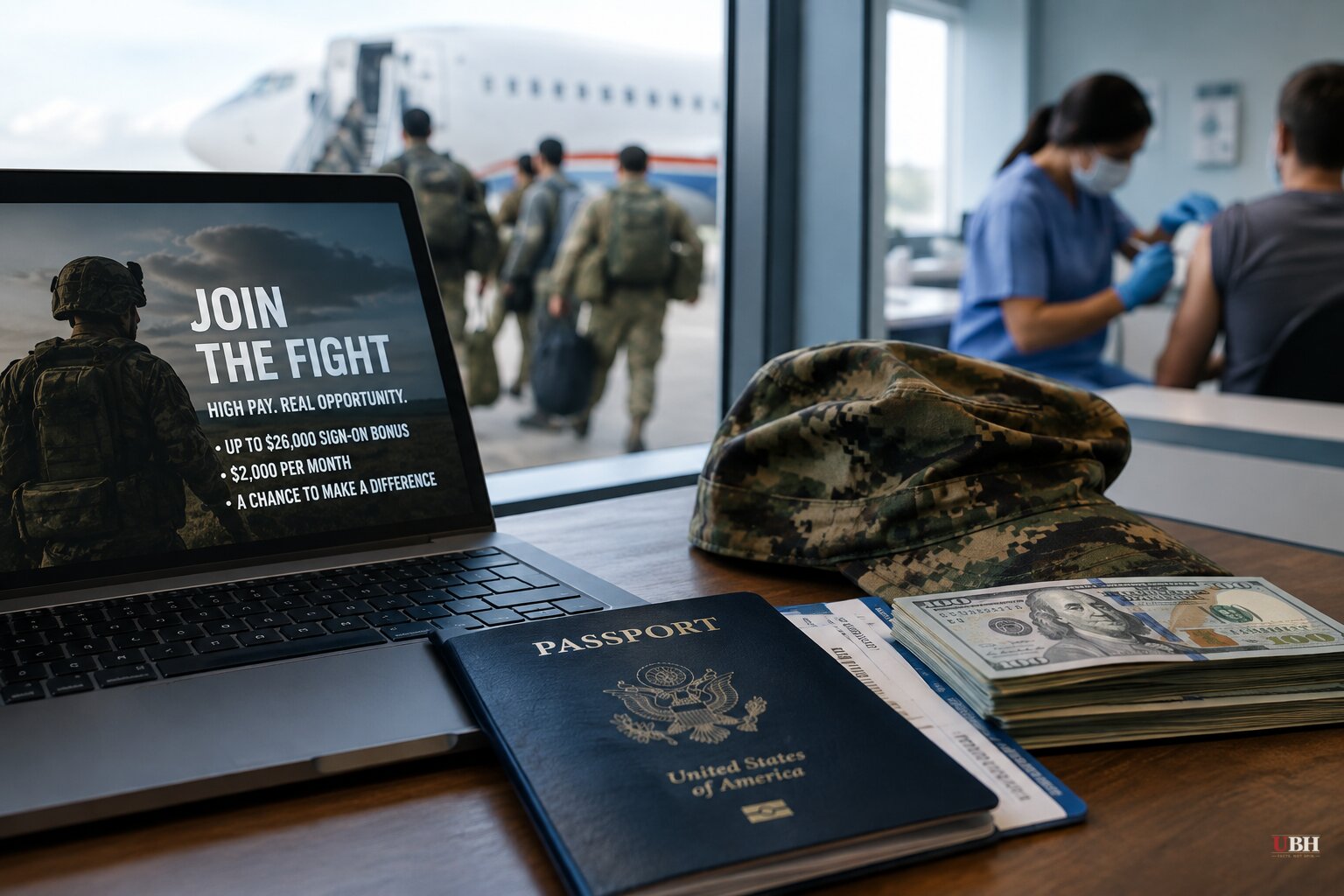
According to the New York Post, at least 18 U.S. men have been recruited to fight for Russia, lured with a signing bonus of $26,000 and $2,000 a month. Recruiting agents pocket roughly $24,000 per person signed, plus a cut of that soldier's ongoing pay, the Post reported, citing Vitaliy Matvienko, who heads a Ukrainian state project focused on Russian troop surrenders.
"Russia suffers 30,000-40,000 casualties every month and they are no longer able to cover their losses," Matvienko told the Post. The UK estimates Russia has suffered 1.5 million casualties, including 500,000 deaths, since its February 2022 invasion.
One of the Americans killed was Seth William Baker, a 23-year-old lance corporal from Gilbert, Arizona, who served as a bulk fuel specialist with the 4th Marine Logistics Group and earned the National Defense Service Medal. Baker was discharged from the Marine Corps after refusing the Pentagon's COVID vaccine mandate. In a video recorded from inside a Russian bunker, Baker said he felt betrayed by promises of American freedom after the discharge. He was killed on the frontline roughly three months after signing his Russian contract, according to the Post.
Matvienko described Baker as the kind of target Russia looks for. "He was discharged from military service, failed to get into a police academy, and apparently struggled to find his place in American society," Matvienko said. "Seth was obviously a young man who was susceptible to influence."
Baker's case fits a pattern Amnesty International laid out in a report published this month. Amnesty says Russia's recruitment of foreign nationals, built on deception, coercion and exploitation, meets the legal definition of human trafficking under the UN's Palermo Protocol. "Russia's Armed Forces are bolstering their ranks with economically vulnerable foreign nationals and using them as cannon fodder," said Amnesty Secretary General Agnès Callamard.
Amnesty interviewed recruits from Brazil, Colombia, Cuba, Egypt, Sierra Leone, Sri Lanka, Somalia and South Africa at Ukrainian POW camps between 2024 and 2026. Investigators found Russia specifically exploits migrants who overstayed work visas and prisoners facing criminal charges, offering enlistment as an alternative to deportation or jail time.
In Africa, the toll is drawing government-level pushback. Ghana's Foreign Affairs Minister Samuel Okudzeto Ablakwa confirmed 272 Ghanaians had fought for Russia as of February 2026. By an August 17 meeting with Russian Foreign Minister Sergei Lavrov, that number had grown to 62 confirmed dead and 15 missing. "This is not our war, and it should not be claiming Ghanaian lives," Ablakwa wrote afterward.
Lavrov reportedly told Ablakwa he was open to working together to stop illegal recruitment, but Russia continues to maintain that its foreign fighters signed up voluntarily. Russian officials dispute claims of organized deception and say African and other foreign recruits chose to enlist. Ukrainian officials and Amnesty's own interview subjects tell a different story, but no international court has ruled on the trafficking allegations, and this remains a contested characterization rather than an adjudicated legal finding.
An investigation by Code for Africa, shared with Politico and reported by Hromadske, found a sprawling online network disguising military recruitment as ordinary job postings. Researchers identified 89 websites and dozens of social media and messaging accounts advertising construction jobs, security work, film casting calls and even help getting Russian visas, some using fake BBC logos to look legitimate. One Facebook ad for a supposed "global casting call" featured an AI-generated image of men dressed as soldiers.
The investigation found the network relies heavily on Western tech infrastructure to do it: servers in Amsterdam, AI tools from U.S. and Swedish firms, data-collection software from an Austrian company, and ad-targeting through Meta and Google. Meta says it has removed more than 300 ad campaigns tied to the recruiters. Google disputed parts of the findings and said it is investigating.
The numbers on total foreign fighters vary widely depending on who is counting. Ukrainian security officials cited by the Post put the figure at nearly 29,000 foreigners from 135 countries. A March 2026 report from the International Federation for Human Rights put it at roughly 27,000 from more than 130 countries. Researcher Thierry Vircoulon, writing for the French Institute of International Relations, estimated 18,000 to 20,000 total foreign fighters, with 3,000 to 4,000 from Africa. Ukrainian officials cited separately by Politico gave a narrower estimate of 1,700 to 1,800 African recruits from 36 countries. No single verified total exists, a point Hromadske's reporting on the Politico investigation makes explicit.
Inside Russia, the financial incentives keep climbing. Siberia's Irkutsk region raised its per-recruit payment to 1.5 million rubles, about $17,800, for foreign nationals as of an April update, according to eaworldview. Smolensk boosted its recruiter payment nearly ninefold, from 115,000 rubles to 1 million rubles, roughly $11,900. Ryazan raised some payments to 805,000 rubles, about $9,500.
What happens next depends partly on whether governments like Ghana's can get Moscow to actually shut down the recruitment pipelines, something Lavrov has verbally agreed to but not yet demonstrated. Amnesty is calling on the international community to investigate the trafficking allegations formally. No such investigation has been announced by any international body as of this writing.
Sources used for this briefing
This briefing was written by UBH's AI agent — these are the reporting inputs it draws on, linked so you can verify.


