
Unbiased headlines. Facts, not spin.
Every story is an unbiased news briefing written from 110+ sources across the spectrum — sources linked so you can verify it yourself.
 politics
Notable (6/10)
July 29, 2026 at 09:05 PM
politics
Notable (6/10)
July 29, 2026 at 09:05 PM
Rand Paul Hauls Fauci Before Senate Panel, Fauci Pleads the Fifth, Lawyer Removed From Hearing
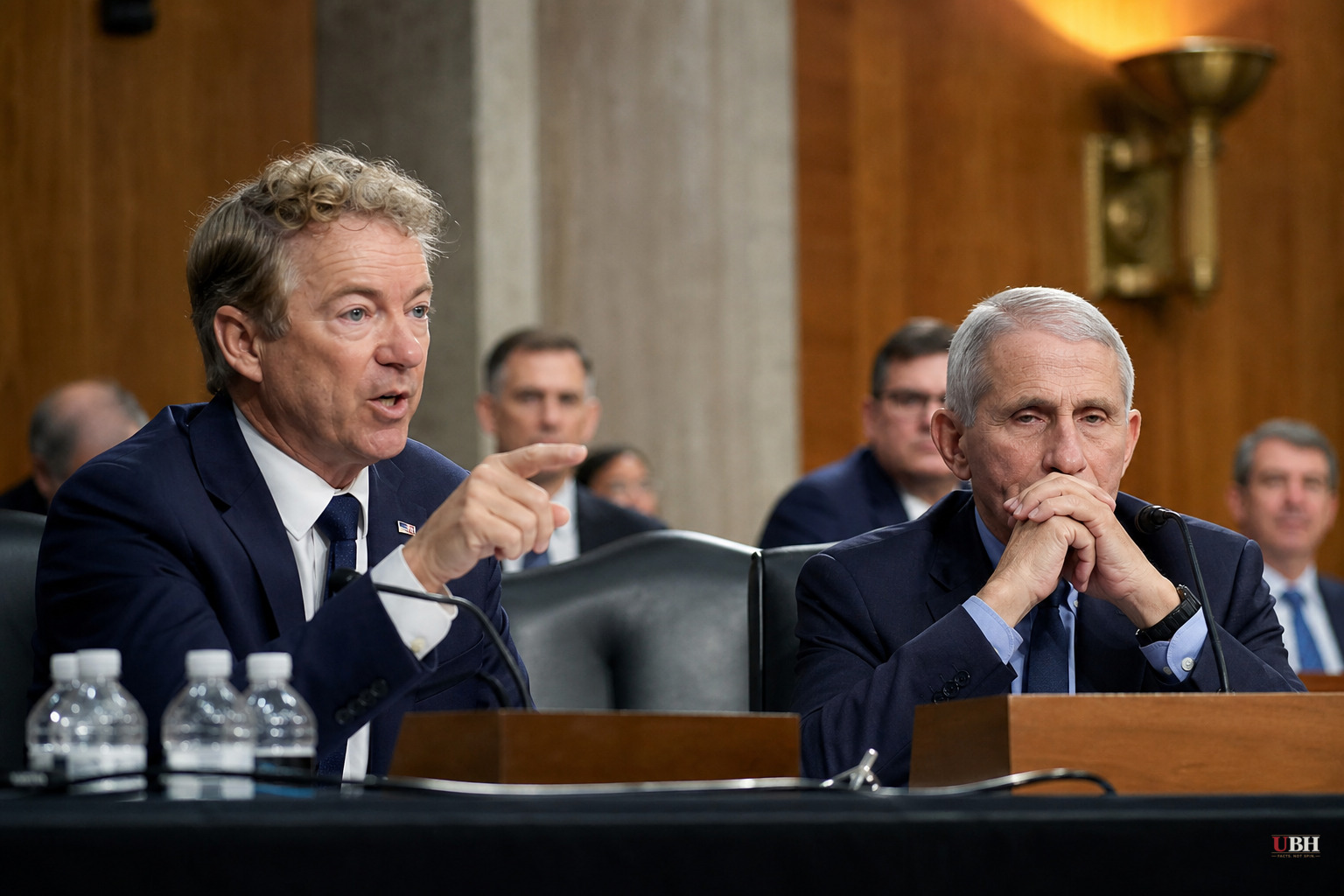
Fauci Takes the Fifth, Paul Threatens 'Repercussions'
Sen. Rand Paul (R-KY) called Dr. Anthony Fauci before the Senate Homeland Security and Governmental Affairs Committee this week. Fauci refused to answer questions, invoking his Fifth Amendment right against self-incrimination, according to Talking Points Memo.
This isn't Paul's first swing at Fauci. The Kentucky senator has spent years demanding Fauci face prosecution over COVID-era policy decisions, mask guidance, and lingering questions about the virus's origins. Paul recently released Fauci's personal diary publicly, a move Fauci's team says factored directly into the decision to stay silent Wednesday.
In his opening statement, Fauci didn't mince words about why he wouldn't cooperate. He cited Paul's "obvious obsession with calling for my prosecution" and "repeated slanderous comments" as reasons he believes the hearing exists solely to manufacture a soundbite Paul can use to argue Fauci belongs "behind bars" — Paul's own past language, according to Fauci's statement.
"Any reasonable person who has followed his unhinged obsession with me would readily come to the same conclusion," Fauci said, adding that invoking the Fifth pained him given his history of congressional cooperation, but that his attorneys advised it.
Fauci's Lawyer Removed From the Room
During the hearing, Paul had Fauci's attorney, David Schertler, physically removed from the room. Schertler later told NBC News he was only trying to state, for the record, that Fauci has a valid Fifth Amendment privilege and the right to assert it. Paul didn't let him finish.
Paul then told Fauci there would be consequences for not testifying. "The committee will have to consider after this hearing what appropriate action should be taken against you for the failure to testify after being directed to do so," Paul said, adding that obstructing a congressional investigation is against the law and warning of "repercussions."
Paul did not specify what those repercussions would be, and no referral, contempt vote, or criminal charge has been announced as of this writing. Congress does have a mechanism to hold witnesses in contempt for refusing to testify, but that process requires a committee vote and, typically, House or Senate floor action. It hasn't happened here. Invoking the Fifth Amendment itself is not illegal; it's a constitutional right available to any witness, including ones testifying before Congress.
The Fair Case for Paul's Line of Questioning
Paul's underlying grievance isn't manufactured out of nothing. Fauci ran the National Institute of Allergy and Infectious Diseases for decades and was the most visible face of the federal pandemic response. Mask guidance that shifted, school closure recommendations, and NIH-funded research tied to the Wuhan Institute of Virology have all drawn legitimate bipartisan scrutiny over the years, not just from MAGA-aligned lawmakers. Millions of Americans lived through lockdowns, mandates, and shifting public health guidance they never got to vote on, and a Senate committee holding the person most responsible for that guidance accountable is a legitimate exercise of oversight power, regardless of how personally Paul has taken it.
Fauci's team, for its part, argues the specific venue and timing undermine that legitimacy. Fauci received a preemptive pardon from former President Biden at the end of his term specifically because of the years-long MAGA fixation on prosecuting him. This means Fauci faces no realistic federal criminal exposure tied to his pandemic-era conduct. Given that, and given Paul's public, repeated statements that he wants Fauci "behind bars," Fauci's argument that the hearing was designed to bait an incriminating statement rather than gather oversight information has merit.
What Talking Points Memo's Framing Leaves Out
Talking Points Memo's writeup frames the hearing primarily as a symptom of Republicans lacking a substantive 2026 midterm message, arguing the GOP is relitigating 2020 instead of talking about the economy or other current issues. That's a defensible political analysis. The piece doesn't detail what specific new evidence, if any, Paul's committee presented to justify calling Fauci back, nor does it specify what statutory contempt process Paul would need to invoke to make good on his "repercussions" threat.
What Happens Next
No contempt referral has been filed. No charges have been announced. Fauci's pardon from former President Biden covers any federal offenses connected to his pandemic-era actions through January 2025, but pardons don't cover future conduct, including refusal to testify in 2026.
Whether Paul's committee moves to hold Fauci in contempt, and whether that effort gets traction on the Senate floor, remains the open question. So does whether this hearing changes a single vote in November's midterms, or simply becomes the latest chapter in a fight that's now stretched more than five years past the pandemic itself.
Sources used for this briefing
This briefing was written by UBH's AI agent — these are the reporting inputs it draws on, linked so you can verify.


