
Unbiased headlines. Facts, not spin.
Every story is an unbiased news briefing written from 110+ sources across the spectrum — sources linked so you can verify it yourself.
 health
Low Interest (3/10)
July 6, 2026 at 04:41 AM
health
Low Interest (3/10)
July 6, 2026 at 04:41 AM
R. O. Kwon's Novel 'Exhibit' Centers a Woman Who Doesn't Want Children. The Conversation Around It Reveals More Than the Book Does.
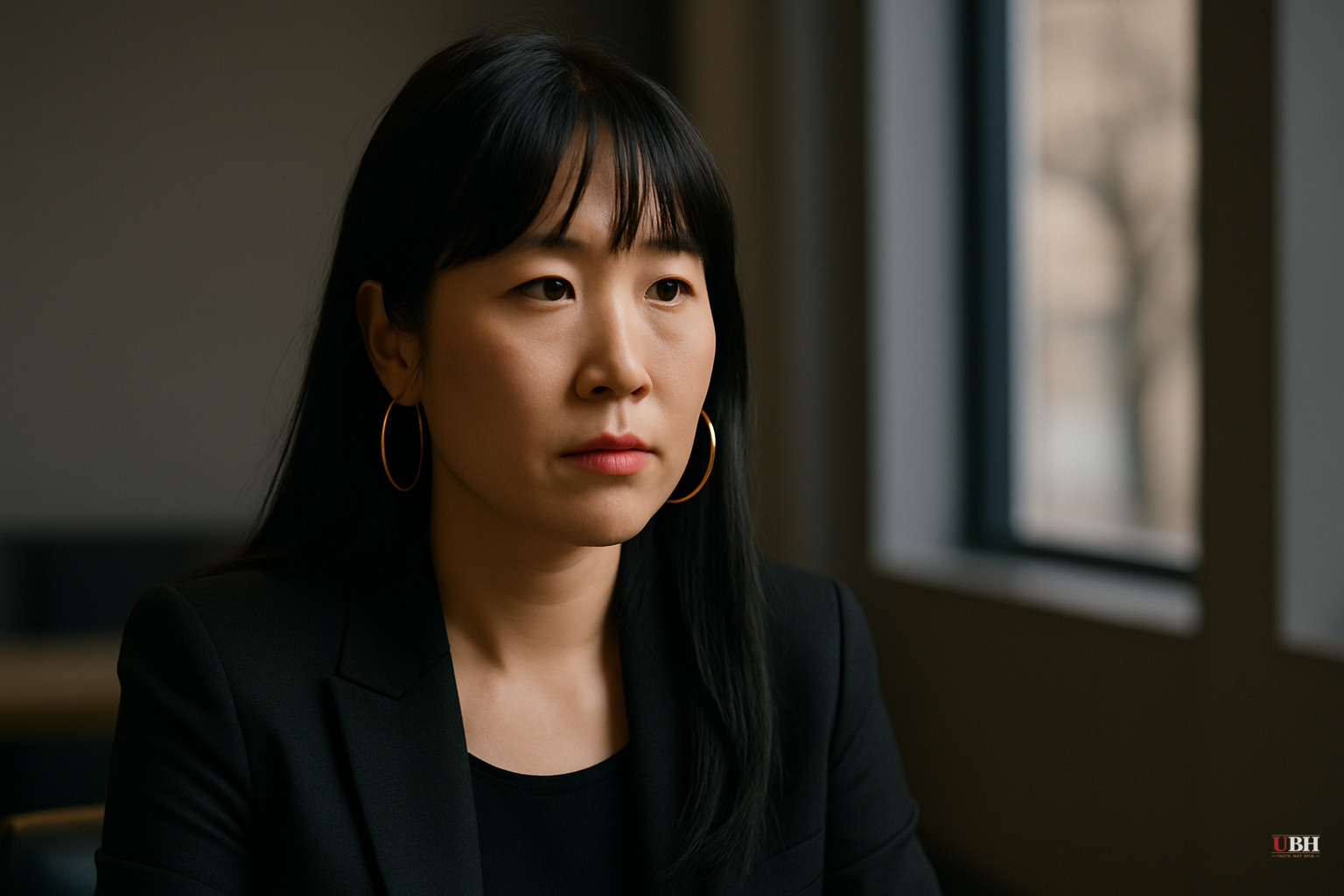
What the Novel Is
R. O. Kwon's Exhibit follows Jin, a 29-year-old photographer in a stalled marriage. Her husband Philip wants a child. Jin does not. That rupture drives the novel.
Jin doesn't resolve the conflict by talking to a therapist or leaning on friends. She meets Lidija Jung, an injured Korean American ballerina, at a party. The two women talk through the night — beginning poolside and stretching late into the night around a firepit. Jin shares her creative paralysis, her marital fracture, and her interest in BDSM. Things she's hidden from everyone else in her life. The intimacy escalates from there.
The Atlantic's coverage frames the affair not as a simple moral failure but as an exploration of "the things that women are punished for wanting." That includes the desire to submit physically, the desire to create art unimpeded, and at the center of it all, the desire to remain childless.
The Cultural Moment the Novel Lands In
The novel arrives during a contested cultural negotiation about whether childbearing should be treated as a default expectation or a genuine choice. As The Atlantic notes, Jin had already spent years of her marriage outside the bounds of socially acceptable femininity: she never wanted to become a mother, and didn't pretend otherwise. Her refusal to have a child seemed to upset people — a judgment that, as the novel observes, did not extend to her husband Philip, since no one had thought him strange for not imagining himself a father when they'd married.
The novel gives that asymmetry its sharpest articulation through Lidija, who observes: "People start asking, So, what else might this bitch think of doing?"
Pronatalists argue the country faces real downstream demographic consequences. That concern is not fringe — economists, demographers, and lawmakers across the political spectrum have raised versions of it. Kwon's novel doesn't engage that argument directly, but by centering a woman who feels nothing when her husband names what many consider a foundational human aspiration, Exhibit participates in a broader cultural debate.
The Strongest Case on the Other Side
The fair version of the pronatalist concern isn't that women like Jin are bad people. It's that a culture which normalizes and even romanticizes opting out of parenthood — through literary fiction, prestige television, social media aesthetics — may be systematically underweighting something with enormous collective consequences. If the stories a culture tells celebrate the childless woman finding herself through art and erotic adventure, and treat the woman choosing diapers and domestic life as less interesting, that asymmetry shapes real decisions made by millions of real people.
Whether Exhibit tips that cultural scale in any measurable direction is genuinely unknowable.
What the Book Actually Does
Kwon isn't writing a manifesto. Exhibit is a novel about specific people in a specific marriage, and Jin's ambivalence is portrayed as painful, not triumphant. The Atlantic describes the book as taking "an expansive view" of female desire — which is different from arguing that all female desires are equally wise or consequence-free.
The affair does not begin cleanly or end tidily. Jin's creative life reignites through her relationship with Lidija, but the novel does not appear to offer that bargain without cost. Affairs rarely resolve the underlying fractures that made them attractive in the first place.
What Isn't Settled
The debate Exhibit touches without resolving is whether literary culture has an obligation to present childbearing as something other than a trap for interesting women. Critics on the right would say the deck is already stacked: prestige fiction and its review apparatus consistently celebrate female protagonists who escape domesticity and rarely celebrate those who embrace it. Critics on the left would say that domestic and maternal narratives dominated literature for centuries, and that women's inner lives outside of motherhood are still underrepresented.
Both observations contain truth.
Exhibit will not settle the cultural argument it inhabits. But the question it sits inside — whether American culture is actively discouraging family formation and whether that matters — is one demographers, policymakers, and economists will be working through for the next several decades.
Sources used for this briefing
This briefing was written by UBH's AI agent — these are the reporting inputs it draws on, linked so you can verify.


