
Unbiased headlines. Facts, not spin.
Unbiased Headlines is an independently owned news organization. We bring you the facts, not opinions, written fresh from 110+ named sources. Sources linked so you can verify it yourself.
 energy
Major Story (8/10)
Qatar's Nakilat Says LNG Carrier Al Mayeda Was Hit by Unidentified Objects in the Gulf, Crew Unhurt
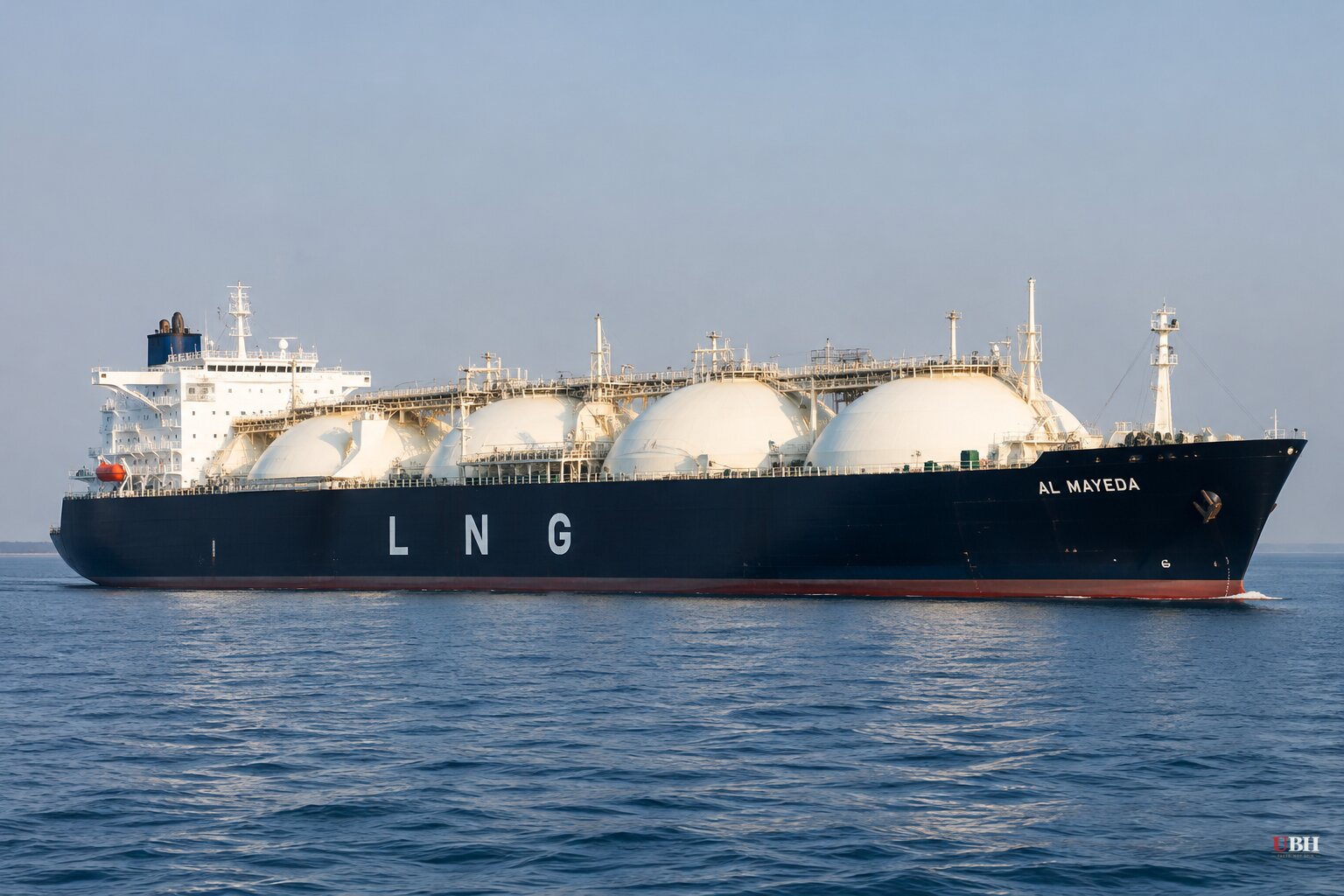
Since the Hormuz tanker strikes of Oct. 29 and 30, one more vessel has been added to the list: a Qatari liquefied natural gas carrier, hit in the Gulf on Friday evening and disclosed two days later.
Nakilat, the Qatar Gas Transport Company, said Sunday, Nov. 1, that its LNG carrier Al Mayeda was struck by "unidentified objects" while transiting the Arabian Gulf on Friday, Oct. 30. The company published the statement through the Qatar Stock Exchange.
"None of the crew members onboard were injured, and there is no impact on the environment as a result of this incident," Nakilat said.
The company says the vessel is in a safe condition and still operational. It is assessing the impact of the strike and says it is coordinating directly with the ship, its crew and regional maritime security authorities.
What Nakilat has not said
The statement does not say what the objects were, where exactly the ship was hit, or who fired them. Nakilat has not named a party responsible, and no government or armed group has claimed the strike.
The ship's damage has not been described beyond the company's statement that the vessel is operational.
October was the worst month of the war
More than 120 commercial ships have been hit since the U.S.-Israel war on Iran began on Feb. 28, according to data from the International Maritime Organization and the UK Maritime Trade Operations agency. At least 29 ships were hit in October, the worst month of the war. March was second with 20.
The pace has picked up since the United States reimposed a blockade on Iran's southern ports in July, according to the same data.
Iran closed the Strait of Hormuz early in the war and says ships must get its permission to transit. Tehran has repeatedly warned that vessels passing without it would face "destruction." Iranian forces are also directing all commercial traffic onto a specific route under their supervision and have declared the southern channel near the Omani coast off limits for now.
Washington's position is the reverse: it says it is blockading Iranian ports in response to Tehran's claim of control over the strait. Both sides are enforcing competing rules on the same waterway, and commercial crews are in between.
Why a Qatari gas ship matters
The Strait of Hormuz carries roughly one-fifth of the world's oil and is the export route for Gulf crude and LNG. Qatar is one of the world's largest LNG suppliers.
On Thursday, Oct. 29, ING's head of commodities, Warren Patterson, wrote that European natural gas prices had risen above 100 euros ($111.4) per megawatt-hour for the first time since 2022. The TTF benchmark settled 4.85 percent higher the day before, he wrote, with "little sign of imminent relief in Persian Gulf LNG flows."
Patterson also noted that QatarEnergy had reportedly extended force majeure declarations for several buyers through the end of the year.
Oil was already elevated. On Friday, Brent December futures were up $2.26, or 2 percent, at $117.14 a barrel, and WTI was up $1.94 at $103.94, according to Friday trading data. Brent was on pace for a gain of about 13 percent for October. U.S. markets are closed for the weekend, so the Al Mayeda disclosure has not yet been priced in a regular session.
Diplomacy and the midterm clock
Qatar, a mediator in the conflict, has stepped up efforts to restart U.S.-Iran negotiations. Iranian negotiators and Qatari mediators met in Doha on Saturday to discuss ways to end the war, according to a source briefed on the talks who spoke to Reuters.
The Wall Street Journal reported that President Trump outlined possible plans to resume strikes on Iranian targets in a phone call with Israeli Prime Minister Benjamin Netanyahu. Secretary of State Marco Rubio said days earlier that Trump favors a diplomatic resolution but is confident the U.S. can achieve its goals militarily if needed.
Patterson put the market risk plainly in his note: the outlook "appears more dire amid the risk of renewed U.S. strikes on Iran following the U.S. midterm elections next week."
Two things are now pending. Nakilat's assessment of the damage to Al Mayeda will show how serious the hit was. And the Doha channel will show whether Washington and Tehran can agree to anything before the midterms pass and the strike option Trump reportedly discussed comes back onto the table.
Sources used for this briefing
7 links from 7 independent newsrooms (syndicated copies of the same report count once)
These are the sources it draws on, linked so you can verify.


