
Unbiased headlines. Facts, not spin.
Unbiased Headlines is an independently owned news organization. We bring you the facts, not opinions, written fresh from 110+ named sources. Sources linked so you can verify it yourself.
 energy
Notable (6/10)
Event date: October 26, 2026 ·
Protests Against India's 11,200 MW Siang Dam Turn Violent in Arunachal Pradesh Ahead of Planned Survey
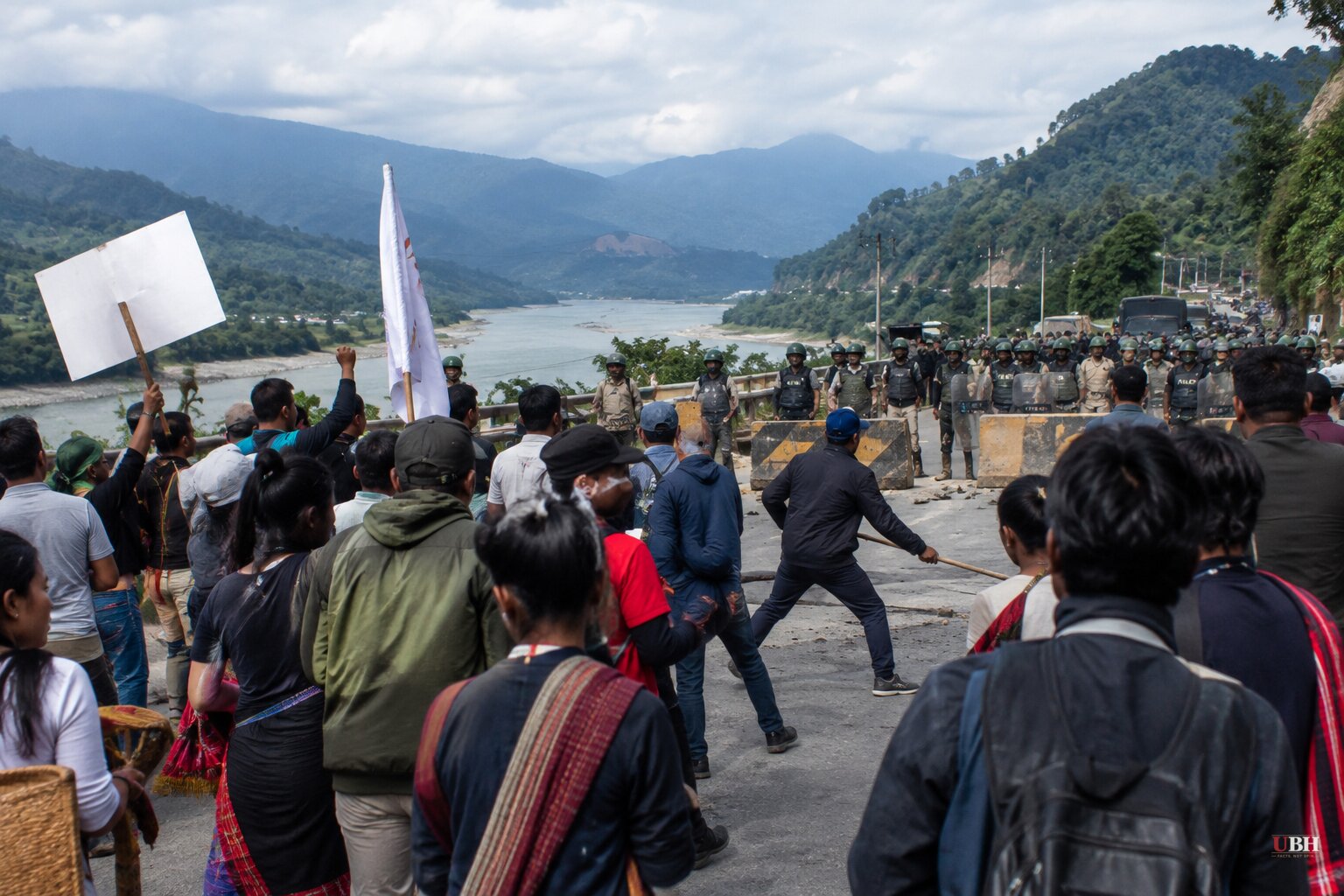
India's plan for its biggest hydropower project, pitched as a counter to a Chinese mega-dam upstream, has set off the worst unrest yet among the Indigenous communities who live along the river.
The violence broke out on the evening of Friday, Oct. 23, in Pasighat, a town in East Siang district, Arunachal Pradesh. Police used tear gas to disperse the crowd.
Chief Minister Pema Khandu described the aftermath to reporters on Oct. 24. "The mob destroyed a lot of properties, police station, the NHPC office was vandalized, several elected representatives' homes were ransacked," he said. He put the number of police injured by thrown stones at around 40.
By Oct. 24, at least three first information reports had been filed and 15 people had been arrested or detained, Inspector-General of Police Hibu Tamang said. Separately, at least 10 people have been arrested since Oct. 9, and four of them are held under the Arunachal Pradesh Unlawful Activities (Prevention) Act, 2014.
Khandu's message to opponents: "Question us, have dialogue with us, instead of violence."
What the project is
The Siang Upper Multipurpose Project, or SUMP, is a proposed 11,200 MW scheme run by state-owned NHPC. It would span three districts: Upper Siang, Siang and East Siang. The idea dates to 1983, and it was declared a national project in 2008.
The Siang is the Yarlung Tsangpo in Tibet. It enters India near Gelling and runs 294 km before joining the Dibang and Lohit at Sadiya in Assam to form the Brahmaputra.
The immediate trigger is a pre-feasibility report. The survey behind it is expected to run three months, from November 2026 to January 2027. The government says it will test whether the project is technically and geologically viable, including possible sites, seismic risk and the potential to moderate downstream floods.
The China argument
Upstream, China is building a hydropower project at Medog on the Yarlung Tsangpo. India describes it as a 60,000 MW scheme. Other accounts call it the Yaxia project and put the cost at $167 billion.
New Delhi fears it could affect downstream flows. The Arunachal government says SUMP's reservoir would store water, regulate floods and help maintain flows into the Brahmaputra.
Beijing says its project will have no "negative impact" downstream. China also claims Arunachal Pradesh as part of southern Tibet. India calls the state an integral part of its territory.
The state has a further motive. Arunachal holds about 40% of India's untapped hydropower potential but has only 2,115 MW installed. It has declared 2025 to 2035 the "Decade of Hydropower."
Khandu has also addressed the worry that SUMP could hold more water than the Chinese project despite producing less power. He says a dam's storage capacity is not set by its generating capacity. The Chinese project's storage is estimated at about 5.5 billion cubic metres.
What the Adi say
The opposition is led by the Adi community, along with the Siang Indigenous Farmers' Forum and the Adi Bane Kebang. They say a large reservoir could submerge ancestral land and villages and wipe out farming livelihoods and cultural sites. They also question building a mega-dam in a seismically active part of the Himalayas.
The Siang Indigenous Farmers' Forum says allowing surveys now could lay groundwork for a project that gets harder to stop later. It disputes the government's claims of local backing, arguing that signatures from individual households are no substitute for talks with village communities and traditional institutions.
The Adi Banne Kebang has demanded that SUMP be scrapped and the pre-feasibility report rejected. The All Adi Youth Association wants engagement through the traditional kebang councils, withdrawal of cases against protesters and restored trust between communities and the administration.
Itanagar journalist Tongam Rina says the China rationale doesn't move people on the ground. "Locals say we know the river much better than the government," she said. She added that labelling protesters anti-national has made things worse.
Protesters have also demanded the release of detained activists and villagers. Otul Jerang, a Pasighat resident who joined the peaceful sit-in beforehand, said the violence was not part of the movement's agenda.
Dialogue so far
Khandu's convoy was stopped by anti-dam protesters in Yingkiong, Upper Siang, on Sept. 30. He has since offered to visit affected villages. On Oct. 25 he met legislators and representatives of the Arunachal Indigenous Tribes Forum and community groups.
Afterward he said on X that misinformation about SUMP was fueling apprehension. He called for facts, transparency and open dialogue to close the information gap.
Attacking a police station and ransacking elected officials' homes is criminal, and the arrests follow from that. The communities' stated fear is losing homes and land to a reservoir, and no one has yet published where the water would reach.
The survey window is the next test. The government has not said whether the work will start on schedule in November. The Adi organisations have said they will not accept it, and the cases against detained protesters remain open.
Sources used for this briefing
7 links from 7 independent newsrooms (syndicated copies of the same report count once)
These are the sources it draws on, linked so you can verify.


