
Unbiased headlines. Facts, not spin.
Unbiased Headlines is an independently owned news organization. We bring you the facts, not opinions, written fresh from 110+ named sources. Sources linked so you can verify it yourself.
 energy
Notable (6/10)
Long Beach closes all coastal swimming areas after 29,000-gallon sewage spill, 14,000 gallons reached the ocean
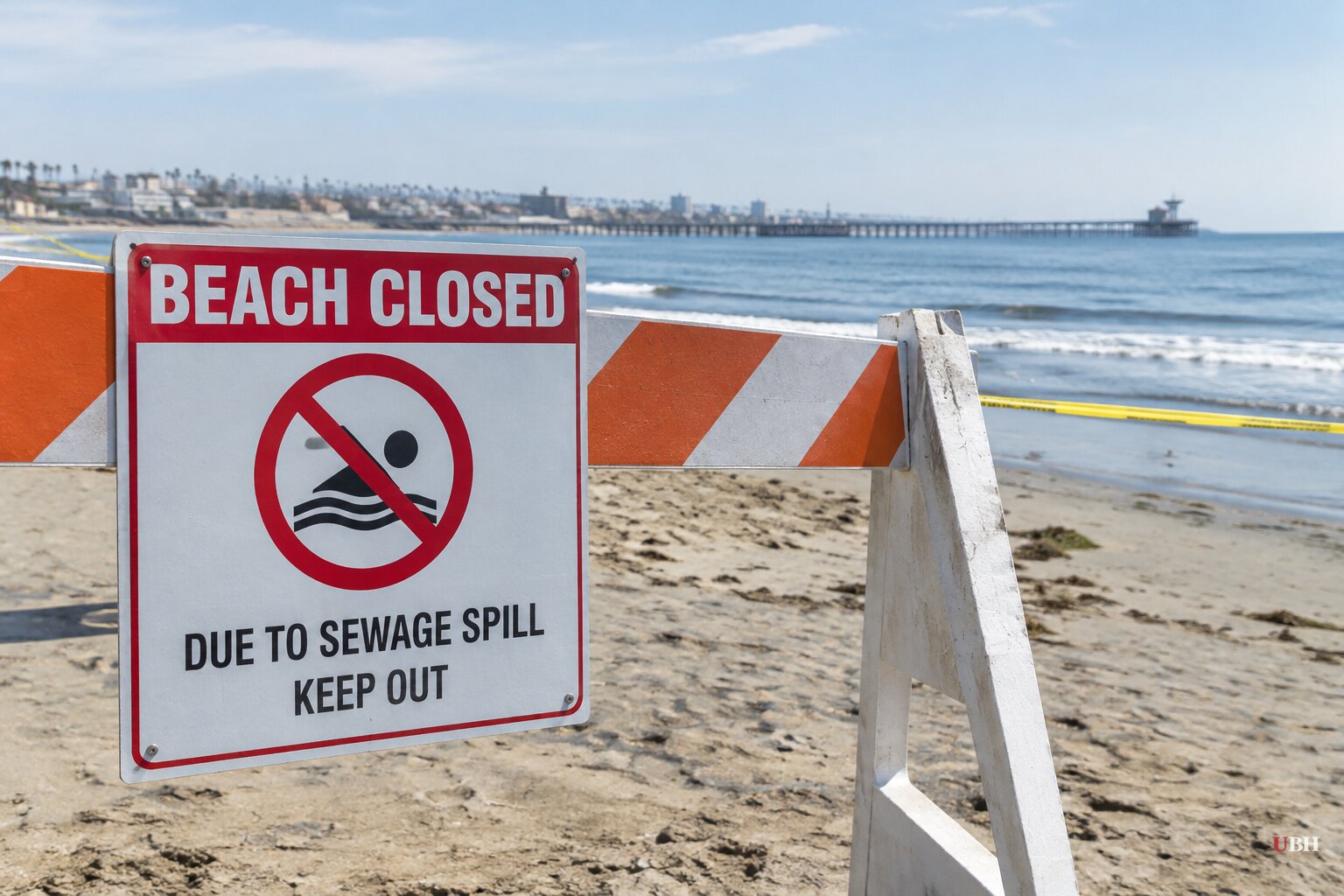
A pressurized sewer pipe broke in Long Beach's Belmont Shore neighborhood on Friday, Oct. 30, and the city has shut down swimming along its entire coast.
The spill began around 6:30 p.m. near Livingston Drive and Second Street, according to Long Beach Utilities. The pipe was a force main, which uses pressure to move wastewater across flat or uphill terrain.
The numbers
The city first put the spill at 27,000 gallons. On Saturday morning, Oct. 31, it raised the figure to 29,000 gallons.
Crews recovered about 15,000 gallons. The other 14,000 gallons reached the ocean, the city said. City crews tried to catch the sewage before it got into storm drains that lead to the sea, but they could not stop all of it.
Utilities rerouted the flow through a bypass line and brought in an emergency contractor, Ocean Blue, for cleanup.
What is closed
City Health Officer Dr. Cliff Okada ordered the closure of all open coastal swimming areas. That covers beaches, bay swimming areas and lagoons. The bay and lagoon areas were added Saturday, after the first closure order.
Long Beach has more than six miles of public beach monitored by health officials. A citywide closure is unusual. Full closures usually follow major emergencies such as raw sewage main breaks, fire debris incidents or lightning. Targeted bacteria warnings and rain advisories are far more common.
State law requires closing and posting beaches after sewage reaches the coast, and the city said it acted "out of an abundance of caution." The areas stay closed until water quality meets state standards.
Repairs and cause
Long Beach Utilities spokesperson Joy Contreras said in an email that emergency repairs were finished Saturday afternoon. The spill is no longer active. Crews are still backfilling the excavation and restoring the street. No sewer service was disrupted.
The cause of the break is under investigation, Contreras said. The city expects an after-action report but has not said when it will be released.
The department said the last sewer main break in Long Beach that sent sewage into the ocean was in 2014.
Why reopening has no date
Rain is forecast for the weekend. Because of that, the city said water sampling will not begin until Monday, Nov. 2. Sampling will continue until results meet state recreational water quality standards.
That sequence means the closure will last at least through the weekend. How much longer depends on the lab results. The city has not offered a reopening estimate.
Residents can call the city water quality hotline at 562-570-4199 or check the Long Beach Health Department's ocean water quality page.
A different kind of spill
Beach closures are not new in Long Beach, but most come from upstream. The Long Beach Post reported that sewage flowing down the Los Angeles and San Gabriel rivers from other cities most often triggers them. Over one recent five-year span, local beaches were closed for 63 days because of upstream spills.
This spill started inside the city's own system, Contreras said, which is the rarer case.
The rules for sewage are also stricter than for other contamination. When runoff from a large warehouse fire in Boyle Heights headed toward Long Beach in June, the Post reported, there was little public warning and beaches stayed open. Closure is mandatory for sewage reaching the coast, but state law does not require it for every type of spill.
Elsewhere on the coast
The Long Beach spill is separate from other water quality problems in the region. On Friday, the Los Angeles County Department of Public Health advised people to avoid the ocean near Ballona Creek at Dockweiler State Beach, Mother's Beach in Marina del Rey and the Santa Monica Pier. Bacteria levels there exceeded health standards. The county lifted warnings at Malibu Point, Surfrider Beach near Malibu Tower 3, and Avalon Beach on Catalina Island.
Two questions remain open. The first is what made the pipe fail. The second is what Monday's sampling shows once the rain arrives. Long Beach's after-action report is the document that should answer the first, and it has no release date.
Sources used for this briefing
7 links from 7 independent newsrooms (syndicated copies of the same report count once)
These are the sources it draws on, linked so you can verify.


