
Unbiased headlines. Facts, not spin.
Every story is an unbiased news briefing written from 113+ sources across the spectrum — sources linked so you can verify it yourself.
 politics
Major Story (7/10)
September 24, 2026 at 02:55 AM
politics
Major Story (7/10)
September 24, 2026 at 02:55 AM
Putin's Envoy Dmitriev Returns to New York for Fresh Round of Ukraine Talks With Witkoff and Kushner
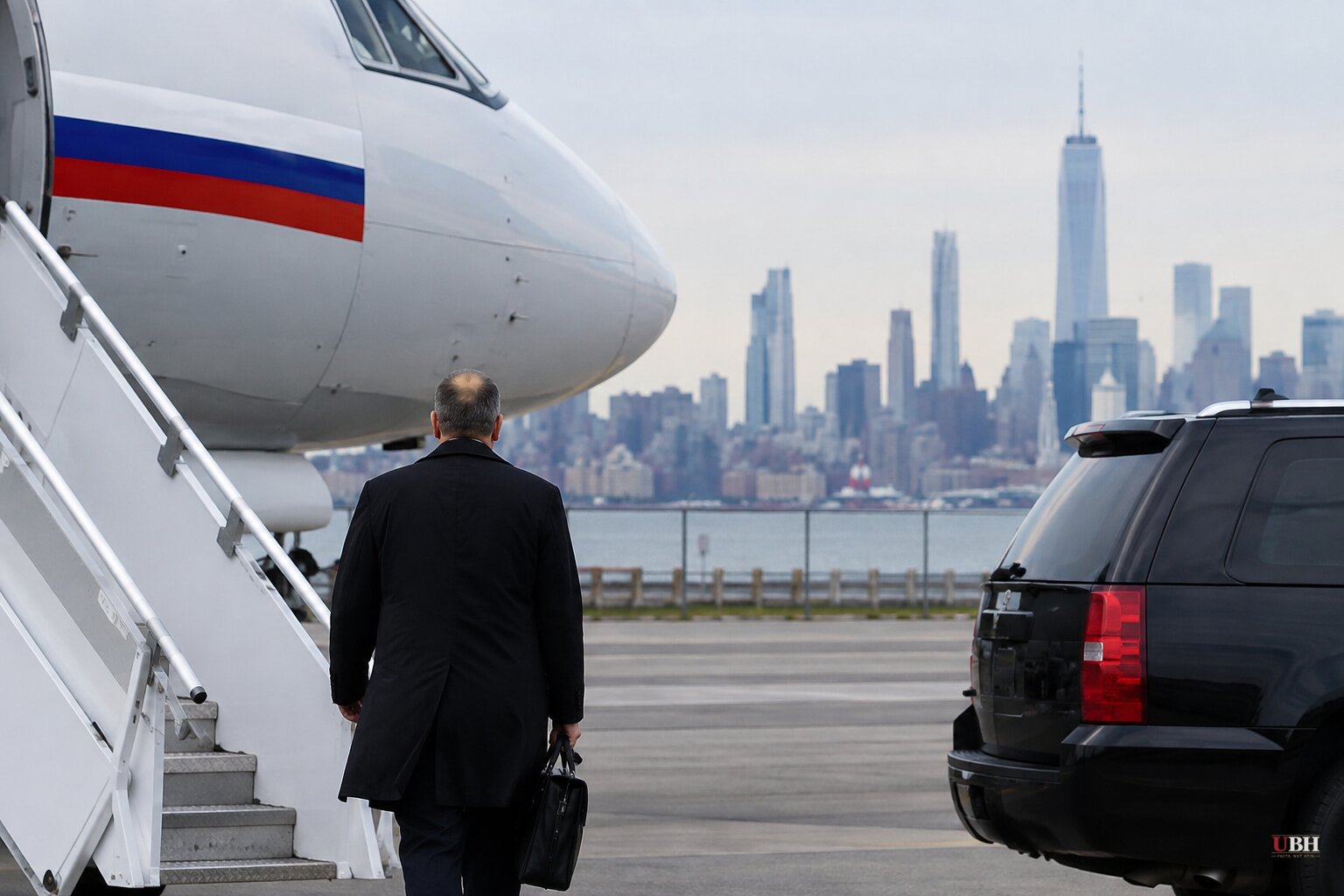
Russian presidential envoy Kirill Dmitriev traveled to New York on Wednesday, September 23, to meet with Trump administration representatives Steve Witkoff and Jared Kushner, according to two sources familiar with the preparations who spoke to Reuters. The visit was arranged with Russian President Vladimir Putin's approval and coincides with the UN General Assembly session underway in the city.
Reuters reports the New York meeting follows directly from a session at the Kremlin on September 5, when Putin sat down with Witkoff and Kushner alongside his foreign policy aide Yuri Ushakov and Dmitriev himself.
What Happened at the Kremlin on September 5
According to Fox News, which cited Associated Press reporting, Witkoff and Kushner met with Putin for more than three hours behind closed doors on that Saturday, wrapping without any announced breakthroughs. Ushakov called the talks "constructive, frank and useful," per the AP account carried by Fox News.
The Epoch Times, reporting the same day, quoted Ushakov using stronger language: "the negotiations were timely and highly useful for both sides." Ushakov said the discussion went beyond the war itself and covered "economic issues and potential major, mutually beneficial Russian-American projects," though he didn't specify what those projects were.
A Kremlin transcript cited by the Epoch Times has Putin opening the meeting by acknowledging the process "would not be simple" before sending "best wishes and words of gratitude" to President Trump. Putin also said he trusts working with Witkoff and Kushner directly: "the level of trust we have in this process is certainly quite high."
Putin ordered a 72-hour pause on strikes against Kyiv to cover the envoys' visit, the Epoch Times reported, and both Moscow and Kyiv reportedly agreed to hold off on strikes against each other's capitals during the trip. Fox News reported that after the Kremlin meeting, Witkoff and Kushner flew to Kyiv the next day, Sunday, to meet Ukrainian President Volodymyr Zelenskyy, who posted on X that Ukraine would keep Russian airspace clear so the Americans could travel safely.
A White House official said after the Kremlin meeting that "the two sides discussed substantive plans for next steps, which will be announced in the coming weeks," and thanked Putin for releasing former U.S. Marine Robert Gilman from Russian custody. As of this week, no such announcement has followed.
The September 23 Follow-Up
One source told Reuters the goal of Dmitriev's New York trip is simply "to keep the Russia-US dialogue and the peacemaking effort going." The agenda covers economic cooperation, energy issues, and a Ukraine settlement, the source said.
Secretary of State Marco Rubio, after meeting Russian Foreign Minister Sergei Lavrov, told reporters both Russia and Ukraine have expressed interest in a limited ceasefire covering grain and energy infrastructure strikes. Rubio also said he hopes Putin will accept an invitation to attend the G20 summit in the United States. No date or venue for that summit was specified in the reporting, and Moscow has not confirmed Putin's attendance.
Dmitriev is a Goldman Sachs and McKinsey alum who runs Russia's sovereign wealth fund and is widely viewed inside Russia, according to Reuters, as Moscow's most America-friendly negotiator. He's previously used his channel with Witkoff and Kushner to secure a sanctions waiver for seaborne Russian oil aimed at stabilizing global energy markets, plus several prisoner exchanges between Washington and Moscow.
Skeptics' Concerns
Skeptics of this process have a legitimate point. This is at least the second high-level US-Russia sit-down since January, and the public record shows repeated "useful" and "constructive" talks but no signed ceasefire, no territorial framework, and no announced settlement terms. Russia and Ukraine, per the Epoch Times, actually intensified long-range strikes in the weeks surrounding the Kremlin meeting even as front lines stayed largely static. A critic could reasonably ask whether Dmitriev's sanctions waiver and prisoner-exchange wins represent real concessions extracted from Moscow, or whether Washington is trading tangible relief for vague promises of future talks.
It is not evidence of bad faith on anyone's part, and no source here alleges the talks are a stalling tactic. Rubio himself framed the grain-and-energy ceasefire idea as something both sides want, not something either side is blocking.
The open question now is whether the New York meetings produce anything more concrete than the Kremlin session did: a signed limited ceasefire, a confirmed G20 appearance by Putin, or at minimum a public timeline. None of that exists yet. What exists is another meeting, in another city, with the same three men at the table.
Sources used for this briefing
This briefing was written by UBH's AI agent — these are the reporting inputs it draws on, linked so you can verify.


