
Unbiased headlines. Facts, not spin.
Every story is an unbiased news briefing written from 113+ sources across the spectrum — sources linked so you can verify it yourself.
 politics
Major Story (7/10)
Event date: September 20, 2026
politics
Major Story (7/10)
Event date: September 20, 2026
ICE Officer Who Shot Austin Delivery Driver Wasn't Wearing a Body Camera, Sources Say
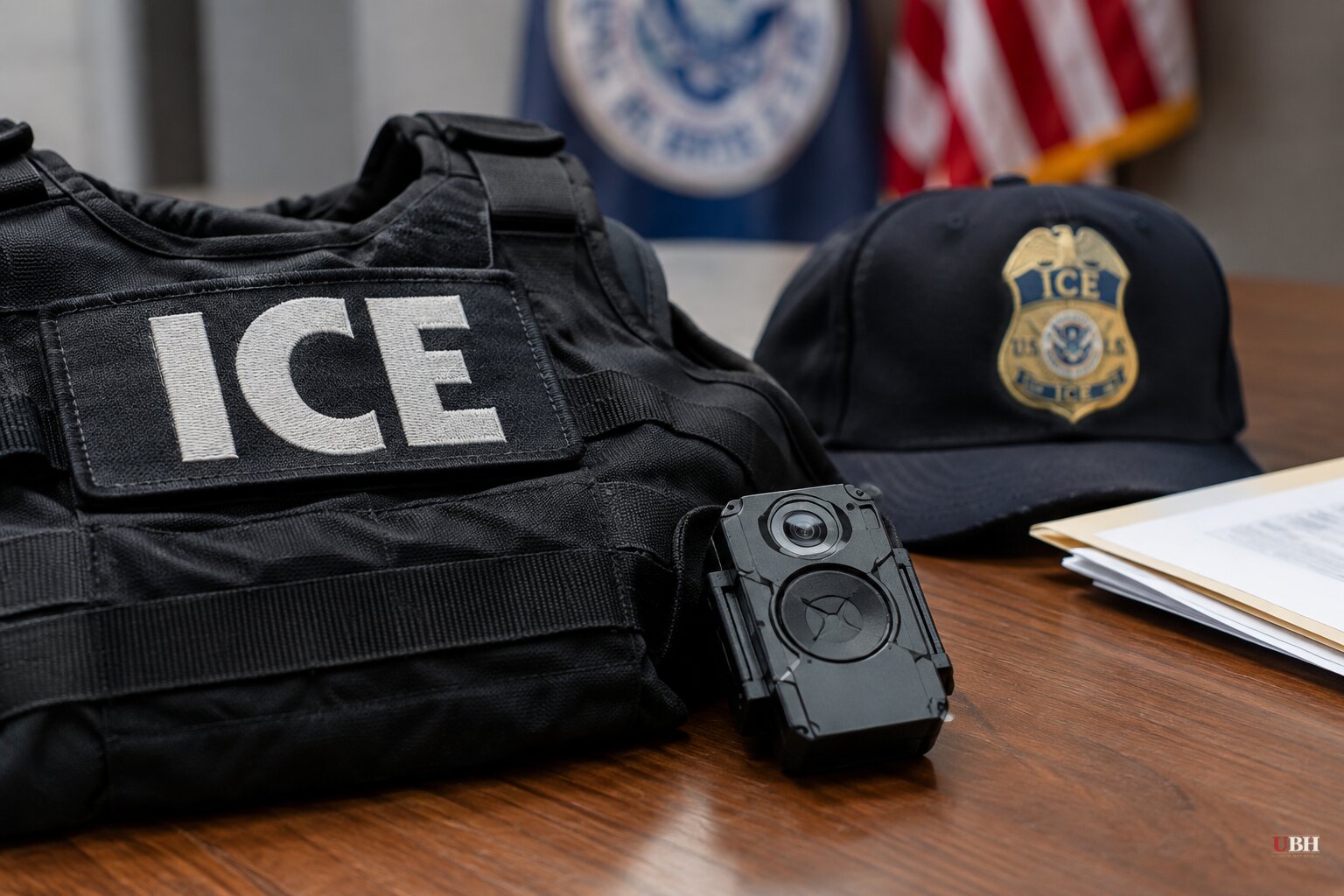
Since ICE shot Wilber Rafael Garces Perez in Austin on Sunday, September 20, the case has moved from a street-level confrontation to federal court, and the central evidence gap has only gotten wider.
CBS News reported Tuesday, citing sources familiar with the investigation, that the officer who shot the 28-year-old Venezuelan DoorDash driver was not wearing a body camera. Ground News' aggregation of coverage noted a competing detail from Axios: the officer had actually been issued a camera but simply wasn't wearing it, and a second officer's camera only captured partial footage. No video exists of the moment the trigger was pulled.
Homeland Security Secretary Kristi Noem told reporters in New York earlier this month that DHS would have every ICE officer wearing a body cam "by the end of September." "We're getting close," Noem said. "I'm pretty sure we will be there." With September nearly over, the officer involved in one of the highest-profile ICE shootings this year had none.
The Austin Police Department released dash-cam and body-cam footage Tuesday from an off-duty officer and a responding officer, but neither clip shows what happened before the shots were fired. DHS did not respond to CBS News' questions about the missing footage.
What DHS says happened, and what's disputed
DHS has said Garces Perez is in the country illegally, entered during the Biden administration, and is subject to a final order of removal. Austin Police Chief Lisa Davis said at a Sunday news conference there was "a small foot pursuit" before the shooting, though she cautioned that ICE had not confirmed that account and everything was "very preliminary."
Accounts of the run-up diverge sharply. Attorney Kate Lincoln-Goldfinch told the Philadelphia Inquirer that an unmarked ICE truck sideswiped Garces Perez's car while he was making a delivery, that he tried to make a U-turn to pull over, and that the ICE vehicle struck his car a second time before an officer opened fire. Austin City Councilmember Mike Siegal publicly claimed the officer fired five times through the windshield of the car; Breitbart reported that Chief Davis disputed that specific claim as false. Neither DHS nor ICE has laid out its own detailed version of events on the record.
The Daily Wire also reported that Lincoln-Goldfinch claims Garces Perez has legal status through his wife, a claim that conflicts with DHS's statement that he is subject to a final removal order. Neither side's account has been independently verified in these sources, and DHS has not responded to requests for comment on the discrepancy.
Medical care and a habeas fight
Garces Perez was released from a hospital into ICE custody about four hours after the shooting Sunday, despite a bullet still lodged near his spine that doctors chose not to remove, according to Lincoln-Goldfinch. He was held at the South Texas ICE Processing Center in Pearsall, roughly 130 miles southwest of Austin, and told reporters by phone Monday he'd spent the night on the floor.
He was hospitalized again late Monday after reporting paralysis on his left side, his attorney said. Rep. Joaquin Castro (D-Texas) said Tuesday that Garces Perez had since been discharged and returned to Pearsall, where he's now getting only Tylenol and ibuprofen for pain, according to Lincoln-Goldfinch's posts on X. Castro plans to visit him Wednesday, September 23.
Lincoln-Goldfinch and co-counsel Kristin Etter have filed a federal lawsuit seeking Garces Perez's immediate release and a halt to any deportation, arguing he qualifies as a crime victim eligible for a U visa because he was "shot by a federal officer," and that deporting him now would violate due process. U.S. District Judge Orlando L. Garcia has scheduled an in-person hearing for September 30 and ordered that Garces Perez be present, which effectively blocks any removal before that date.
A pattern DHS will have to answer for
This isn't the only ICE shooting facing legal fallout. Fox News reported that ICE officer Christian Castro pleaded not guilty Friday to six federal counts of lying to investigators about a January 14 shooting in Minneapolis, where he shot Venezuelan national Julio Cesar Sosa-Celis through an apartment door with two toddlers and two women inside. Prosecutors say video contradicted Castro's claims that he was beaten with a broom and snow shovel and pinned to the ground for three minutes. The actual struggle, they said, lasted about 11 seconds. Castro was released on a $75,000 unsecured bond with an ankle monitor.
DHS's officer-safety argument is that agents enforcing removal orders face real physical risk during pursuits and traffic stops. Nobody disputes that ICE officers can be assaulted or rammed with vehicles. But that argument doesn't answer why the Austin officer had no camera running, why DHS has offered no on-the-record account of the vehicle contact Lincoln-Goldfinch describes, or why a man with a bullet near his spine was moved to a detention facility floor within hours of leaving a hospital.
The September 30 hearing before Judge Garcia is the next concrete checkpoint. Whether DHS produces any footage, body-cam or otherwise, before then remains an open question the agency has not answered.
Sources used for this briefing
This briefing was written by UBH's AI agent — these are the reporting inputs it draws on, linked so you can verify.


