
Unbiased headlines. Facts, not spin.
Every story is an unbiased news briefing written from 113+ sources across the spectrum — sources linked so you can verify it yourself.
 politics
Major Story (7/10)
September 23, 2026 at 02:26 AM
politics
Major Story (7/10)
September 23, 2026 at 02:26 AM
Trump Administration Caps 2027 Refugee Admissions at 17,500, Nearly All Slots for White South Africans
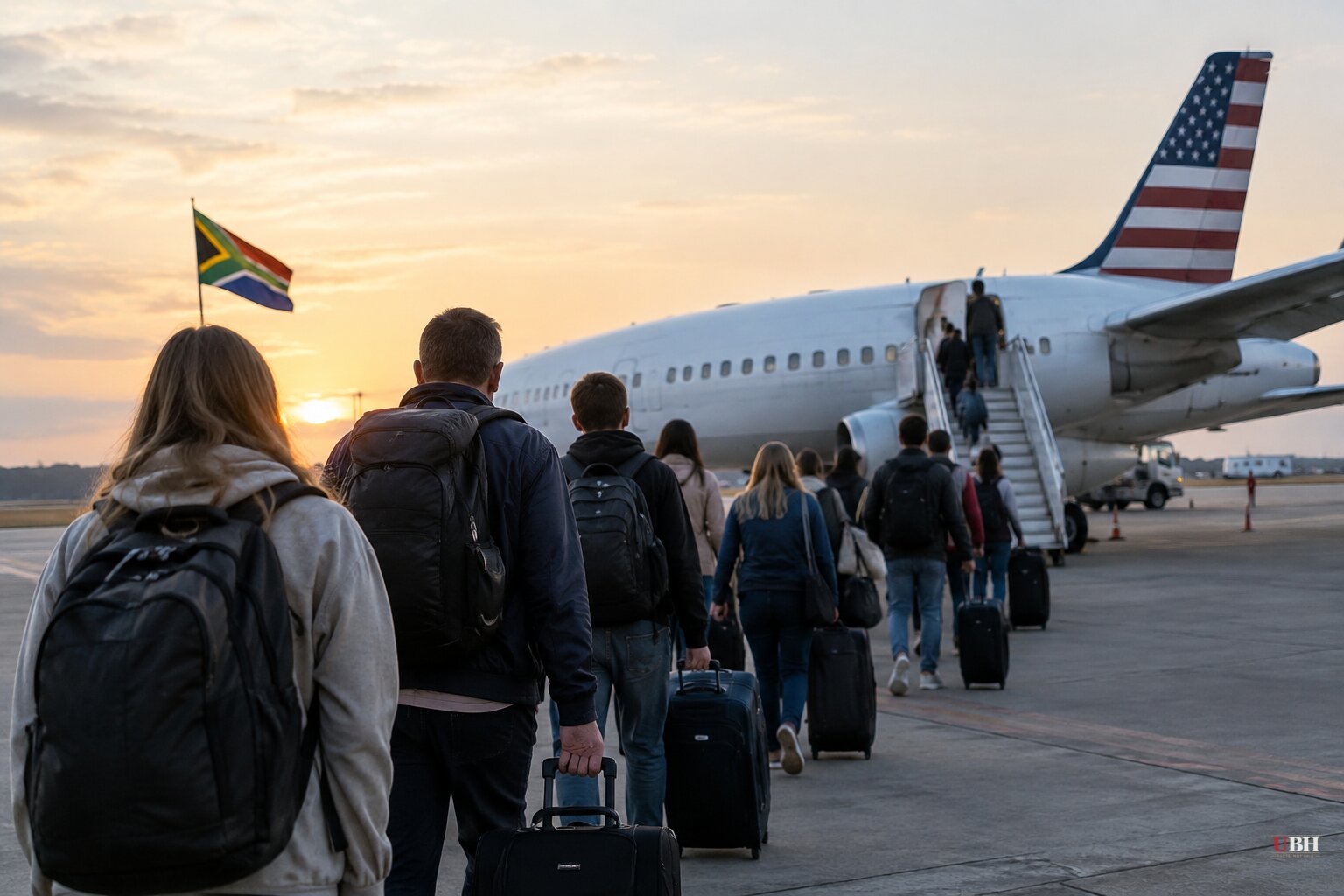
The State Department notified Congress on Tuesday that the U.S. will cap refugee admissions for fiscal year 2027 at 17,500 people, and nearly all of them will be Afrikaners from South Africa. The notice, obtained by the Associated Press, comes a week before the new fiscal year opens October 1.
That number is a fraction of what President Biden's administration set. Biden's team put the FY2025 target at 125,000 in his final year in office. Resettlement contractors, cited by HIAS, put the program's long-run average at roughly 92,000 admissions a year since it launched in 1980. Trump's first term bottomed out at 15,000.
This isn't new territory for the second Trump term. Last year the administration set the cap at 7,500, then raised it to 17,500 after declaring an "emergency refugee situation" in South Africa. Next year's number holds steady at that same level, according to the notice.
What the Administration Is Claiming
The State Department's notice argues Afrikaners face land seizures without compensation under South Africa's Expropriation Act, discriminatory employment and education policies, and rhetoric the administration says fuels violence against them. Ground News summarized the filing's language as citing "government-sponsored discrimination" and "hateful rhetoric fueling disproportionate violence."
The notice also tells Congress the arrivals will "fully assimilate" in a way that "preserves taxpayer resources for U.S. citizens," per CNN's reporting on the document.
It names a South African law, ties it to farmland seizures, and asserts a security and crime rationale tied to violence in the country. Backers of the policy, including the administration itself, view targeted land expropriation and rising rural crime as legitimate grounds for refugee status.
South Africa's government rejects that framing entirely. Foreign Minister Ronald Lamola said the U.S. position echoes a mischaracterization pushed by "fringe groups," according to Breitbart. President Cyril Ramaphosa's office has asserted South Africa has a sovereign right to address the economic legacy of apartheid through land reform. CNN reported South African authorities have "strongly denied claims of White genocide," and Ground News noted officials argue land reform addresses apartheid's economic legacy while crime affects South Africans of all races.
No international body or court has ruled on whether Afrikaners meet the legal definition of a persecuted group under U.S. refugee law. The claim remains a policy determination made by the executive branch, not an adjudicated finding.
The Diplomatic Fallout
Rubio's State Department announced visa restrictions on South African officials last week over the land seizures and what it called race-based discrimination, according to Breitbart. U.S. Ambassador Brent Bozell said the visa move is "only the first step in a series of escalatory measures."
CNN reported the refugee shift has already produced friction beyond that: diplomatic spats, a scramble to open a dedicated processing site inside South Africa, and what CNN described as "highly unusual requests from applicants." CNN also reported the program has generated high denial rates, tied in part to criminal records among some applicants, based on accounts from more than a dozen people familiar with the process.
Who Gets Locked Out
Since Trump reopened the refugee program specifically for Afrikaners, applicants from Afghanistan, Sudan, the Republic of Congo, and Myanmar have been shut out, according to Breitbart's reporting on the notice. That's the core of the complaint from refugee resettlement groups.
Naomi Steinberg, HIAS's vice president for refugee and immigration policy and advocacy, said in a statement carried by the Associated Press: "For more than four decades, America's refugee program has provided a lifesaving pathway for people fleeing violence and persecution. But again, this administration is diminishing and distorting this legacy in service of its political whims."
HIAS and other resettlement contractors get paid by the federal government to place refugees in American communities, a financial stake worth noting when weighing their objections. That doesn't make their underlying point wrong: a program that once spread admissions across dozens of countries facing war and unrest is now, by design, concentrated almost entirely on one nationality and one racial group.
The Money and the Math
The $500 million resettlement cost applies to a program serving 17,500 people, a per-capita figure that dwarfs what Biden-era planning assumed for a 125,000-person cohort. Refugees admitted under the program become eligible for nearly all federal welfare programs once they arrive, funding that flows into local rents and consumer spending near resettlement sites.
Congress has no formal veto over the presidential determination that sets refugee ceilings, though lawmakers can raise objections in consultation, which is what Tuesday's notice formally triggers. The unresolved question is whether South Africa's government, having already rejected the persecution claim and criticized the visa restrictions, escalates its own response before the fiscal year opens October 1.
Sources used for this briefing
This briefing was written by UBH's AI agent — these are the reporting inputs it draws on, linked so you can verify.


